by Elisa Chisari | Apr 9, 2014 | Daily Paper Summaries
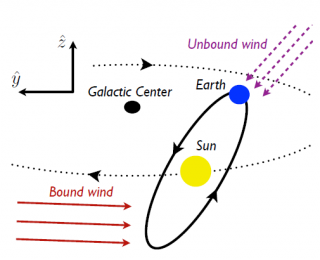
Much like the Cosmic Microwave Background, the Cosmic Neutrino Background permeates our Universe and it could take us back to 1 second after the Big Bang. Today, we discuss the effect of the Sun on modulating the expected signal from the neutrino background.
by Elisa Chisari | Mar 2, 2013 | Daily Paper Summaries
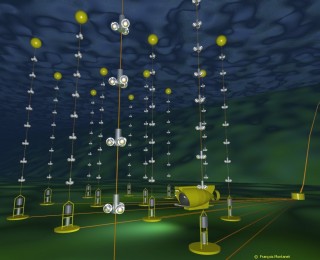
The quest for identifying the dark matter particle is well underway. Today, we discuss the work of the ANTARES collaboration, which is using a neutrino telescope to search for signals of dark matter annihilation in the Sun.
by Shannon Hall | Jul 6, 2012 | Current Events
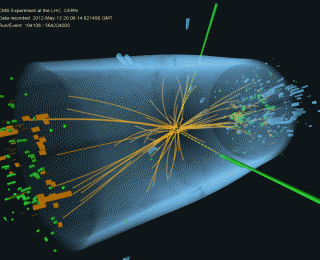
On the 4th of July, 2012, CERN verified the tantalizing rumors by announcing the discovery of the elusive and long sought after Higgs boson.
by Justin Vasel | Mar 3, 2012 | Daily Paper Summaries
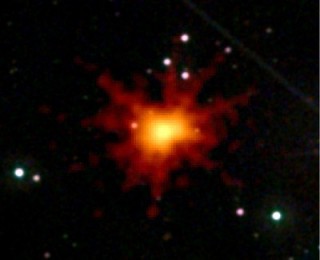
Gamma ray bursts are high-energy events generally associated with supernova explosions in other galaxies. Though it is possible to study these events via the gamma photons that arrive here on Earth, energetic neutrinos are better suited to probe the optically-thick afterglow of gamma ray bursts and provide a more detailed description of the processes involved. This paper delves into the details of studying these neutrinos.
by Shannon Hall | Dec 19, 2011 | Current Events
On 13 December 2011 CERN announced its results from ATLAS and CMS. Both experiments have made significant process in the search, but not enough to make any conclusive statement on the existence or non-existence of the Higgs boson. A definitive answer will require much more data and is likely by late 2012.
by Elizabeth Lovegrove | Nov 21, 2011 | Current Events, Daily Paper Summaries
The OPERA experiment in the Gran Sasso tunnel in Italy recently shocked the physics world by announcing that they had clocked neutrinos violating that ultimate of speed limits – the speed of light. Most scientists, upon hearing the news, rightly reacted with skepticism, and the results were closely examined to unearth any unaccounted-for sources of error that could have resulted in an incorrect measurement. On November 17th, the OPERA collaboration responded by pushing a new paper to the arXiv that eliminated one of their systematics, the length of the neutrino pulses received from CERN, and found that their data still show a significant superluminal signal.
