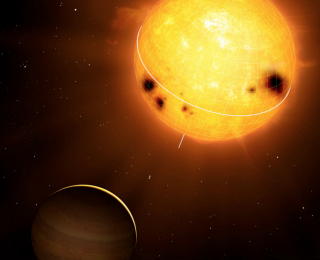
Uncovering planets and stellar activity using only radial velocities
How do we model stellar activity to disentangle planet signals from stellar activity using only RVs?

How do we model stellar activity to disentangle planet signals from stellar activity using only RVs?
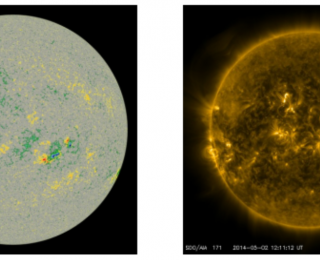
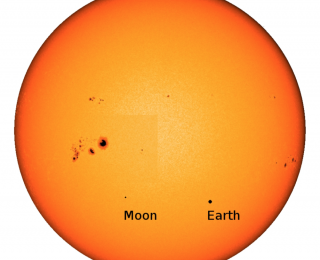
One of the best ways to look for planets around stars is to look for wobbles in the stellar spectrum using state of the art spectrographs. Unfortunately, processes on the star like star spots can also cause shifts in the spectrum. Today’s astrobite uses the Sun to link sunspots to shifts in the solar spectrum. These lessons will help to discover Earth-twins orbiting other stars.
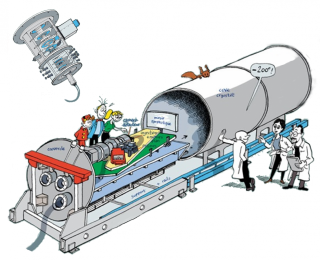
Spirou often runs into fantastic adventures with his courageous, and sharp pet squirrel Spip. Their next adventure: a radial velocity spectrograph. What sophisticated technology is this? How does it work? What can it help us find?
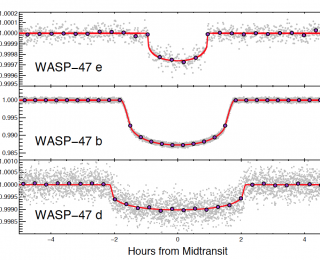
What might be the strangest architecture yet of an exoplanetary system was discovered, and it raises big questions as to how planetary systems form and evolve.
How do you observe an Earth transit, from Earth? You use some of the Solar System’s largest mirrors. The authors did. They found an anomaly.
Our current best radial velocities are precise to about 1m/s. How do we make the step towards achieving 10cm/s precision?