by Jenny Calahan | Jan 22, 2019 | Daily Paper Summaries
Today’s paper makes predictions for the yet-to-be-observed dwarf galaxy population around Andromeda’s satellite galaxy, M33. It provides scientific justification for a future mission with WFIRST.
by Jamila Pegues | Sep 4, 2018 | Daily Paper Summaries
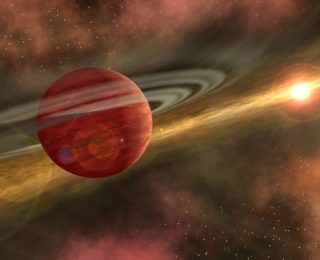
According to one theory of planet formation, the secret to forming massive planets is through itsy-bitsy, teeny-weeny pebbles of dust. In today’s astrobite, we explore what sort of planets these little pebbles could form.
by Jamila Pegues | Aug 23, 2018 | Daily Paper Summaries
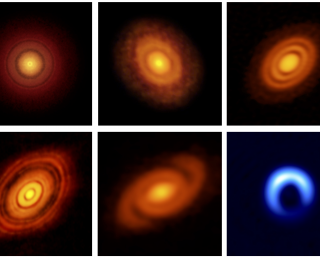
With the awesome power of ALMA, scientists have observed a variety of dust gaps in protoplanetary disks. In today’s astrobite, we explore how these gaps might be related to planet formation.
by Peter Sinclair | Apr 9, 2018 | Daily Paper Summaries
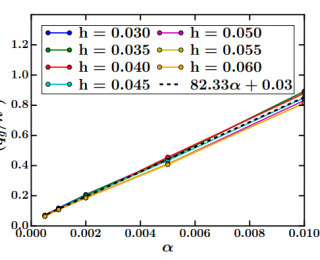
While a planet is forming, its passage through the protoplanetary disk can prevent pebbles from migrating inwards and accreting onto the planet.
by Jamila Pegues | Oct 25, 2017 | Daily Paper Summaries
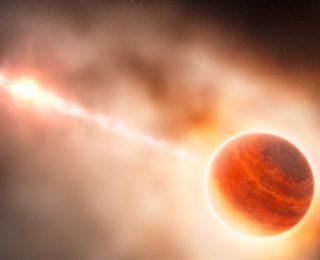
Thick clouds shroud the interiors of gas giants, like Jupiter, in mystery. Today’s authors set out to blow some of that mystery away. Using equations and modeling, they explore processes of heat transfer within the interiors of hot-start, core-accreting gas giants.
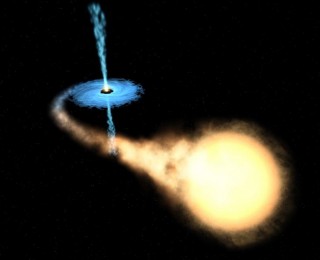
by Andrew Emerick | Feb 24, 2015 | Daily Paper Summaries
Reproducing the observed star formation history of galaxies in simulations is a fantastic test of our understanding of galaxy evolution. This is regulated strongly by “feedback”, for example, from supernova. Today’s astrobite discusses feedback from high mass X-ray binaries.
