by Elisa Chisari | Oct 16, 2013 | Daily Paper Summaries
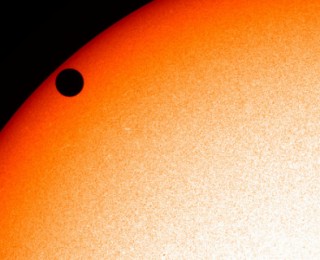
We are used to thinking about planet transits in visible wavelengths. What can we learn from planet transits in the radio band? Today, we discuss what these transits might tell us about the magnetic activity and the atmosphere of a star.
by Elisabeth Newton | Apr 26, 2012 | Daily Paper Summaries
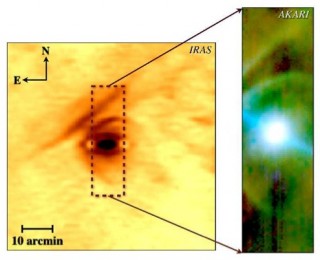
Sometimes we see strange shapes when we look through our fancy telescopes and we’re left wondering how they formed. How did the rings and “pearls” of SN1987A form? Or the hexagonal cloud pattern on Saturn? The star Betelgeuse – famous for being Orion’s left shoulder – presents another unusual geometric appearance.
by Elisabeth Newton | Feb 1, 2012 | Daily Paper Summaries
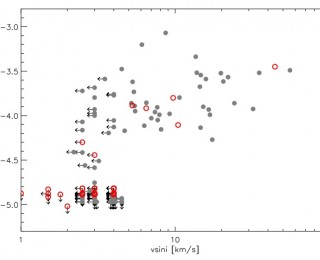
This paper delves into some of the physical properties of early M dwarfs (M0-M4.5), focusing on chromospheric/magnetic activity and rotation. The authors present a catalog of activity and rotation for 334 early M dwarfs.
by Adele Plunkett | Sep 30, 2011 | Daily Paper Summaries
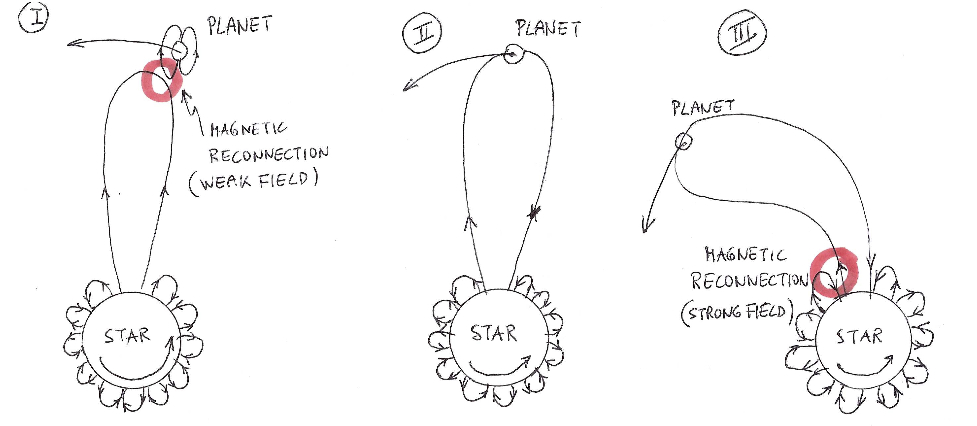
This paper investigates the interaction between close-in (semimajor axis a<0.15AU) massive planets (a.k.a. “hot Jupiters'') and their host (late-type) stars. Two possible mechanisms for interaction are tidal and magnetic, with the focus of this paper being the latter. The pioneering work on the topic of stellar activity enhancement (such as dark spots, faculae, etc) due to planet interaction is by Cuntz et al. (2000). You can see related contributions about stellar activity on previous astrobites posts.
by Courtney Dressing | Aug 3, 2011 | Daily Paper Summaries
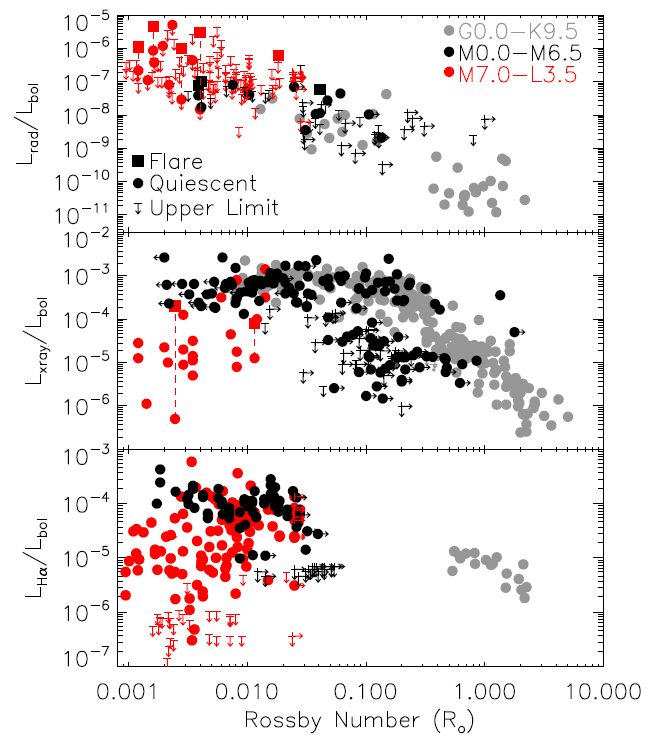
McLean et al. observe a new sample of late-M and L dwarfs with the Very large Array to search for a relation between rotation rate and radio activity for ultracool dwarfs.
by Ian Czekala | Jun 9, 2011 | Daily Paper Summaries
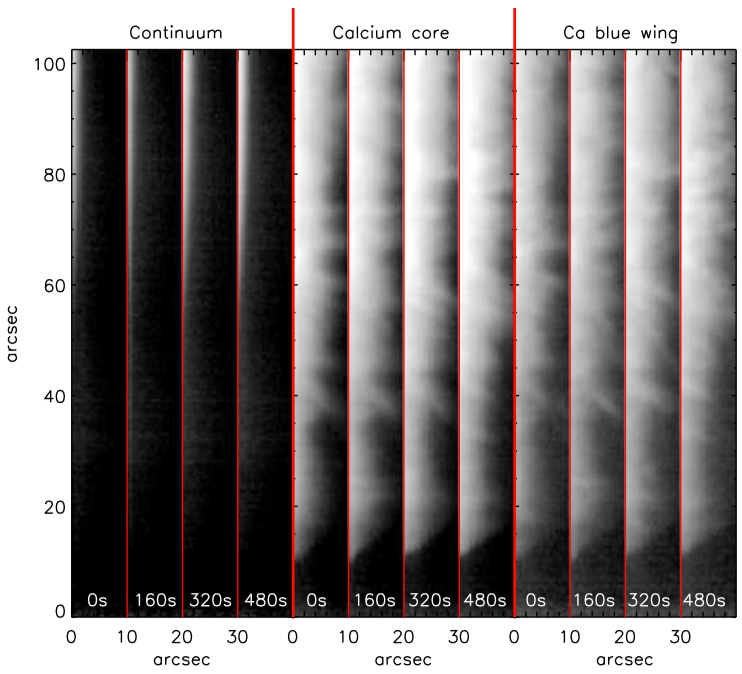
In previous astrobites, we’ve emphasized how important spectroscopy is to an astrophysicist’s understanding of the universe. From radial velocity measurements involved in the discovery of planets, determination of the ionization history of the universe, characterization of P Cygni profiles and more, spectroscopic analysis is a crucial part of an astrophysicist’s toolbox. These sources are faint! If you are impressed by the results obtained by galactic and extra-galactic spectroscopy, be prepared to marvel at the extremely high signal to noise data that can be obtained by observing our brightest source in the sky, the Sun. The sun is truly a spectroscopist’s delight.
