by Lucia Morganti | Jun 1, 2012 | Daily Paper Summaries
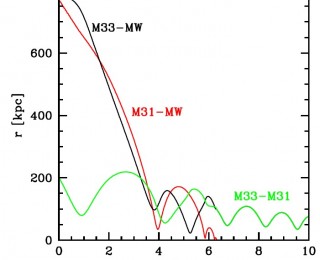
HST measurements of stellar proper motions in M31 reveal that the Andromeda galaxy is in radial (head-on collision) orbit towards the Milky Way. The huge strike will happen 4 billion years from now according to the simulations. It will likely affect also the environment of the Sun and the location of the solar system.
by Susanna Kohler | May 14, 2012 | Daily Paper Summaries
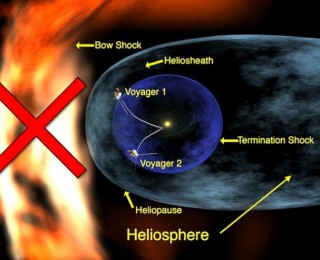
Recent data from IBEX has revealed that our decades-old model of the heliosphere is wrong: there is no bow shock ahead of the heliosphere in the ISM.
by Anna Rosen | Nov 7, 2011 | Daily Paper Summaries
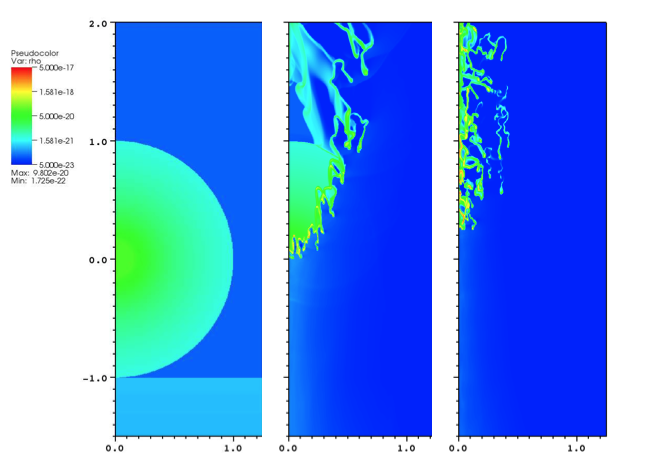
Could the interaction of the pre-solar core with a nearby supernova trigger the formation of our Solar System?
by Elisabeth Newton | Aug 17, 2011 | Daily Paper Summaries
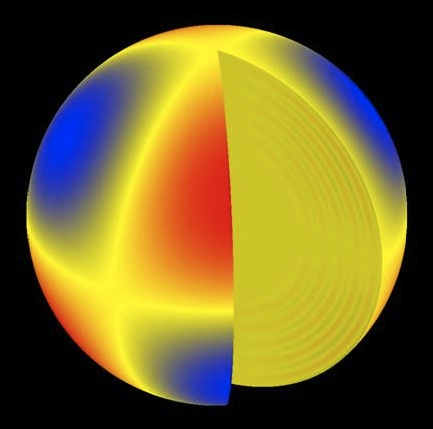
If there’s one type of star you’d think astronomers would know a lot about, it’s probably solar-type stars. After all, humans have been staring at our very near neighbor for millennia and in the recent century have dedicated entire space missions to studying this archetype. But there is always more to be learned and new tools like asteroseismology continue to open up avenues of study previously closed.
by Ian Czekala | Jul 18, 2011 | Daily Paper Summaries
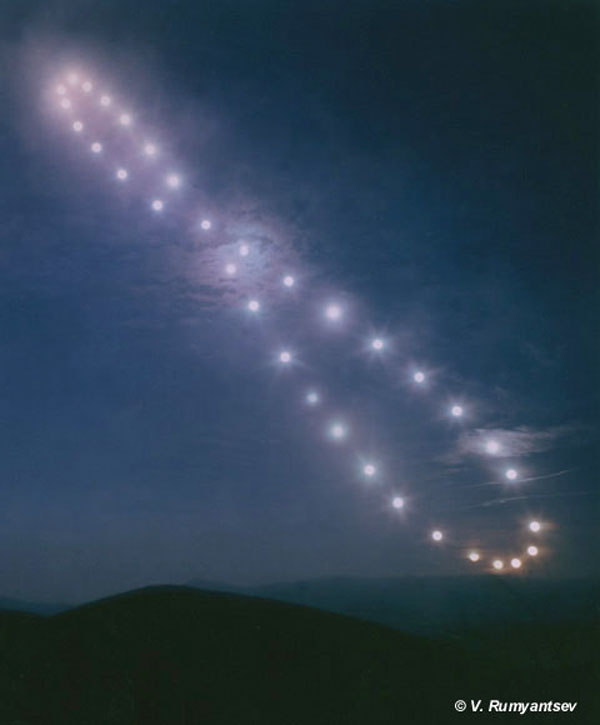
The units we use to measure time have until recently been always derived from the movements of the heavens, which we have considered immutable because we have never had the accuracy of measurement to notice otherwise. Starting with the Babylonians, we divided our days into neatly divisible blocks of hours, minutes, and then seconds. The advent of extremely accurate atomic clocks that rely upon the hyperfine quantum transitions of Cesium-133 atoms have challenged our traditional notions of time.
by Ian Czekala | Jun 9, 2011 | Daily Paper Summaries
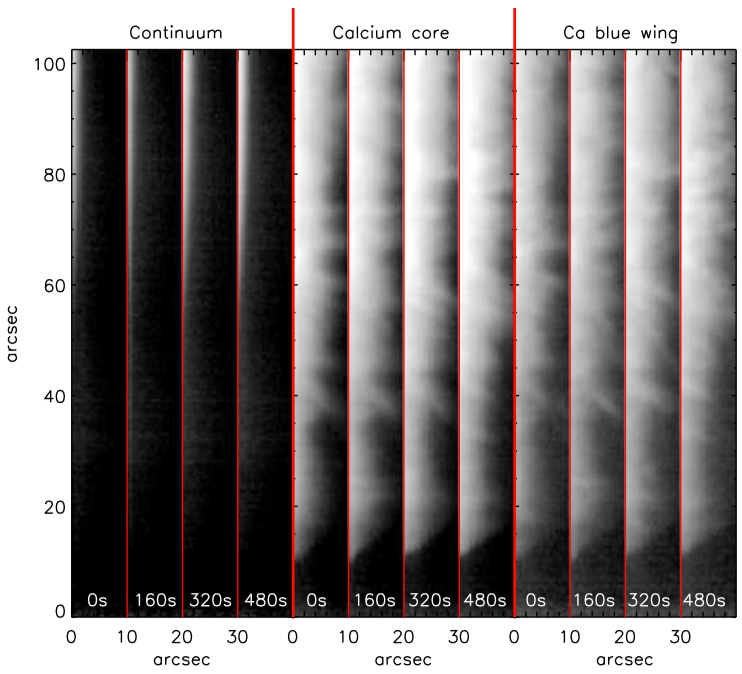
In previous astrobites, we’ve emphasized how important spectroscopy is to an astrophysicist’s understanding of the universe. From radial velocity measurements involved in the discovery of planets, determination of the ionization history of the universe, characterization of P Cygni profiles and more, spectroscopic analysis is a crucial part of an astrophysicist’s toolbox. These sources are faint! If you are impressed by the results obtained by galactic and extra-galactic spectroscopy, be prepared to marvel at the extremely high signal to noise data that can be obtained by observing our brightest source in the sky, the Sun. The sun is truly a spectroscopist’s delight.
