Cool Stars 20
This week about 500 astronomers met in Boston, MA for the 20th Cambridge Workshop on Cool stars, Stellar Systems, and the Sun (Cool Stars) meeting.

This week about 500 astronomers met in Boston, MA for the 20th Cambridge Workshop on Cool stars, Stellar Systems, and the Sun (Cool Stars) meeting.
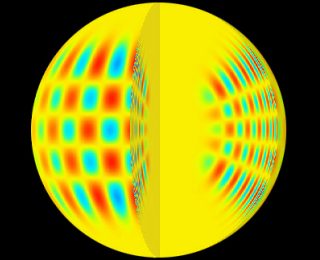
Oscillations at the center of the Sun have been observed for the very first time. What do they mean for the rotation of the Sun?
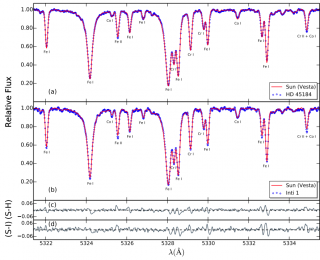
After accidentally observing the wrong star this paper’s authors discovered a previously-unknown solar twin, a type of star which can help shed light on a number of questions in astronomy.
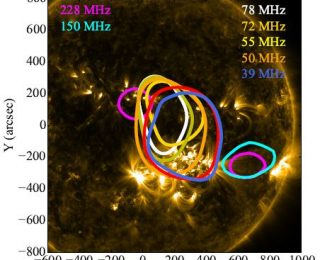
Observations of radio waves make for a great probe of electrons interacting with our Sun’s magnetic field. Today’s bite uncovers the origin of an unusual burst of radio energy, coined a J-burst, observed back in 2013.
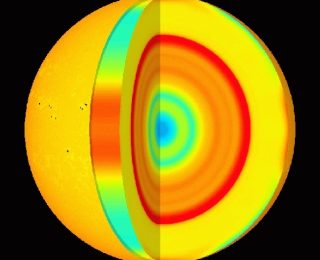
Stellar evolution remains one of the most complicated and yet fundamental subjects in astrophysics. In today’s paper, we take a look at the role of atomic diffusion in the evolution of Sun-like stars, and how they affect estimates of stellar ages and chemical tagging.
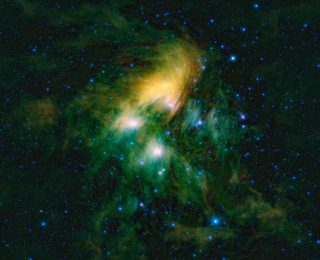
Have you checked the assumptions and approximations of your favorite stellar evolution code? In today’s paper we confront these uncertainties and face the fact that, well, stellar evolution is extremely complicated and we need to keep tabs of the limitations of our models.