The Sun In A Distant Mirror
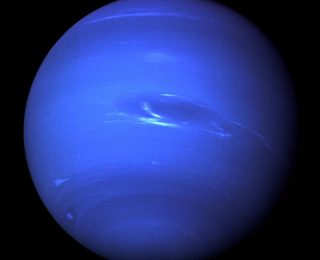
When Kepler looks at Neptune, it sees the Sun oscillate.

When Kepler looks at Neptune, it sees the Sun oscillate.
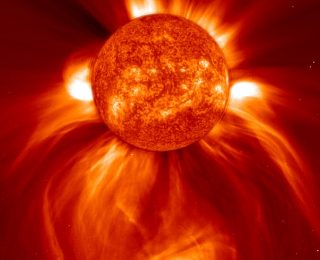
That giant blob of plasma right there in our cosmic backyard rules our everyday lives, and yet it still holds many surprises. We will see today that the Sun is significantly less active than other stars similar to it, and how this affects our future studies on the subject.
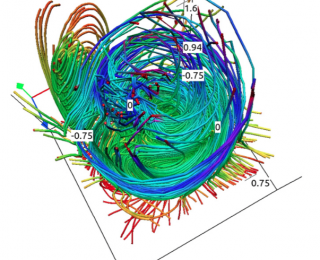
Today’s guest post from Diana Yoder discusses the formation of magnetic twisters in the Sun.
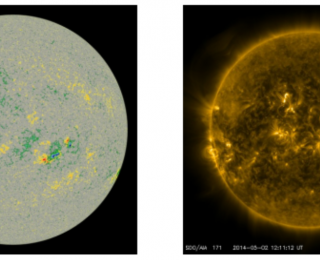
One of the best ways to look for planets around stars is to look for wobbles in the stellar spectrum using state of the art spectrographs. Unfortunately, processes on the star like star spots can also cause shifts in the spectrum. Today’s astrobite uses the Sun to link sunspots to shifts in the solar spectrum. These lessons will help to discover Earth-twins orbiting other stars.
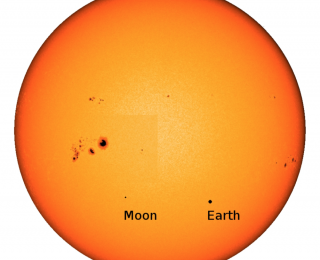
How do you observe an Earth transit, from Earth? You use some of the Solar System’s largest mirrors. The authors did. They found an anomaly.
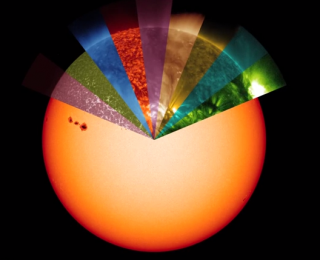
Does the Sun shine in high-energy gamma rays? Apparently so, in the form of a halo surrounding itself. But certain features of this gamma-ray halo are perplexing.