• RSS
  • Submit a Guest Post
  • Undergraduates: Submit your Research!
  • Suggest a Paper Topic!
astrobites
  • About
    • About Astrobites
    • Meet the Authors
    • Statement of Inclusivity
    • Copyright & Permissions
  • Latest Research
    • Daily Paper Summaries
    • Classics
    • Undergrad Research
    • Physical Review Coverage
  • Beyond astro-ph
    • Beyond astro-ph Library
    • Interviews
    • Career Navigation
    • Personal Experiences
    • Current Events
    • Teaching with Astrobites
  • Guides
    • EM Spectrum
    • Galaxies & AGNs
    • Spectroscopy and Spectral Lines
    • Adaptive Optics
    • Gravitational Waves
    • Transient Astronomy
    • Astrophysical Software
    • Graduate School
    • Writing a personal statement for grad apps
    • First Observing Run
    • …More Guides!
Select Page
For your Perusing Pleasure: Some Preliminary Results from the Social Perceptions of Astronomy Survey

For your Perusing Pleasure: Some Preliminary Results from the Social Perceptions of Astronomy Survey

by Maria Drout | Nov 16, 2011 | Career Navigation

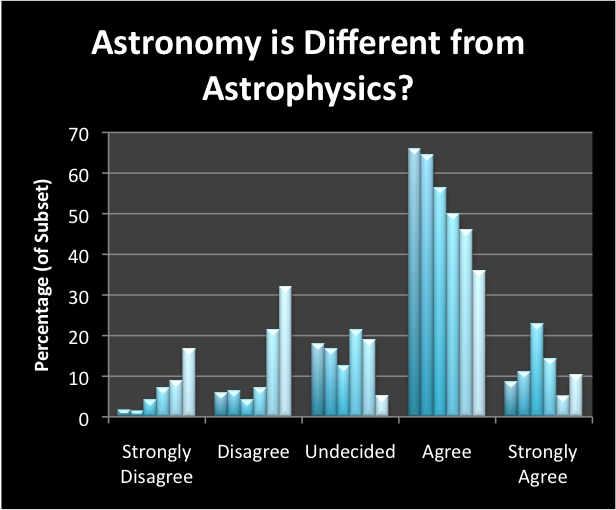
Preliminary results from a survey conducted to gauge how the general public thinks about astronomy and astrophysics and the scientists who specialize in the field.

Links: Astro Perception Survey, Applying to Grad School

Links: Astro Perception Survey, Applying to Grad School

by Astrobites | Sep 30, 2011 | Quick Notes

A new survey investigates social perceptions of astronomy and our sister site Chembites has an article about the grad school application process.
The First High Redshift Quasar from Pan-STARRS

The First High Redshift Quasar from Pan-STARRS

by Courtney Dressing | Sep 30, 2011 | Daily Paper Summaries

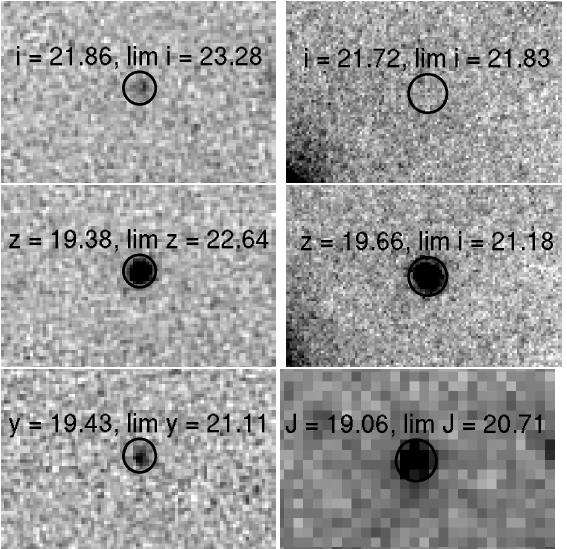
Morganson et al. announce the discovery of the first quasar discovered by Pan-STARRS. The newly detected quasar is a Broad Absorption Line quasar at a redshift of 5.73 +/- 0.02 with a z band magnitude of 19.4, a luminosity of 3.8×1047 erg/s, and an estimated black hole mass of 6.9×10⁹ solar masses.
Super-Earths or Mini-Neptunes: Part Two

Super-Earths or Mini-Neptunes: Part Two

by Courtney Dressing | Sep 15, 2011 | Daily Paper Summaries

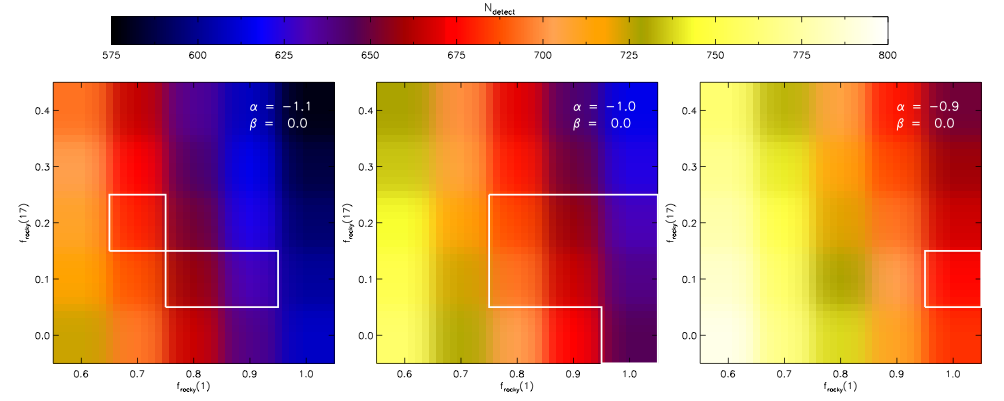
Wolfgang & Laughlin combine observations from the HARPS radial velocity survey and the Kepler transit survey to investigate the mass-radius-period distribution of exoplanets. They find that most small planets are rocky.
Kepler Team Announces Planet in a Binary Star System

Kepler Team Announces Planet in a Binary Star System

by Courtney Dressing | Sep 15, 2011 | Quick Notes

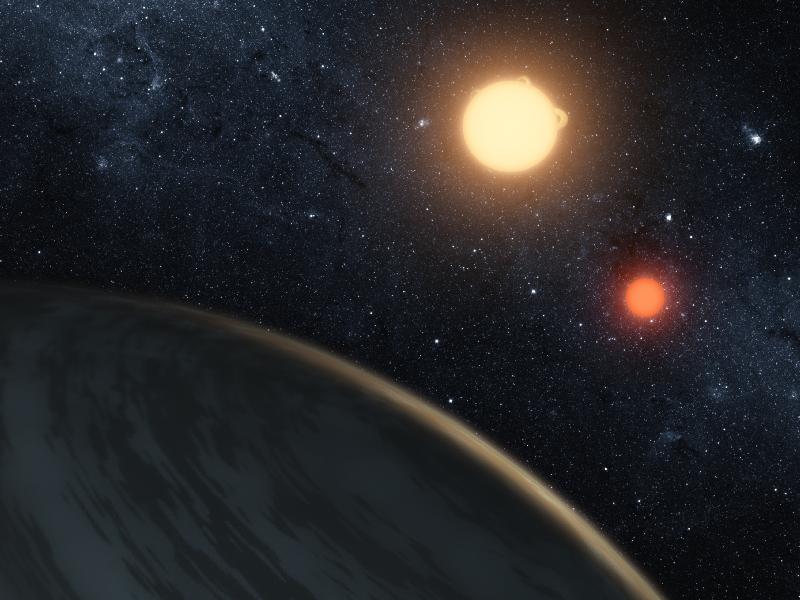
Kepler has discovered a real-life version of Tatooine! The newly minted planet, dubbed Kepler-16b, orbits both stars on a 229 day orbit and is roughly the same size as Saturn.
Super-Earths or Mini-Neptunes?

Super-Earths or Mini-Neptunes?

by Courtney Dressing | Sep 1, 2011 | Daily Paper Summaries

How do the planet candidates discovered by Kepler compare to the planets detected by radial velocity surveys? Can we combine the Kepler radii with the RV masses to determine whether small planets are rocky Super-Earths or gaseous mini-Neptunes?

« Older Entries
Next Entries »

Loading

Follow our socials

  • Bluesky
  • Facebook
  • Instagram
  • RSS Feed

More Posts About

AAS AGN astronomy astrophysics binary stars black holes cosmology dark matter dwarf galaxies exoplanets galaxies galaxy evolution gravitational waves habitability JWST Kepler Milky Way observations planetary science planet formation protoplanetary disks radio astronomy simulations solar system spectroscopy star formation stars stellar evolution supernovae theory

Posts by Category

  • Accessibility
  • Applications
  • Beyond
  • Book Reviews
  • Career Navigation
  • Classics
  • Climate Change
  • Course Assignments
  • Crossposts
  • Current Events
  • Daily Paper Summaries
  • Game Reviews
  • Guides
  • Historical Astronomy
  • Instrumentation
  • Interviews
  • Outreach
  • Personal Experiences
  • PRJ
  • Quick Notes
  • Satellites
  • Teaching
  • Undergraduate Research

More Astronomy

  • AAS
  • AAS Nova
  • astro-ph
  • AstroBetter
  • APOD

Read Astrobites in Other Languages

  • Astrobitos (Spanish)
  • Astropontos (Portuguese)
  • staryab (Farsi)

Listen to Astrobites

  • astro[sound]bites

Discover More Incredible Science

  • ScienceBites Network
  • RSS

© 2026 Astrobites | All Rights Reserved | Supported by AAS | Designed by Elegant Themes | Powered by WordPress