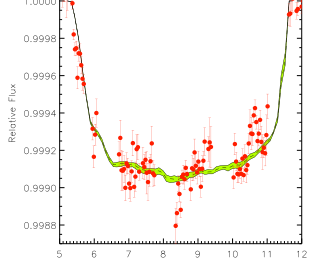
Using observations from home to improve the transit method
Most exoplanets are and have been detected by the transit method. Maybe, we can improve the method even further by drawing conclusions from the recent Venus transits in 2004 and 2012.

Most exoplanets are and have been detected by the transit method. Maybe, we can improve the method even further by drawing conclusions from the recent Venus transits in 2004 and 2012.
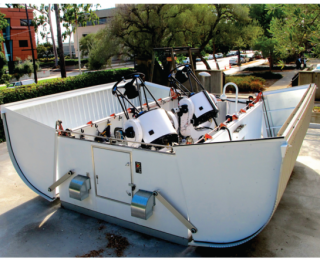
MINERVA: Detecting Super-Earths from the ground in a modular, cost-effective manner.
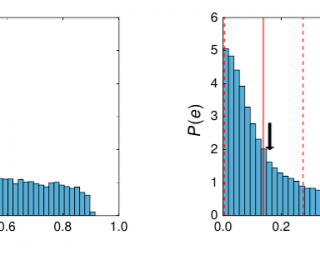
The Kepler Mission has measured planet radii and orbital periods for 3,000+ light curves. So what is next? Either we convince the continental USA to become amateur astronomers… Or we figure out ways to retrieve more planetary parameters from the Kepler data set. I’ll stick with the later. And so will the authors or this paper.
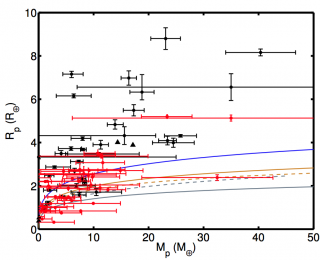
Artist’s impressions of exoplanets are often wrong!
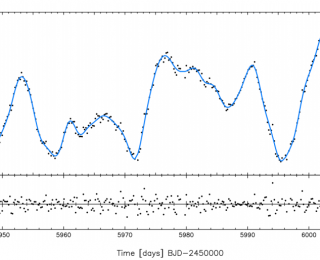
Is CoRoT-7d real, or is it stellar activity masquerading as a planet? Haywood et al. build a noise model to analyze CoRoT-7’s activity to find out.
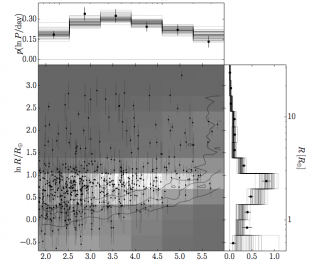
There are nine Earth-like planets detectable in the Kepler data set… better get searching!