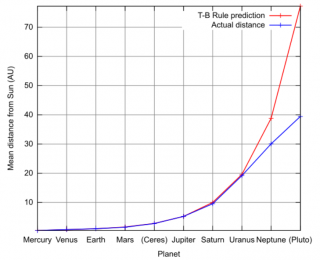
Testing the Titius-Bode law on exoplanets
From examining extrasolar planetary systems, we can test if the Titius-Bode “law” is actually a law.

From examining extrasolar planetary systems, we can test if the Titius-Bode “law” is actually a law.
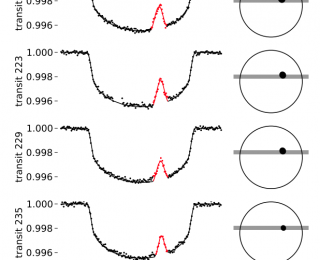
Kepler finds the signature of a transiting white dwarf. Instead blocking the light of its companion star, the white dwarf magnifies it, creating a light curve that periodically brightens.
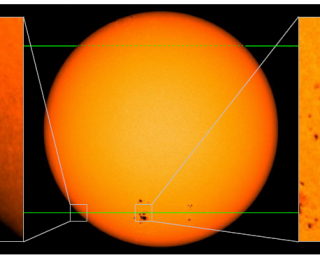
The orbits of some recently discovered exoplanets seem to be synchronised with the rotation of their host stars. Can this mystery be explained?
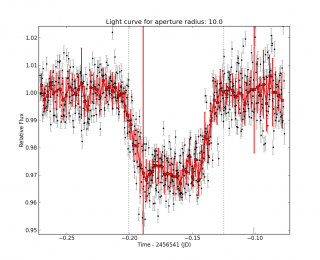
This month’s undergraduate research post features an analysis of distance-indicating RR Lyrae stars, and transiting exoplanet science using a code called OSCAAR.
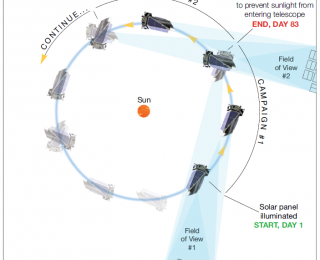
The Kepler Space Telescope gets a promising second chance with a new mission called “K2”.
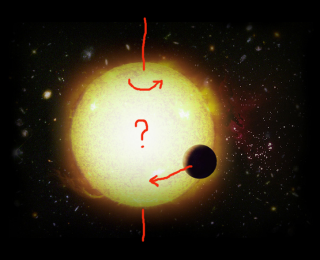
How do so many hot jupiters come to orbit backwards?