by Elisa Chisari | Oct 16, 2013 | Daily Paper Summaries
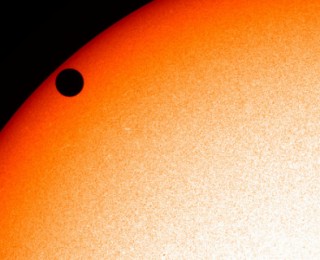
We are used to thinking about planet transits in visible wavelengths. What can we learn from planet transits in the radio band? Today, we discuss what these transits might tell us about the magnetic activity and the atmosphere of a star.
by Nick Ballering | Sep 9, 2013 | Current Events
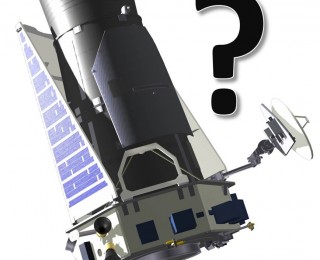
NASA is looking for a new mission for the damaged Kepler space telescope. Here are some ideas.

by Nick Ballering | Jun 17, 2013 | Current Events
Highlights from the International Astronomical Union Symposium on “Exploring the Formation and Evolution of Planetary Systems”.
by Joseph O'Rourke | May 23, 2013 | Daily Paper Summaries
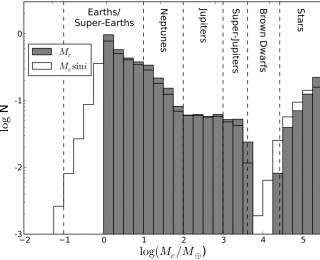
Our simple formula for predicting the probability that an exoplanet will transit might miss something important.
by Ben Montet | May 3, 2013 | Daily Paper Summaries
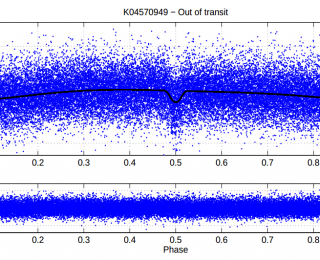
Faigler et al. apply their BEER algorithm to a collection of stars in the Kepler field and find a hot Jupiter missed by the Kepler Science Team, showing a new way to find and characterize planets without follow-up observations.
by Caroline Morley | Feb 14, 2013 | Daily Paper Summaries
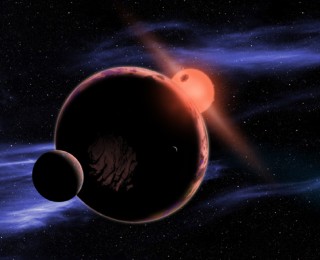
The census of planets for smaller stars—M dwarfs—is now basically complete. In this paper, Courtney Dressing and Dave Charbonneau use this M dwarf advantage to determine the occurrence rate of small planets around M dwarfs.
