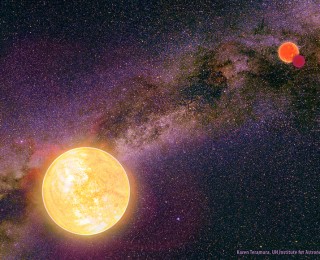
by Ben Montet | Feb 8, 2013 | Daily Paper Summaries
By looking for variations in the observed periods for eclipsing binary stars, astronomers have found evidence that a sizable fraction of these systems are actually systems of three or more stars.
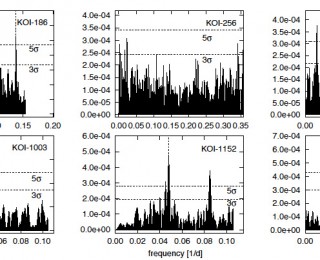
by Courtney Dressing | Aug 2, 2012 | Daily Paper Summaries
The leading theory is that hot Jupiters tend to occur in single planet systems, but Szabo et al. find evidence that some hot Jupiters might reside in multi-planet systems. Are hot Jupiters actually lonely?
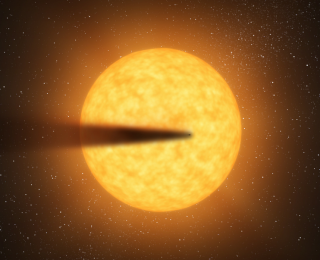
by Dan Gifford | Jun 18, 2012 | Daily Paper Summaries
Is it a comet or a planet?
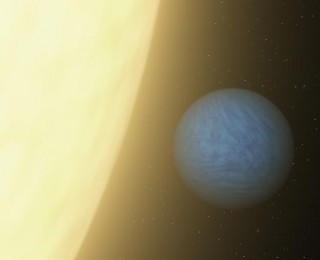
by Elisabeth Newton | May 9, 2012 | Daily Paper Summaries
Last year, I reported on how the mystery of 55 Cancri e was resolved. In this Letter, Demory et al. observe the secondary eclipses of 55 Cnc e (when the planet passes behind the star), allowing them to determine the planet’s temperature. At 3,800 degrees Fahrenheit: this super Earth is not looking like a good vacation spot. They are also able to explore possible compositions for the planet.
by Shannon Hall | Feb 12, 2012 | Daily Paper Summaries
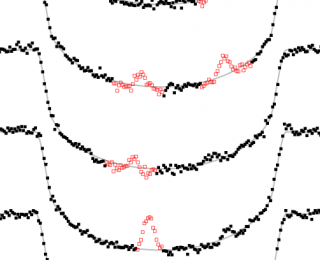
This paper discusses the observed anomalies caused by starspot occultations due to transiting exoplanets. They are useful in determining the obliquity of the star with respect to the orbital plane of the transiting planet.
by Courtney Dressing | Jan 6, 2012 | Daily Paper Summaries
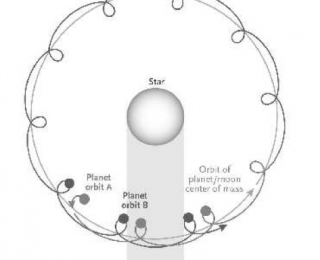
Moons in other solar systems are common in science fiction. Are they common in the universe as well? Kipping et al. are using Kepler data to find out.
