by Courtney Dressing | Sep 15, 2011 | Daily Paper Summaries
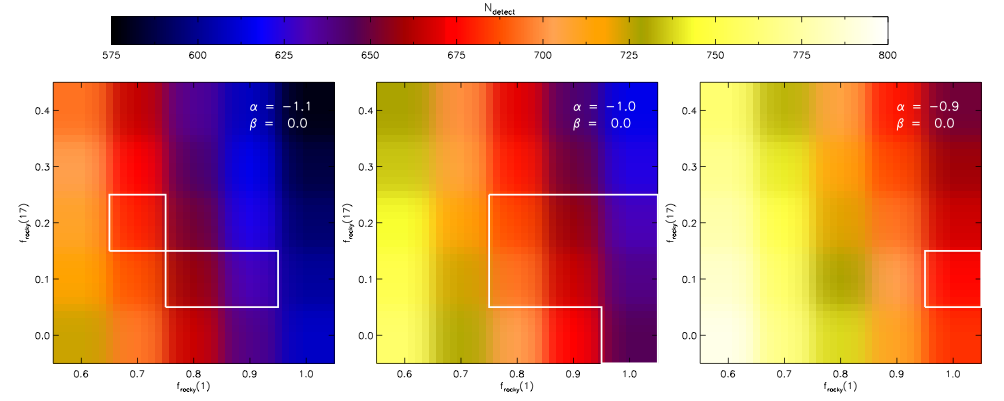
Wolfgang & Laughlin combine observations from the HARPS radial velocity survey and the Kepler transit survey to investigate the mass-radius-period distribution of exoplanets. They find that most small planets are rocky.
by Courtney Dressing | Sep 15, 2011 | Quick Notes
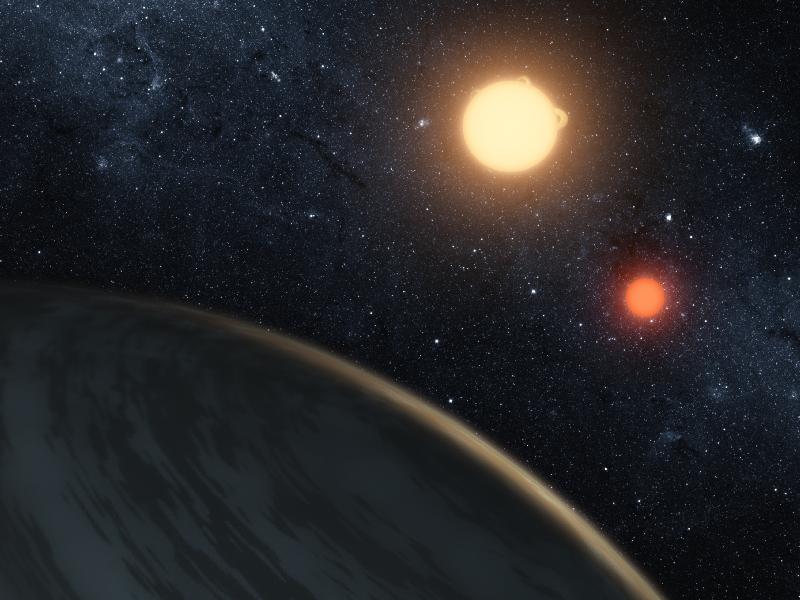
Kepler has discovered a real-life version of Tatooine! The newly minted planet, dubbed Kepler-16b, orbits both stars on a 229 day orbit and is roughly the same size as Saturn.

by Elisabeth Newton | Sep 15, 2011 | Daily Paper Summaries
I’m here at the Extreme Solar Systems 2 conference in Jackson Hole, Wyoming. On Monday, Sarah Ballard spoke about recent results on the Kepler-19 system; she led a paper on this object that was posted to the arxiv last week. This is the story of the newly-discovered transiting planet Kepler-19b and its mysterious companion.
by Courtney Dressing | Sep 1, 2011 | Daily Paper Summaries
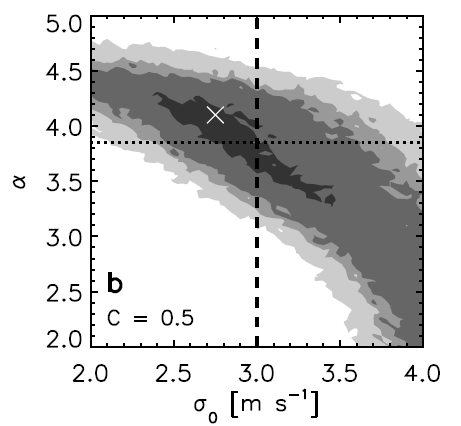
How do the planet candidates discovered by Kepler compare to the planets detected by radial velocity surveys? Can we combine the Kepler radii with the RV masses to determine whether small planets are rocky Super-Earths or gaseous mini-Neptunes?
by Ian Czekala | Aug 26, 2011 | Daily Paper Summaries
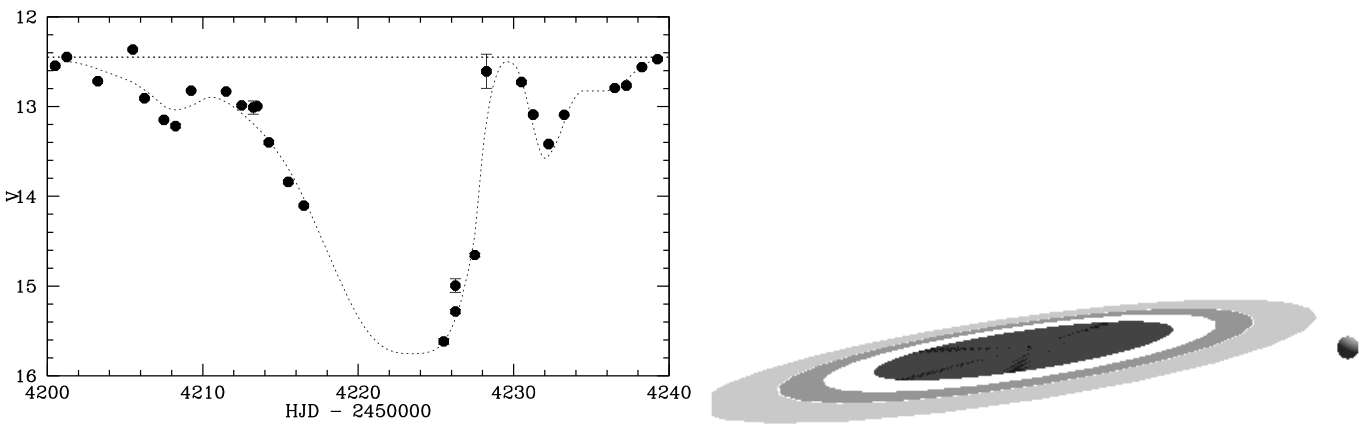
We know other stars have planets. We know that certain stars have circumstellar disks. We know that before there are planets, there must be a protoplanetary disk; we also know that these two states must be connected through a evolutionary path which includes planet formation.
What if–if we were just so lucky–we found a protoplanetary system that had a disk, that was aligned so perfectly, and that was bright enough, and ….
by Courtney Dressing | Aug 3, 2011 | Daily Paper Summaries
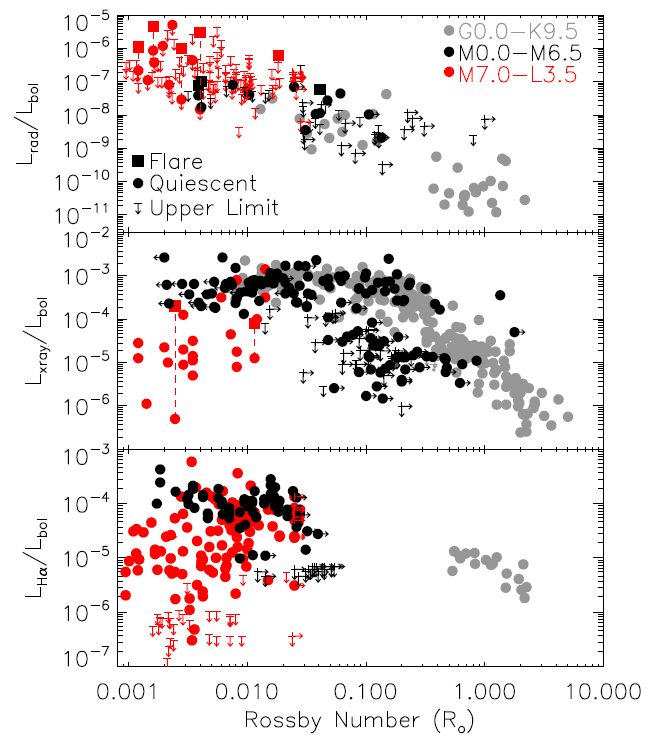
McLean et al. observe a new sample of late-M and L dwarfs with the Very large Array to search for a relation between rotation rate and radio activity for ultracool dwarfs.
