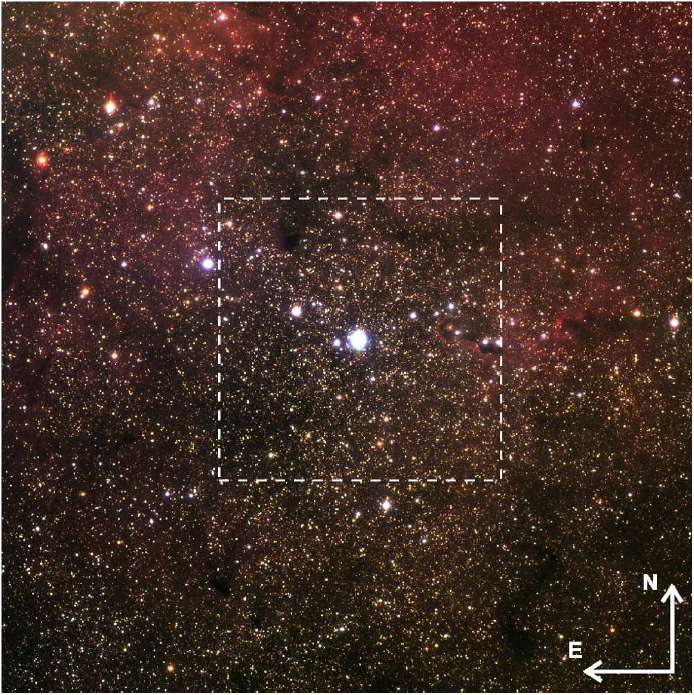
YETI: Abominable Snowman or Exoplanet Transit Survey?
Neuhäuser et al. are searching for young Jovian planets orbiting stars in open clusters. What are the advantages of looking for planets in clusters?

Neuhäuser et al. are searching for young Jovian planets orbiting stars in open clusters. What are the advantages of looking for planets in clusters?

Habitable exomoons appear all over science fiction, but could they exist in real life? Could we detect them if they did?
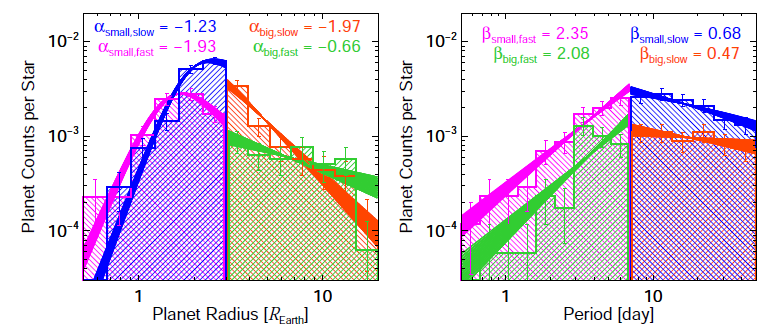
What does the Kepler data tell us about the number of planets per star and the distribution of planets in radius and orbital period? Andrew Youdin addresses that question by considering the selection effects in the Kepler sample and fitting a joint powerlaw in radius and orbital period.
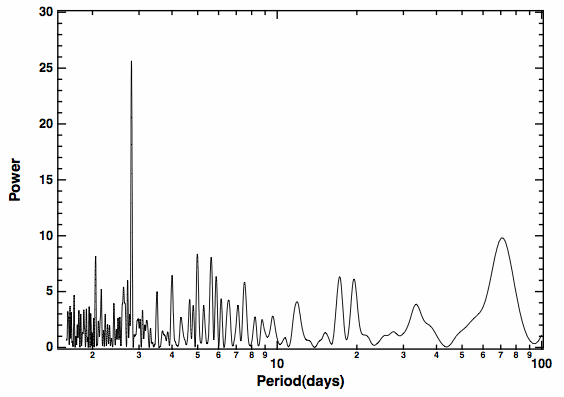
This is the story of exoplanet 55 Cnc e, which was first identified via the radial velocity method as a 14 Earth-mass planet on a 2.8 day orbit. A re-analysis in 2010 pointed towards an even shorter period orbit and a paper on the arxiv last week followed up on those predictions.
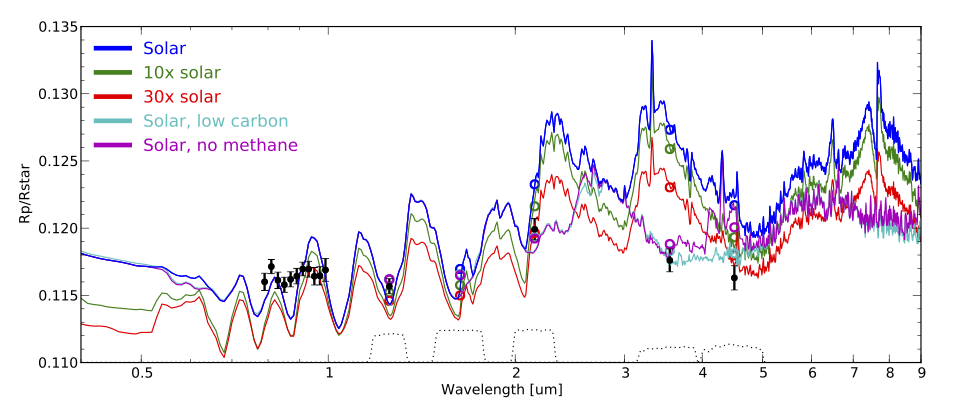
In this paper, the authors attempt to characterize the composition of the atmosphere of the super-Earth GJ 1214b.
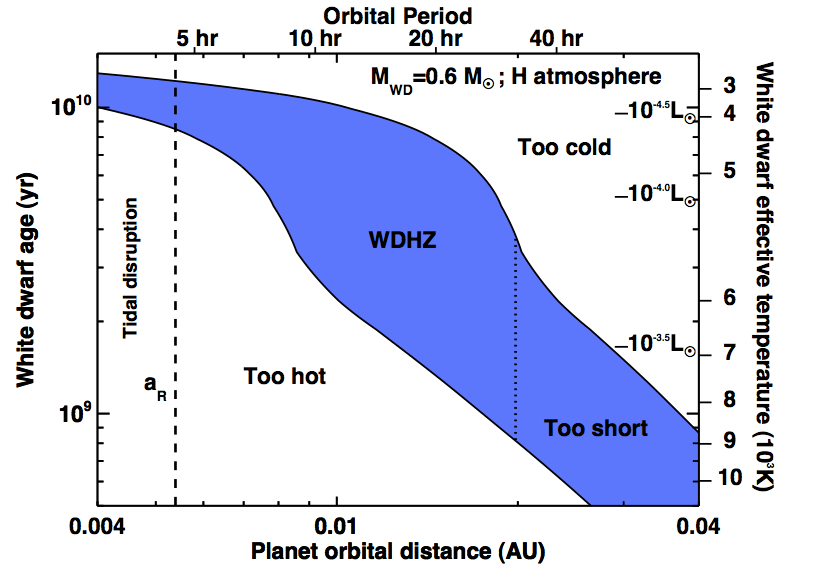
The Kepler mission is doing a fantastic job detecting planets around main sequence stars, but what about white dwarfs? Do they have planets? If they do, Agol 2011 suggests that those planets could be detected in ground-based transit surveys.