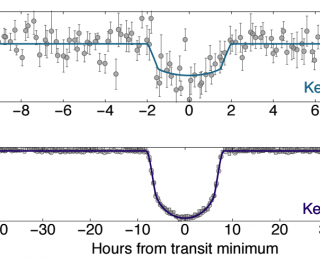
Kepler-167e: The 1st Validated Transiting Jupiter Analog
Look up in the sky. It’s a bird! No, it’s a background eclipsing binary! No, it’s Kepler-167e: the first transiting exoplanet that’s just like Jupiter!!!

Look up in the sky. It’s a bird! No, it’s a background eclipsing binary! No, it’s Kepler-167e: the first transiting exoplanet that’s just like Jupiter!!!

Using a laser we can carefully edit the telltale signs of the Earth’s presence, hiding ourselves away or announcing our presence to other life in the universe. But doing so may be fraught with unknowable consequences that we can never undo. Maybe it’s best to just stay behind the galactic sofa.
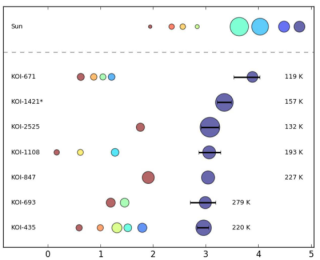
Could icy planets be evading detection, by hiding in the outer reaches of nearby solar systems? Careful re-examination of Kepler data reveals candidate long-period exoplanets.

Astronomers may have finally observed the event that explains polluted white dwarfs and their debris disks.

The third Extreme Solar System conference was held between Nov 29 to Dec 4th, in Kona, Hawaii, on the 20th anniversary of the first exoplanet detection around a main sequence star. This astrobite gives a brief overview of the conference.
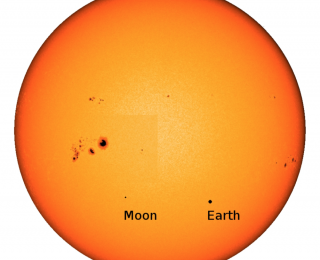
How do you observe an Earth transit, from Earth? You use some of the Solar System’s largest mirrors. The authors did. They found an anomaly.