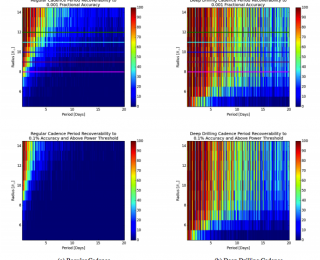
UR #17: Finding Transiting Planets With LSST
This month’s undergraduate research post features a student who looked at how well LSST will be able to detect transiting exoplanets. Read on to find out what she learned!

This month’s undergraduate research post features a student who looked at how well LSST will be able to detect transiting exoplanets. Read on to find out what she learned!
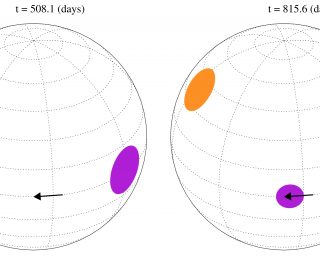
On using photometric data from Kepler to study starspots, and to measure differential rotation rates.
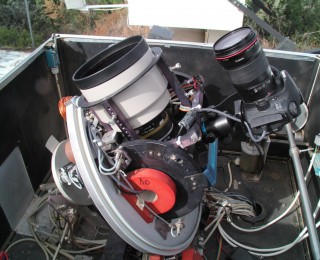
Do you own a digital single-lens reflex (DSLR) camera? The authors of today’s paper do. They used it for astronomy. They used it for science.
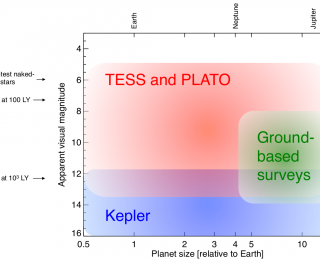
The exoplanet hunt is on. The stakes are high. What will our next-generation telescopes find?
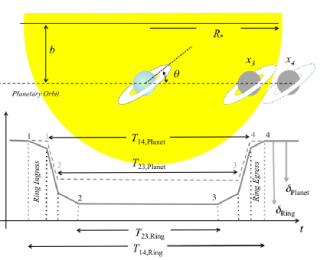
Planetary rings such as those around Saturn are fascinating features. Recent observations also reveal evidence for rings around exoplanets, but it’s a difficult task to distinguish these planets from ringless planets. This Astrobite presents a technique, which simplifies the search for candidates. Even better, the developed code is publicly available and allows you going out to look for candidates for exoplanetary rings.
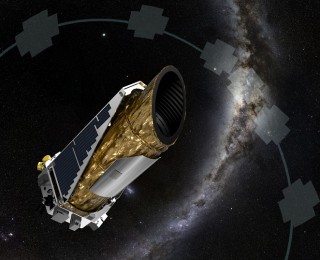
A new analysis technique, that fits simultaneously for light-curve systematics and transit signals, finds 36 planet candidates in the K2 dataset — Kepler is still in the game!