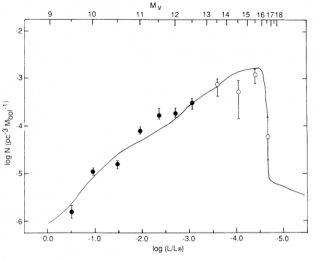
Astrophysical Classics: Cosmochronology with White Dwarfs
In today’s Astrophysical Classic, we hark back to 1987 and the introduction of a new method determining the age of the universe through the use of white dwarf stars.

In today’s Astrophysical Classic, we hark back to 1987 and the introduction of a new method determining the age of the universe through the use of white dwarf stars.
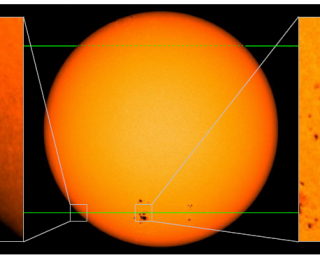
Kepler finds the signature of a transiting white dwarf. Instead blocking the light of its companion star, the white dwarf magnifies it, creating a light curve that periodically brightens.
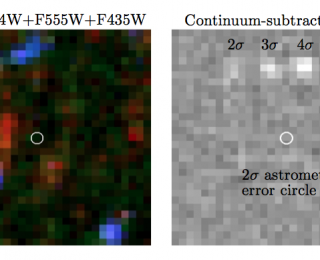
Archival data are able to place constraints on the origin of supernova 2011fe.
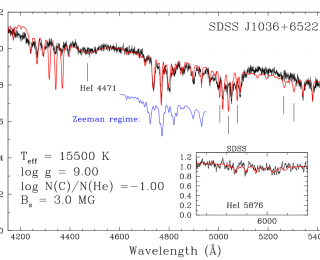
The authors present the discovery of a new hot carbon-atmosphere white dwarf with a strong magnetic field. This discovery might help illuminate the origins of a recently found class of white dwarfs.
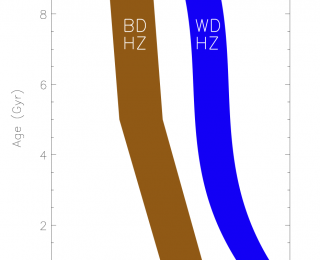
The holy grail for exoplanet science would be to find an inhabited planet. Not just habitable, but actually inhabited. But where are we most likely to find those planets? Only around Sun-like stars, or could life thrive around other types of stars? Could evolved stars like white dwarfs or neutron stars harbor life? Could brown dwarfs, the so-called failed stars, have inhabited planets?

A massive white dwarf accreting from a companion can lead to accretion induced collapse turning the white dwarf into a neutron star – how can such an event be observed?