
Featured Astrobites
Our latest posts
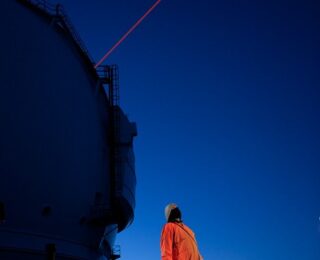
Book Review: The Last Stargazers
A book that pulls back the curtain on the real world of astronomy, filled with unexpected discoveries, behind-the-scenes stories, and the challenges that come with exploring the cosmos.
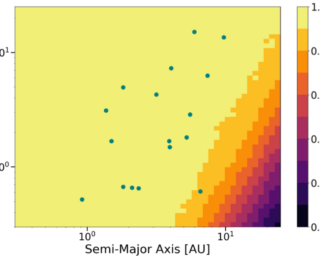
How Common are Solar Systems Like Our Own?
How common are systems like our own solar system? Do big and small planets often form together?
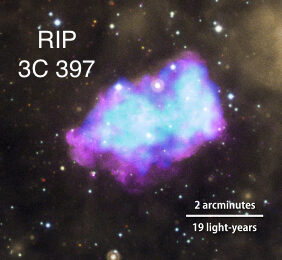
An Elegy to Supernova Remnant 3C 397: Simulating Stellar Death
3C 397, lost but not forgotten. Read today’s bite to find out about this galactic Type Ia supernova remnant’s cataclysmic demise.
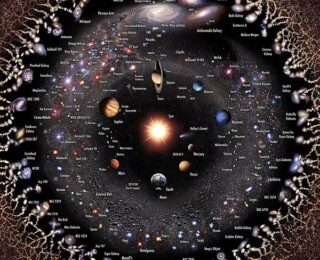
Mapping the Universe with galaxy motions from CosmicFlows-4
Today’s bite looks at using the motions of galaxies to tell us about structures in the local Universe.
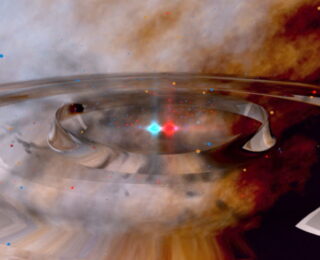
Source Needed: Could Signal Confusion Hurt Next-Gen Gravitational Wave Detectors?
Today’s paper takes a prospective look at possible concerns for future gravitational wave observations, and finds that perhaps no concern is needed.

How Ancient Chinese Solar Eclipse Records Helped to Determine the Earth’s Rotation Rate
Post-eclipse blues? Today’s paper uses solar eclipse observations made thousands of years ago to track how Earth’s rotation rate has slowed over time.
Beyond astro-ph
Astronomy beyond the research
Book Review: The Last Stargazers
A book that pulls back the curtain on the real world of astronomy, filled with unexpected discoveries, behind-the-scenes stories, and the challenges that come with exploring the cosmos.
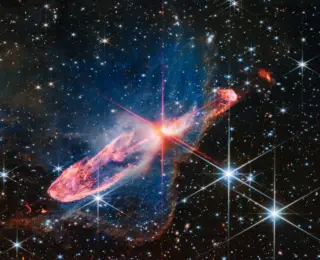
Astrobites at APS April 2024: Looking Ahead as We Look Far Through the JWST
Astrobites offers coverage of the Physical Review Invited Session: “Looking Ahead as we Look Far through the JWST.” #APSApril
Astrobites at April APS 2024: Day 4
We report on Day 4 of the 2024 April APS Meeting!
Navigating careers in astronomy
Career advice
The Rainbow Village at AAS: An Astrobites Recap
The Rainbow Village at AAS provided a gathering place for people of color in astronomy at the recent AAS meeting in New Orleans. Today’s post looks back at how things went, and where the concept will go in the future!
Meet the AAS Keynote Speakers: Dr. Karen Meech
Today we interview planetary astronomer Dr. Karen Meech from the Institute for Astronomy at the University of Hawaiʻi, for her Dannie Heineman Prize Lecture at #AAS243!
Meet the AAS Keynote Speakers: Professor Jamie Bock
Today we interview cosmologist Prof. Jamie Bock from Caltech/JPL for his Plenary Lecture at #AAS243!