
Beyond the galaxy: finding exoplanets with gravitational waves
Third-wheeling exoplanets outside our galaxy might be spotted with future gravitational-wave detectors.

Third-wheeling exoplanets outside our galaxy might be spotted with future gravitational-wave detectors.
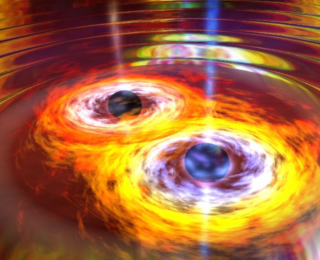
GW231123 defies our best models of stellar collapse, hosting two black holes that shouldn’t exist. A new paper proposes a radical solution: these monsters may have been born in the early universe as primordial black holes, quietly feeding for billions of years until they became the record-breakers we detected today.
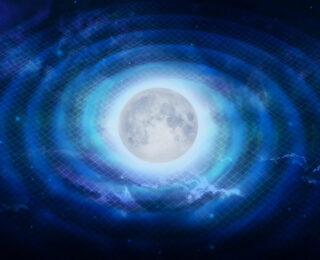
The authors of today’s bite explore how lunar mountains and crust can act as the perfect detector for detecting ripples in spacetime.
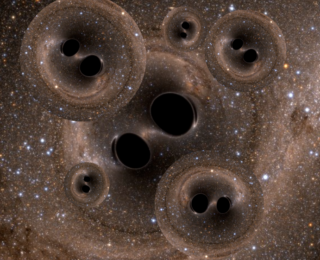
Did you know that many observed black holes theoretically shouldn’t exist? Today’s paper gathers gravitational wave evidence for how these impossible black holes might have formed.
Today we explore how Einstein Telescope might be the instrument to indirectly see (or hear..?) dark matter!
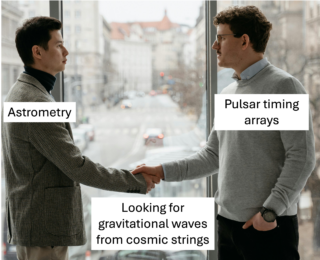
By measuring both the positions of stars and the times when pulsar pulses reach us, we might identify gravitational waves emitted by exotic processes right after the Big Bang.