• RSS
  • Submit a Guest Post
  • Undergraduates: Submit your Research!
  • Suggest a Paper Topic!
astrobites
  • About
    • About Astrobites
    • Meet the Authors
    • Statement of Inclusivity
    • Copyright & Permissions
  • Latest Research
    • Daily Paper Summaries
    • Classics
    • Undergrad Research
    • Physical Review Coverage
  • Beyond astro-ph
    • Beyond astro-ph Library
    • Interviews
    • Career Navigation
    • Personal Experiences
    • Current Events
    • Teaching with Astrobites
  • Guides
    • EM Spectrum
    • Galaxies & AGNs
    • Spectroscopy and Spectral Lines
    • Adaptive Optics
    • Gravitational Waves
    • Transient Astronomy
    • Astrophysical Software
    • Graduate School
    • Writing a personal statement for grad apps
    • First Observing Run
    • …More Guides!
Select Page
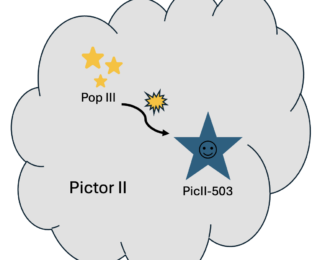
Found in our own Backyard: A Child of the First Stars?

Found in our own Backyard: A Child of the First Stars?

by Neev Shah | Mar 26, 2026 | Daily Paper Summaries

A direct descendant of the first stars! Read today’s bite to learn how the authors found it.

Spinning into the merging binary black hole family tree

Spinning into the merging binary black hole family tree

by Neev Shah | Nov 21, 2025 | Daily Paper Summaries

Do black holes have a family tree? Read more in today’s bite!
Bumpy road ahead: can binary interactions make supernovae periodically brighter?

Bumpy road ahead: can binary interactions make supernovae periodically brighter?

by Ryan White | Jul 23, 2025 | Daily Paper Summaries

Some supernovae have bumpy light curves – could a baby neutron star repeatedly diving into the envelope of its inflated companion be the cause? Today’s authors simulate this to find out!
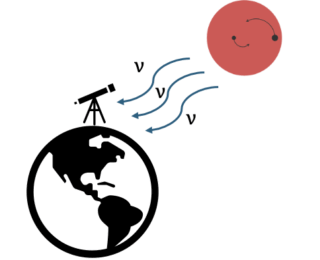
Keep your ν-eyes open: Messengers from a Common Envelope

Keep your ν-eyes open: Messengers from a Common Envelope

by Neev Shah | Jun 28, 2025 | Daily Paper Summaries, PRJ

Today’s bite explores how neutrinos might inform us about a neutron star being engulfed by another star!
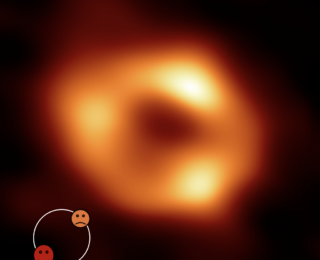
Sagittarius A* only eats half its lunch, but where does it come from?

Sagittarius A* only eats half its lunch, but where does it come from?

by Neev Shah | Apr 8, 2025 | Daily Paper Summaries

The Milky Way’s supermassive black hole may have been disrupting the lives of many binaries. Today’s bite explores where those binaries came from.
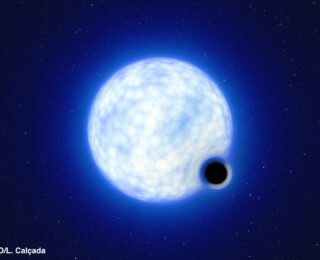
Rude Awakenings: Black Holes Might Get Kicked When They’re Born

Rude Awakenings: Black Holes Might Get Kicked When They’re Born

by Anavi Uppal | Feb 20, 2025 | Daily Paper Summaries

Most babies get lullabies, but some baby black holes might get strong kicks from their parent supernovae instead.

« Older Entries

Loading

Follow our socials

  • Bluesky
  • Facebook
  • Instagram
  • RSS Feed

More Posts About

AAS AGN astronomy astrophysics binary stars black holes cosmology dark matter dwarf galaxies exoplanets galaxies galaxy evolution gravitational waves habitability JWST Kepler Milky Way observations planetary science planet formation protoplanetary disks radio astronomy simulations solar system spectroscopy star formation stars stellar evolution supernovae theory

Posts by Category

  • Accessibility
  • Applications
  • Beyond
  • Book Reviews
  • Career Navigation
  • Classics
  • Climate Change
  • Course Assignments
  • Crossposts
  • Current Events
  • Daily Paper Summaries
  • Game Reviews
  • Guides
  • Historical Astronomy
  • Instrumentation
  • Interviews
  • Outreach
  • Personal Experiences
  • PRJ
  • Quick Notes
  • Satellites
  • Teaching
  • Undergraduate Research

More Astronomy

  • AAS
  • AAS Nova
  • astro-ph
  • AstroBetter
  • APOD

Read Astrobites in Other Languages

  • Astrobitos (Spanish)
  • Astropontos (Portuguese)
  • staryab (Farsi)

Listen to Astrobites

  • astro[sound]bites

Discover More Incredible Science

  • ScienceBites Network
  • RSS

© 2026 Astrobites | All Rights Reserved | Supported by AAS | Designed by Elegant Themes | Powered by WordPress