Know Thy Star, Know Thy Life
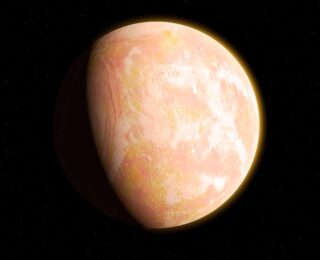
Today’s bite explores how life in Earth’s past could exist around the dimmest stars in the galaxy.

Today’s bite explores how life in Earth’s past could exist around the dimmest stars in the galaxy.
You’re probably used to seeing tabloids in the checkout aisle of the grocery store claiming all sorts of wild things. The scandals of life on Earth are abundant, and it seems like the rest of the solar system isn’t any different. Although you might not see their pictures on the front covers of any gossip magazines, Uranus and Neptune may not be what you think. Allegedly, these “ice giant” planets have a piping-hot secret that the authors of today’s paper are exposing.
![[Guest post] Excavating Exoplanets: How to Dust off Debris Disks Using a New High-Contrast Imaging Technique](https://astrobites.org/wp-content/uploads/2026/05/Screenshot-2026-06-01-at-10.50.56-AM-320x260.png)
What do astronomers and archaeologists have in common? Today’s guest author discusses how faint exoplanet signals are extracted from their noisy surroundings.
![[Guest] The Walking Dead: Warm Worlds Around Dead Stars](https://astrobites.org/wp-content/uploads/2026/06/IMG_8429-320x260.jpeg)
For today’s bite guest author, Savaria Parrish, explores the prospects for habitability on planets around a class of stellar remnants known as white dwarfs!
![[Guest post] The Secret Life of sub-Neptunes and super-Earths](https://astrobites.org/wp-content/uploads/2026/05/subneptune-320x260.png)
There’s a puzzling gap in the distribution of exoplanet sizes. Today’s paper explores the role of photoevaporation and core composition on the formation of the radius valley.
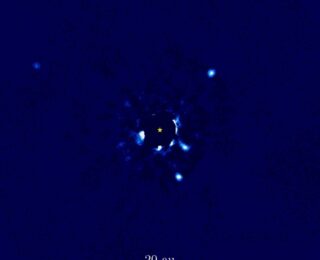
There’s a hard physical limit on spotting a planet next to its blinding star. However, it turns out today’s telescopes aren’t hitting it. New work maps out exactly how close in we could still detect the faint, Earth-like worlds we want to find the most.