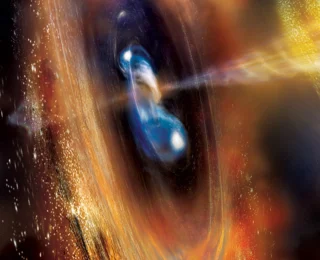
Don’t Like Your Neutrino Flavor? Transform It!
Neutron stars are some of the densest, most exotic objects in the universe. Today’s paper explores how simulating novel neutrino physics affects the outcome of neutron star mergers.

Neutron stars are some of the densest, most exotic objects in the universe. Today’s paper explores how simulating novel neutrino physics affects the outcome of neutron star mergers.
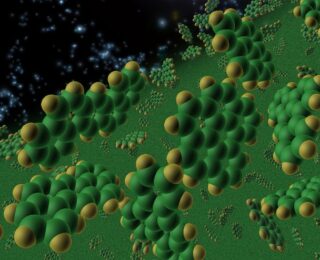
Polycyclic aromatic hydrocarbons (PAHs) are small molecules consisting of rings of carbons, ubiquitous in the interstellar medium. However, PAHs do not seem to be present in protoplanetary disks around the youngest stars. Today’s paper tries to understand why that is.
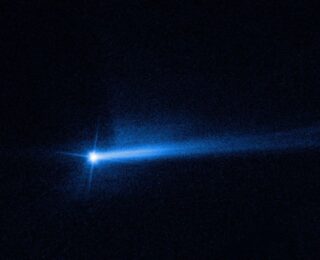
In 2022, NASA’s DART spacecraft crashed itself into an asteroid in a binary system. Today’s paper investigates the unexpected evolution of the binary’s orbit after the collision.
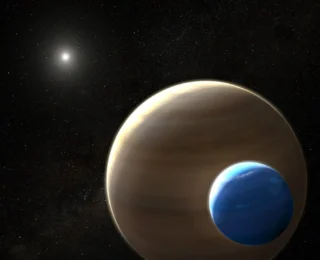
Though moons are ubiquitous in our Solar System, we have not yet found one elsewhere (an exomoon). Today’s paper investigates whether we could find moons by precisely tracking the positions of a star and planet.
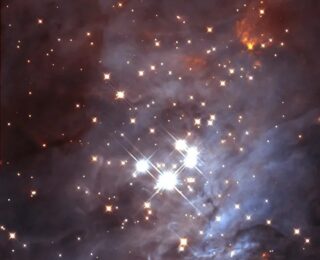
JWST’s discovery of free-floating binary planetary-mass objects came as quite a surprise and tests theories of planet formation. Today’s paper investigates whether dynamical encounters in dense star-forming regions could destroy such binary systems.