
Featured Astrobites
Our latest posts
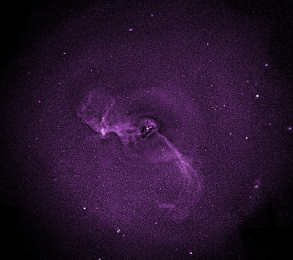
Whipping up a cluster ft. Radio-loud AGN
Read on to learn how radio observations are uncovering hidden AGNs and what this means for our understanding of protocluster evolution.
The Radcliffe Wave (Or How Space Might Have Caused An Ice Age)
Nearby in the Milky Way, the Radcliffe Wave hosts a dense concentration of dust, gas, and star clusters. And in the past few million years, the Sun might have passed right through it! But what effect did that have on our own Earth?
Seeding Life in the Oceans of Moons
Today’s paper explores the possibility of impacts delivering organics to the ocean worlds in our solar system.
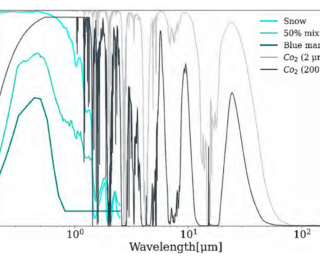
What Role Does Planet Orbital Eccentricity Play On Planet Habitability?
Where do Hot Sub-Neptunes Come From?!
Hidden Objects in our backyard? The First -ray emission measurement around several TeV by LHAASO
This study by the LHAASO Collaboration presents the first measurement of diffuse gamma-ray emissions in the 1–25 TeV range, revealing excess flux beyond theoretical predictions. The findings suggest hidden gamma-ray sources, such as pulsar wind nebulae or massive star clusters, and indicate spectral variations across the Galactic plane. These results challenge existing cosmic-ray transport models and highlight the need for further observations and refined theoretical frameworks.
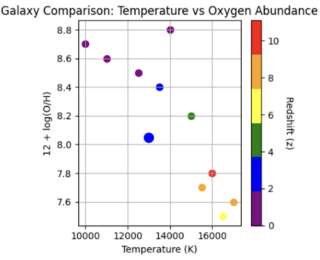
UR: SPECTRA Analysis of Early Universe Galaxies Using JWST Data
In the latest of our #UndergradResearch series, discover how Vidit Bhandari determined the physical conditions and chemical composition of galaxy Q2343-D40 using JWST.
Beyond astro-ph
Astronomy beyond the research
No Results Found
The page you requested could not be found. Try refining your search, or use the navigation above to locate the post.
Navigating careers in astronomy
Career advice
Alternative Careers: Leveraging your Astronomy Degree for Data Science
Astrobites reports on a recent Alternative Careers panel on Data Science jobs at the Wolbach Library. When asked why they decided to go into a non-academic career, none of the panelists said their primary reason was monetary or because of the tough job market in astronomy.
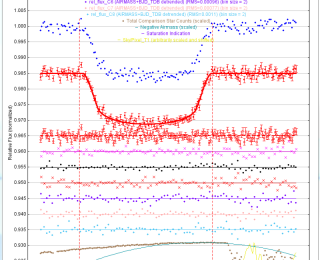
AstroImageJ: A Simple and Powerful Tool for Astronomical Image Analysis and Precise Photometry
So you went observing, and you got a time series of images for precise photometry and you want to plot a light curve. Now what? Where do you start? Right here, with AstroImageJ.
Taking the leap from engineering into astronomy
If you hold an engineering diploma and dream of exploring the universe, this Astrobite is for you: practical advice on how to take the leap into astronomy and astrophysics.