
Featured Astrobites
Our latest posts
Stars on the Move: New Insights from the Galactic Center
A curious cluster of stars is moving together near Sgr A*. Is it a stellar coincidence, or a sign of a hidden black hole?
Spotting the Black Sheep of Black Holes
There are monstrous black holes in the centers of most galaxies. Today’s bite dissects one of them and questions how it could have grown so quickly.

Radio Harps in the Galactic Center: A Laboratory for Cosmic-Ray Transport
Radio observations of the Galactic center reveal striking filaments of synchrotron emission, formed as cosmic ray (CR) electrons travel along magnetic fields. Researchers tested different CR transport models and found that a combination of diffusion and streaming best explains the observed filament structures. This study not only sheds light on how CRs move through space but also provides a new way to probe the magnetic environment of our galaxy.
Rude Awakenings: Black Holes Might Get Kicked When They’re Born
Most babies get lullabies, but some baby black holes might get strong kicks from their parent supernovae instead.

Did that supermassive black hole just rip apart a star, or is it just eating lunch like normal?
Read about how we can use radio astronomy to find tidal disruption events in galaxies!
A Dust Curve That Breaks the Mold
Today’s bite explores how JWST reveals a surprising dust curve in a distant galaxy, challenging what we know about cosmic dust!
Beyond astro-ph
Astronomy beyond the research
No Results Found
The page you requested could not be found. Try refining your search, or use the navigation above to locate the post.
Navigating careers in astronomy
Career advice
So You Want to Apply for an REU… Here’s How
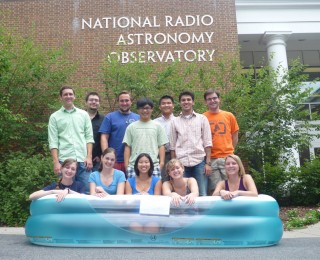
If you are a sophomore or junior undergraduate, you might be considering participating in the National Science Foundation’s Research Experience for Undergraduates program. We have some advice about how to apply for these programs and find the ideal summer research opportunity for you.
When Graduate School Isn’t in the Immediate Future
Many believe that if you care about astronomy there are few other options besides graduate school and ultimately academia. My hope for this post is to unseat that misconception and maybe alleviate some of the pain that comes with choosing an alternate course. Here, I focus on job opportunities that are available right after college. Some are stepping stones into graduate school while others are careers in themselves. I’ve talked extensively with people in each field, all of whom entered with only a bachelor’s degree and found themselves in a job they loved. In the end, there are more options than you might think!
What do we want graduate school to be?
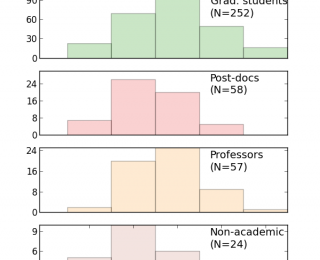
We present responses from more than 400 Astrobites readers to our survey regarding the letter that has been the subject of recent controversy. What do you think this says about the graduate student expereince?