
Featured Astrobites
Our latest posts
Meet the AAS Keynote Speakers: Dr. Dave Pooley
Today we interview Dr. Dave Pooley, professor at the Trinity University and one of this year’s #AAS245 Keynote speaker!
Meet the AAS Keynote Speakers: Dr Jason Kalirai
Today we interview Dr. Jason Kalirai, Mission Area Executive at the Johns Hopkins APL and one of this year’s #AAS245 Keynote speaker!
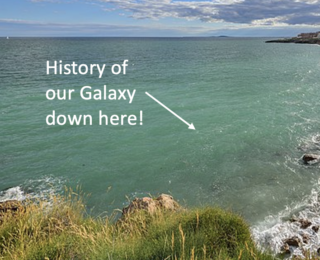
Digging up Our Galaxy’s History Under the Sea
What was happening in our Galaxy millions of years ago? The authors of today’s paper suggest we can find out from minerals under the sea here on Earth.
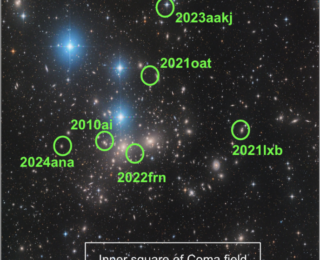
The Hubble Tension is Still Tense
Today’s authors make a high-precision measurement to address a key issue in modern cosmology: the Hubble tension. Read on to see what they found!
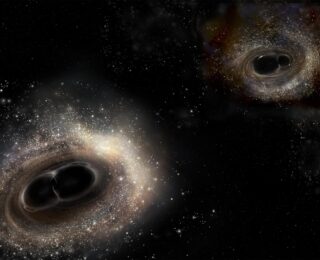
Giving Justice to Intermediate Mass Black Hole Mergers!
How can we find the gravitational waves that form when an IMBH and SMBH merge? Read ahead to find out how we can prepare to detect these supposedly common mergers using LISA!
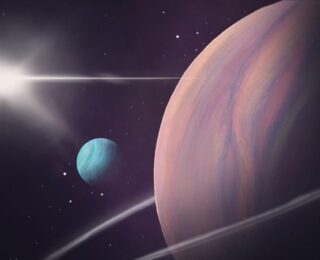
Smoons, Ploonets, and Circumbinary Planets, Oh My!
Every exomoon deserves the chance to fly!
Beyond astro-ph
Astronomy beyond the research
No Results Found
The page you requested could not be found. Try refining your search, or use the navigation above to locate the post.
Navigating careers in astronomy
Career advice

Applying to Graduate School Part I: Preparing to Apply
It’s that time of year! For those of you thinking about grad school, check out how you might prepare yourself for the application process and narrow down your list of schools.
Q&A with John Johnson: What should you do in graduate school?
We again have the pleasure of having John Johnson write today on astrobites. We were curious to get his opinion on several topics; in this first post, he’ll answer our questions about life in graduate school. We asked what he wished he’d known going into graduate school, how he balanced work and life, and what he did in grad school that he thinks were beneficial later on.
Careers, Like Space Missions, are Tricky: How a Master’s Degree Can Help
At the same time that many in the astronomy community are scrambling to save the James Webb Space Telescope, young astronomers may be just as antsy about their own futures. Some students choose a terminal Master’s degree as a means to better compete in the Ph.D. applicant pool, to qualify for teaching credentials that require a master’s degree, to find positions at research facilities, museums, planetariums, and science publications … or just ‘test the water’ in a graduate school environment.