
Featured Astrobites
Our latest posts
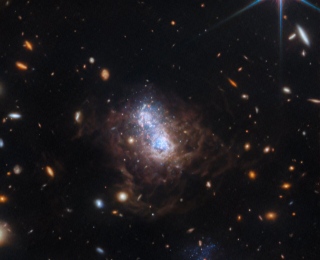
Blast from the Past: Determining a Distance to I Zwicky 18
Take a walk down memory lane with I Zwicky 18, which could be the key to unlocking the secrets of the early universe.

Two satellite proposals threaten dark and quiet skies worldwide
Giant mirrors in space to create sunlight at night and an AI data center made up of 1-million satellites are undergoing regulatory approval. How did we get here?
Caught Doping: Going to Extreme Measures to Detect Ultraviolet Photons
No, it’s not illegal! Astronomers have developed a technique called delta-doping to make detectors that are much better at detecting ultraviolet light.
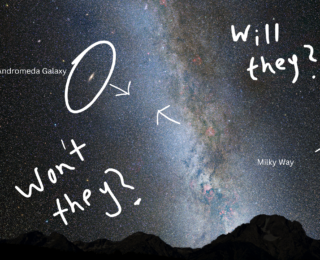
Shaken and Stirred: Putting the Local Group on a weighing scale.
The “timing argument” overestimates the total mass of the local group by oversimplifying it to a two body problem, a new study explore how the complex merger history of objects in the group affect its mass estimates.
Stay tuned to Radio YZ Ceti: Isn’t that a magnetic conversation between star and planet?
Astronomers have tuned their radio telescopes to YZ Ceti, and it might be crackling with a magnetic conversation of a star and its planet. Is this a breakthrough detection, or just stellar noise playing tricks on us?
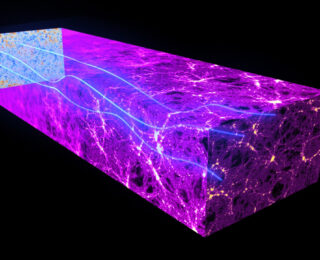
Observing the Universe’s Teenage Angst with Dropout Galaxies and CMB Lensing
In today’s bite, we explore a new method for studying how structure grows during the Universe’s formative teenage years, using rebellious dropout galaxies and peer-pressured CMB photons.
Beyond astro-ph
Astronomy beyond the research

NASA Needs Your Help!
NASA is facing severe budget cuts that would cancel missions ready to be launched, put tens of thousands out of a job, and set science back decades. We need your help to ask congress to prevent these cuts!
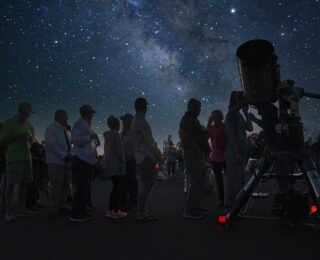
How can we build trust in science?
Fostering public trust in science is essential for creating a stronger and more informed global society. As researchers and communicators, what can we do to help build this trust?
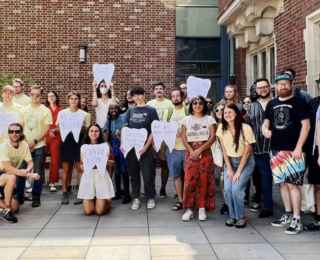
So, you want to be a graduate student activist.
Are you a graduate student interested in making your astronomy department or university a better place to grad school? Today, one of our authors shares his advice about how to make positive change from his experiences this past year as a Graduate Student Council President.
Navigating careers in astronomy
Career advice
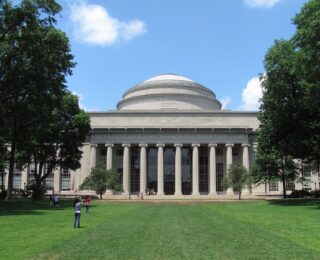
MIT PhysGAAP: Here to help with your physics graduate school application
MIT’s PhysGAAP Program pairs PhD applicants with grad student mentors, and provides resources for navigating the grad school application process. Apply by Nov. 11th!
Interested in science policy? Check out the Mirzayan Policy Graduate Fellowship!
Guest author Alex Belles tells us about his experiences in science policy as a grad student in NASEM’s Mirzayan Policy Fellowship program
A guide to applying to astro postdocs. Part 2: The application process
In Part 2 of this 2-part guide to applying to astro/physics postdocs, a few Astrobites authors share tips on applying to postdoc opportunities, based on their own personal experience.