
Featured Astrobites
Our latest posts

More Than a Name – Why Women in Physics Deserve Context
Why should we give more context to the incredible contributions to STEM by exceptional women? And do you need to be exceptional to be successful? Find out in this interview with Dr Claire Davies!
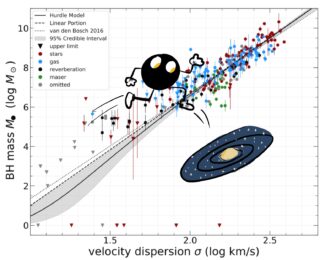
Jumping through hoops: A new way to explore the BH-galaxy connection
The BH-galaxy relations are crucial in our understanding of how they co-evolve. In today’s paper find out a new method to explore this relation.
Chapter 7 Summary Part 2: Energy Solutions by Rector and Yu, Climate Change for Astronomers
This post summarizes the second half of Chapter 7 of the book ‘Climate Change for Astronomers’, involving a discussion of energy sources available to us in the present, and the future, in order to understand the way forward for solutions to climate change. It also discusses how various solutions can be combined, how energy usage can be made more efficient, and how we can move towards creating a smarter and greener energy infrastructure.
A Story of Starlight and Spirals in the Milky Way
New simulations of Milky Way-like galaxies, named after a Greek goddess.
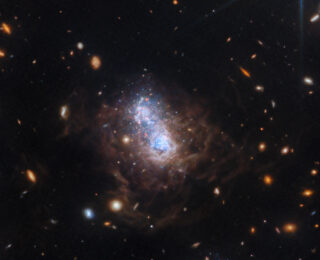
Echoes of the First Light: A Mysterious Metal-Poor Galaxy at Cosmic Dawn
A tiny galaxy, barely metal-enriched, is packed with massive stars. Could it hold clues to the universe’s first stars?
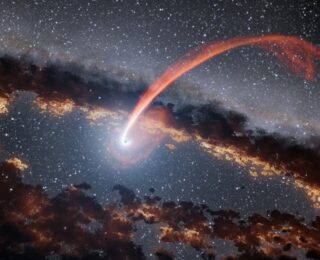
Exploring the remains of a destroyed (death) star
Today’s paper explores the potential connection between two transient astronomical phenomenon: Tidal disruption events and extreme coronal line emitters.
Beyond astro-ph
Astronomy beyond the research
No Results Found
The page you requested could not be found. Try refining your search, or use the navigation above to locate the post.
Navigating careers in astronomy
Career advice
Interested in Exoplanets? Astrobiology? Apply now for ERES & AbGradCon2015
Calling undergrads, graduate students and early career scientists interested in exoplanet studies and/or astrobiology to apply for the Emerging Researchers in Exoplanet Science Symposium and/or the Astrobiology Graduate Conference.
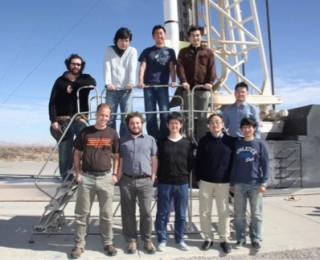
Taking a Gap Year – Part 1
In the first of a series of posts, several of our Astrobiters talk about their experiences taking a year off to do research before starting graduate school.
Applying to grad school in the US: a timeline
I find that thinking about major undertakings and not knowing where to start can be extremely stressful. How am I supposed to know to be on top of something if I don’t even know I’m supposed to do it? In my experience, and maybe in yours as well, applying to grad school can be like that. This timeline is supposed to be a general outline for applying to astronomy graduate schools in the US generally from the perspective of a US-based student.