
Featured Astrobites
Our latest posts
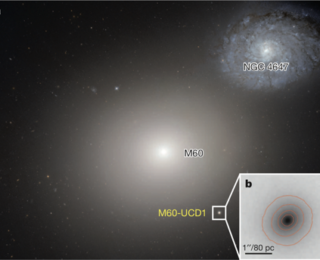
Small, but Mighty! A galaxy robbed of its stars but contains a supermassive secret.
Today’s paper explores a rather interesting galaxy which seems to have a black hole much more massive than expected, and whether it’s next-door neighbour had anything to do with it…!
Satellites of satellites should exist. Let’s go look for them.
Today’s paper makes predictions for the yet-to-be-observed dwarf galaxy population around Andromeda’s satellite galaxy, M33. It provides scientific justification for a future mission with WFIRST.
Forecast calls for clear skies on WASP-96b
A cloud-free world offers the clearest view yet of an exoplanet atmosphere.
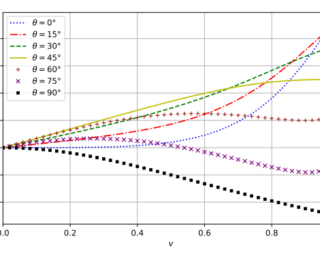
Observational consequences of the beaming effect for gravitational waves
Title: Detecting the Beaming Effect of Gravitational WavesAuthors: Alejandro Torres-Orjuela, Xian Chen, Zhoujian Cao, and Pau Amaro-SeoaneFirst Author’s Institution: Kavli Institute for Astronomy and Astrophysics at Peking University, Beijing, ChinaStatus: Published in Phys Rev D, open access The direct detection of compact binary mergers like binary black hole and binary neutron star systems via their gravitational radiation have come via decades of development in inteferometric detector technology and data analysis techniques. One of the most important components to the success of the enterprise has been the breakthrough achievements in numerical relativity, which is necessary to reproduce the inspiral, merger, and ringdown gravitational waveforms produced in compact binary mergers and produce template waveform banks for comparison with the data. However, these numerical relativity simulations are computationally expensive, which limits template banks to use component masses and spins of the compact objects, instead of a larger battery of parameters. The authors of today’s paper argue that another component, the velocity of the source relative to the observer (us), can have a substantial impact on the inferred gravitational wave amplitude. The Doppler shift induced by the component of relative motion towards or away from the observer is well known. A less known phenomenon, though well studied for the electromagnetic case, is the beaming effect. The beaming effect, also known as doppler boosting or the headlight effect, describes a scenario wherein the relative motion of a source can induce a change in the apparent luminosity of its radiation. For the case of gravitational radiation the analogous effect is a deviation in the apparent (observed) amplitude of the gravitational wave relative to the intrinsic…
New Authors for 2019!
A huge welcome to the new authors joining our team for 2019.
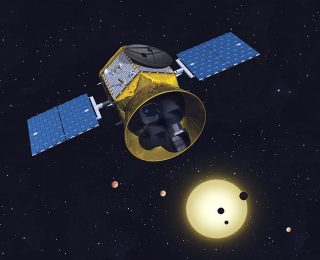
How to find exoplanets and ‘listen’ to their stars with TESS
Today’s post investigates how multitasking TESS is not only detecting exoplanets, but allowing us to find out more about their stars.
Beyond astro-ph
Astronomy beyond the research
No Results Found
The page you requested could not be found. Try refining your search, or use the navigation above to locate the post.
Navigating careers in astronomy
Career advice
No Results Found
The page you requested could not be found. Try refining your search, or use the navigation above to locate the post.
More posts by category