
Featured Astrobites
Our latest posts

Transgender in Astronomy: Interview with Wichahpi King
For Pride Month, Astrobites is interviewing one transgender astronomer every week. This week we interviewed Wichahpi King, a PhD student at the University of Texas at Austin!
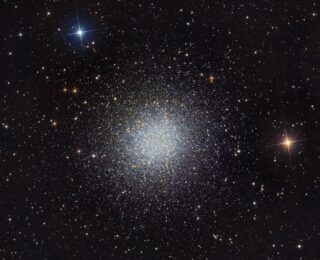
From Globs to Gravitational Waves: A Simulated Cosmic Choreography
Astronomy is all about the complex interactions between celestial objects. Today’s authors explore how we might be able to observe signals from intermediate mass black holes and objects from the globular clusters in which they might reside.

#BlackInAstro Experiences: Logan White
As part of Black Space Week 2025, we interview incoming graduate student Logan White!
#BlackInAstro Experiences: Phoenix-Avery Sarian
In today’s #BlackInAstro Experiences post, we sit down with Phoenix-Avery Sarian from The Ohio State University to talk about her experiences as an astronomer so far.
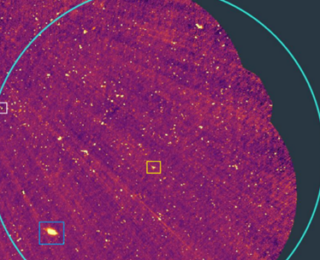
Ultra-high energy neutrino emission on the extragalactic express: A mystery
In today’s paper, our authors investigate three galaxies in the radio to determine where an ultra high-energy neutrino came from.
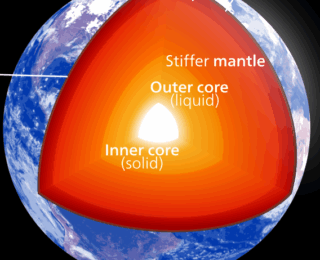
A dark matter journey to the centre of the Earth
In today’s paper, we take a journey to the Earth’s core, and learn how seismic data can help put constraints on the properties on dark matter particles.
Beyond astro-ph
Astronomy beyond the research
No Results Found
The page you requested could not be found. Try refining your search, or use the navigation above to locate the post.
Navigating careers in astronomy
Career advice

Meet the AAS Keynote Speakers: Debra Fischer
Most of the known exoplanets resemble “hot Jupiters” because they’re bigger and easier to find. But how can we find Earth-like planets? Check out Dr. Debra Fischer’s plenary talk at #AAS232 to learn more about the “Past, Present, and Future” of exoplanet science.
Meet the AAS Keynote Speakers: Enrico Ramirez-Ruiz
As Carl Sagan said, “If you wish to make apple pie from scratch, you must first invent the universe.” More specifically, to make some neutron-rich elements like gold and uranium, you need neutron star mergers. Check out Professor Enrico Ramirez-Ruiz’s upcoming #AAS232 talk to learn more about what it takes to make the heaviest elements in the universe.
LGBT+ Inclusivity in Astronomy
How can we make astronomy as a field more inclusive for LGBT+ folks? Read on to learn about recommendations that we can all act on!