
Guest: Fast and Curious: Rotation of Blue Straggler Stars in NGC 1851
What are blue straggler stars and how are they formed? By using spectroscopy, today’s authors explain the link between this question and how fast these objects spin!

What are blue straggler stars and how are they formed? By using spectroscopy, today’s authors explain the link between this question and how fast these objects spin!

The lowest mass stars have been well-studied across the mid and high frequency radio bands. However, lower frequencies can reveal larger-scale magnetic structures and may even be the key to the first direct radio detection of an exoplanet. Learn about the first detection of a low-mass ultracool dwarf–one or both stars in a binary system–at the low frequency of 340 MHz!
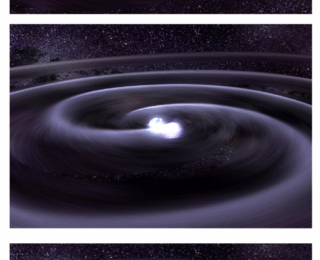
Half of all stars are in binaries. Stars that end their lives as the most massive white dwarfs often also have another distant star orbiting an inner binary. Could these tertiary stars play a role in merging the inner binaries into remnant objects that emit fast radio bursts?
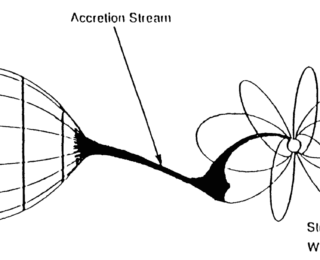
We’ve known about pulsars for more than fifty years, but what about other kinds of repeating radio sources? Learn how this white dwarf binary might be the first peek into a new class of radio lighthouses!

Follow along as we zoom through the stars with these hypervelocity stellar survivors and uncover their explosive origins.
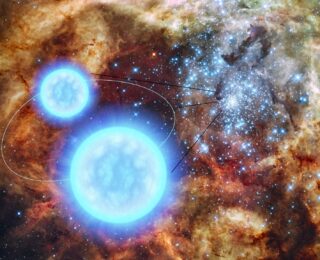
What kind of event is violent enough to fling around stars that are hundreds of times more massive than our Sun? Find out today!