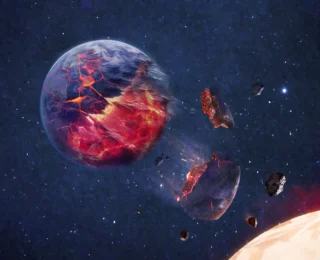
Cosmic Cannibalism: When Stars Eat Their Planets
Some stars hide a strange ingredient in their atmospheres: the remains of a planet they devoured. It turns out to be more common than expected.

Some stars hide a strange ingredient in their atmospheres: the remains of a planet they devoured. It turns out to be more common than expected.
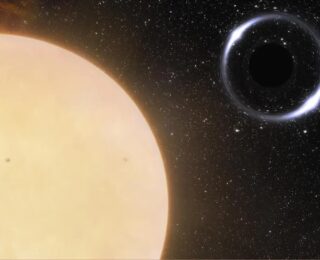
Today’s bite explores exoplanets’ newest predator: dark matter. Black holes made up of dark matter may be lying at the hearts of planets…and eating them from the inside out.

The Fomalhaut debris disk is well-studied, but new analysis suggests that there may be a hidden planet we haven’t seen…
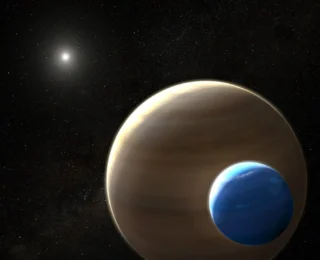
Though moons are ubiquitous in our Solar System, we have not yet found one elsewhere (an exomoon). Today’s paper investigates whether we could find moons by precisely tracking the positions of a star and planet.
Nearby in the Milky Way, the Radcliffe Wave hosts a dense concentration of dust, gas, and star clusters. And in the past few million years, the Sun might have passed right through it! But what effect did that have on our own Earth?
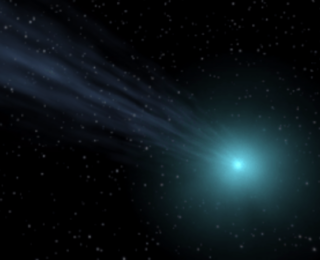
Today’s bite tells the story of BD+054868 Ab, a rocky exoplanet that is being vaporised for getting too close to its host star.