• RSS
  • Submit a Guest Post
  • Undergraduates: Submit your Research!
  • Suggest a Paper Topic!
astrobites
  • About
    • About Astrobites
    • Meet the Authors
    • Statement of Inclusivity
    • Copyright & Permissions
  • Latest Research
    • Daily Paper Summaries
    • Classics
    • Undergrad Research
    • Physical Review Coverage
  • Beyond astro-ph
    • Beyond astro-ph Library
    • Interviews
    • Career Navigation
    • Personal Experiences
    • Current Events
    • Teaching with Astrobites
  • Guides
    • EM Spectrum
    • Galaxies & AGNs
    • Spectroscopy and Spectral Lines
    • Adaptive Optics
    • Gravitational Waves
    • Transient Astronomy
    • Astrophysical Software
    • Graduate School
    • Writing a personal statement for grad apps
    • First Observing Run
    • …More Guides!
Select Page
UR: Data-Driven Analysis of Galactical Evolution

UR: Data-Driven Analysis of Galactical Evolution

by Guest | Dec 9, 2025 | Undergraduate Research

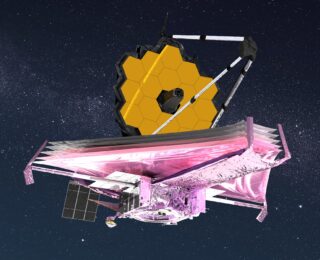
In the latest of our #UndergradResearch series, discover how to estimate the metallicities of early galaxies using line ratios from JWST with Vidit Bhandari.

A Week Down Under, Unifying Theorists and Observers of the High-Redshift Universe

A Week Down Under, Unifying Theorists and Observers of the High-Redshift Universe

by Guest | Nov 8, 2025 | Current Events

Today’s bite comes to your screen direct from the “Exploring the first billion years of the Universe” conference in Australia. Read on to find out what we’ve already discovered about the early Universe, and what’s still to come.
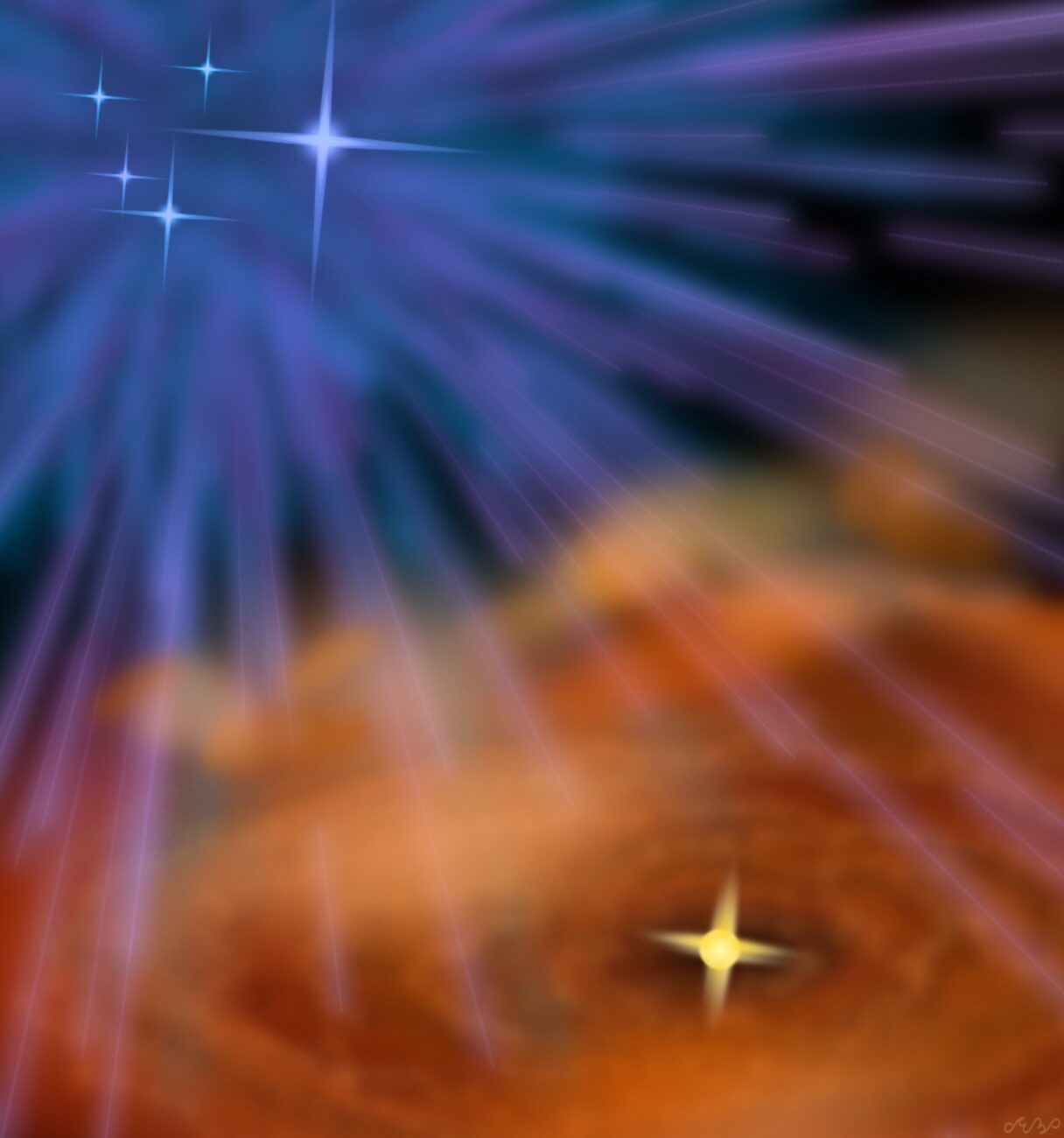
Forming Giant Planets? Your Stellar Neighbors’ UV Light Could Be a Problem.

Forming Giant Planets? Your Stellar Neighbors’ UV Light Could Be a Problem.

by Guest | Nov 1, 2025 | Daily Paper Summaries

In today’s post, guest author Matheus Bernini Peron explains how UV radiation from neighboring stars can hamper giant planet formation.
Black Holes as Quantum Heat Engines: Extracting Work from Hawking Radiation and Probing the Information Paradox 

Black Holes as Quantum Heat Engines: Extracting Work from Hawking Radiation and Probing the Information Paradox 

by Guest | Sep 17, 2025 | Undergraduate Research

In the latest of our #UndergradResearch series, discover how Begum Kutuklu models Schwarzschild black holes as quantum heat engines, offering new insights into the information paradox through thermodynamic analyses.

Dispu-tau-ble: When the Fog of Reionization Lifts, Mysteries Deepen

Dispu-tau-ble: When the Fog of Reionization Lifts, Mysteries Deepen

by Guest, Ben Sherwin | Sep 16, 2025 | Daily Paper Summaries

In today’s guest post, we explore if a small change in how we model the early universe could help solve issues in our understanding of dark energy and neutrinos.

« Older Entries
Next Entries »

Loading

Follow our socials

  • Bluesky
  • Facebook
  • Instagram
  • RSS Feed

More Posts About

AAS AGN astronomy astrophysics binary stars black holes cosmology dark matter dwarf galaxies exoplanets galaxies galaxy evolution gravitational waves habitability JWST Kepler Milky Way observations planetary science planet formation protoplanetary disks radio astronomy simulations solar system spectroscopy star formation stars stellar evolution supernovae theory

Posts by Category

  • Accessibility
  • Applications
  • Beyond
  • Book Reviews
  • Career Navigation
  • Classics
  • Climate Change
  • Course Assignments
  • Crossposts
  • Current Events
  • Daily Paper Summaries
  • Game Reviews
  • Guides
  • Historical Astronomy
  • Instrumentation
  • Interviews
  • Outreach
  • Personal Experiences
  • PRJ
  • Quick Notes
  • Satellites
  • Teaching
  • Undergraduate Research

More Astronomy

  • AAS
  • AAS Nova
  • astro-ph
  • AstroBetter
  • APOD

Read Astrobites in Other Languages

  • Astrobitos (Spanish)
  • Astropontos (Portuguese)
  • staryab (Farsi)

Listen to Astrobites

  • astro[sound]bites

Discover More Incredible Science

  • ScienceBites Network
  • RSS

© 2026 Astrobites | All Rights Reserved | Supported by AAS | Designed by Elegant Themes | Powered by WordPress