
Featured Astrobites
Our latest posts

Live fast die immediately – spinning black holes in collapsars
Core collapse supernovae sometimes lead to spinning black holes and gamma ray bursts. In this astrobite, we explore the results of a recent simulation of these “collapsar” systems to understand the impact of neutrino cooling on the black hole spin and subsequent gamma ray bursts.

What to watch when the stars are behind clouds
In need of inspiration for astronomy videos to watch? Look no further! We have gathered a list of some of the greatest YouTube communicators out there.

Piecing Together Humanity’s Astrophysical Ancestry
What have we learned from the space probes that visited asteroids Itokawa, Ryugu, and Bennu? Quite a lot about the early, forming Solar System – which might include some prehistoric biology…

Guest: A Wandering Massive Black Hole
Tidal disruption events can happen when stars are torn apart by a supermassive black hole at the centre of a galaxy. Guest author, Mary Ogborn, explains how tidal disruption events can help us see when supermassive black holes wander away from their galaxy’s centre.

Escaping the Icarian fate: a surprisingly thick atmosphere on the ultrahot super-Earth TOI-561 b
Whether you are already a fan of Greek mythology or someone who only vaguely remembers Icarus from a long-forgotten school lesson, today’s Astrobite will show you that flying too close to the Sun (and its consequences) is more than a myth when it comes to extremely hot exoplanets.

Did Life Begin from Space Dust on Glaciers?
What if the ingredients for life did not bubble up from a pond or vent, but fell from space as dust? A new paper suggests ancient glaciers may have collected this cosmic dust, concentrated it, and helped kick-start prebiotic chemistry.
Beyond astro-ph
Astronomy beyond the research

Meet the AAS Keynote Speakers: Dr. Adam Burgasser
Today we interview Dr. Adam Burgasser, professor of astronomy and astrophysics at the University of California San Diego (UCSD), and a plenary speaker at #AAS247
Meet the AAS Keynote Speakers: Dr. Daniella DellaGiustina
Today we interview Dr. Daniella DellaGiustina, professor at the University of Arizona, Deputy Principal Investigator of the OSIRIS-REx sample return mission, and the Fred Kavli Plenary Lecturer at #AAS247
Meet the AAS Keynote Speakers: Dr James Binney
Today we interview Dr. James Binney, a faculty at Oxford University, and a plenary speaker at #AAS247
Navigating careers in astronomy
Career advice
The Rainbow Village at AAS: Junellie Gonzalez Quiles and the League of Underrepresented Minoritized Astronomers
Astrobites interviews Junellie Gonzalez Quiles, the Coordinator for the League of Underrepresented Minoritized Astronomers!

The Rainbow Village at AAS: Ashley Walker and Black in Astro
Today’s bite is an interview with Ashley Walker, Black in Astro president and co-organizer of the Rainbow Villaige at #AAS243!
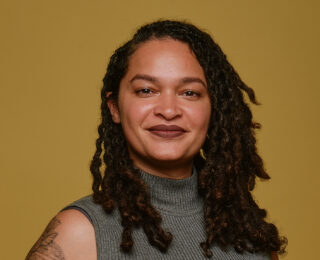
The Rainbow Village at AAS: Dr. Arianna Long and VanguardSTEM
Today’s article showcases Dr. Arianna Long, one of the organizers of the Rainbow Village at AAS, a new gathering place for people of color in astronomy!