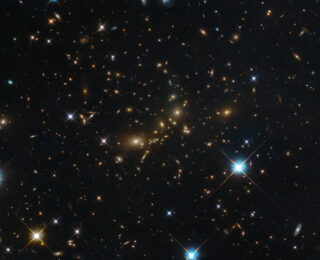
Hunting for stellar splashback: defining the size of a galaxy cluster
How big is a galaxy cluster? Today’s authors use the remnants of destroyed galaxies to define the edge of galaxy clusters.

How big is a galaxy cluster? Today’s authors use the remnants of destroyed galaxies to define the edge of galaxy clusters.
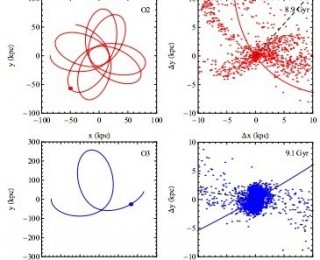
A phenomenological series of simulations of dwarf galaxies placed on different orbits around a Milky Way-like galaxy, in order to learn about the properties (and observability) of tidal tails in dwarf galaxies around our Milky Way.
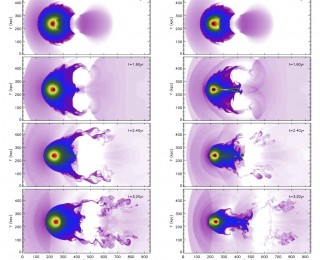
Most simulations to date have implied that satellite galaxies traveling through galaxy clusters are stripped of gas for future star formation in a process known as “strangulation”. In contrast, the authors of this paper suggest that satellite galaxies may not be as cut off as some might think: instead, their simulations show that the cooler, stripped gas from the corona will mix with the surrounding intra-cluster medium and remain near the original galaxy as a potential new source of star-forming fuel.
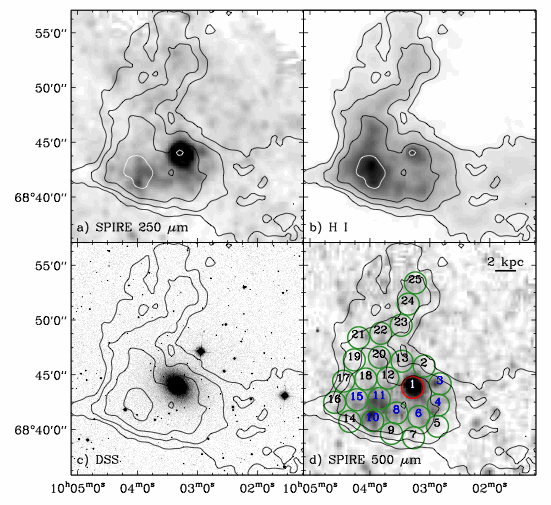
The interacting galaxies in the M 81 triplet are interconnected by tidal features. In this work, the authors study dust in the NGC 3077 tidal stream and discuss its implications.