
by Shannon Hall | Nov 21, 2011 | Career Navigation
NASA is currently hiring a new team of astronauts. Presented here are the logistics concerning the application process and the training.
by Kim Phifer | Nov 20, 2011 | Daily Paper Summaries
Title: Fermi Detectiqon of a Luminous γ–ray Pulsar in a Globular Cluster Authors: The Fermi LAT Collaboration Principle Investigator: Dr. Peter Michelson, Stanford UniversityThe Fermi Large Area Telescope, which was launched in 2008, is a gamma ray space telescope which can observe high-energy photons with energies ranging between 20 MeV and 300 GeV. These photons are emitted by particles nearing the speed of light! The Large Area Telescope (LAT) is true to its name, and can observe around 20% of the sky at a time. It scans the sky continuously, observing the entire sky every 3 hours. This all sky gamma-ray survey has already had many exciting results. It observed the GRB 080916C, the most energetic outburst ever seen (see Susanna’s post to learn more about gamma-ray bursts), discovered a link between supernovae remnants and cosmic rays, found out that most of the gamma-ray background does not arise from active galactic nuclei as was previously suspected, and it discovered Fermi bubbles, completely new (or at least previously unseen) substructures emerging from the Galactic center. In addition to all of this, Fermi LAT has proven fantastic tool for the discovery of pulsars.Pulsars form during some type II supernovae events, and are spun up to high rotation speeds by some “kick” due to collapse or explosion asymmetries. They are also highly magnetized, and thus emit periodic synchrotron radiation in two beams. For a more in depth discussion of the observables of pulsars, see this astrobite. The first pulsar discovered, at the heart of the Crab Nebula, was initially observed in radio wavelengths. This was quite a discovery, so much so that...
by Astrobites | Nov 20, 2011 | Undergraduate Research
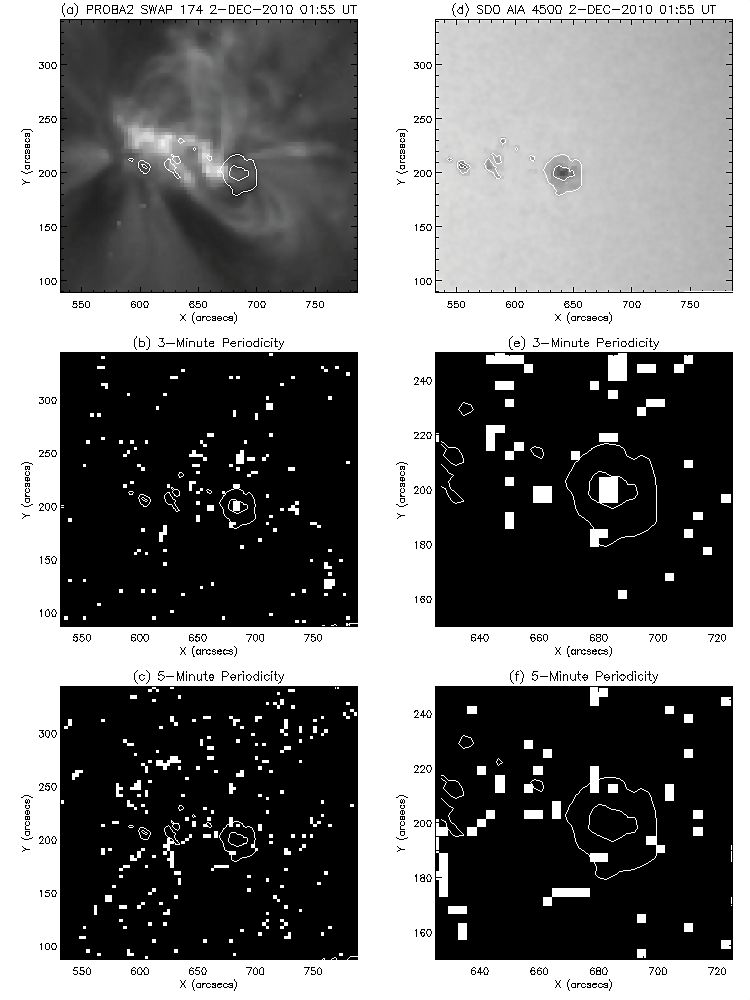
This month’s undergrad research installment features modeling of galaxy redshift distribution and a study of oscillations in the solar corona.
by Susanna Kohler | Nov 18, 2011 | Daily Paper Summaries
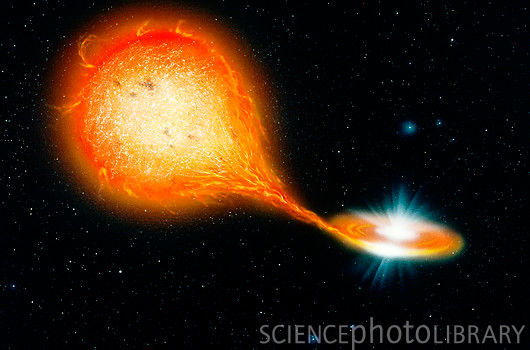
This paper presents the first evidence of two distinct populations of pulsars, which the authors speculate stem from a difference in how they are formed.
by Allison Strom | Nov 18, 2011 | Daily Paper Summaries
Modica et al. and the GOALS team use multiwavelength observations to investigate star formation and nuclear activity in a nearby luminous infrared galaxy.
