
This week is #BlackSpaceWeek: Black In Astro’s annual event dedicated to celebrating and amplifying Black excellence in space-related fields. In 2025, the specific theme of the week is “Weaving the Universe Together” and events include virtual mixers, policy panels, storytelling sessions, and more. Read on to learn how rising University of Arizona NSF and GEM Fellow Logan White weaves astronomy and art together in a cosmic dance, and follow the thread connecting the patchwork of community here.

Growing up in North Carolina, from a young age, Logan White set her sights on two goals: she wanted to be a ballerina and an astronaut. When she told me this, I was surprised — “surely you mean ‘or’?,” I thought. No, she hadn’t misspoken. In fact, those goals were not just pipe dreams born out of childhood excitement; over the next few decades, in what I came to learn is a common theme in Logan’s story, she wholeheartedly committed herself to both careers and has found a number of parallels between the two disciplines along the way.
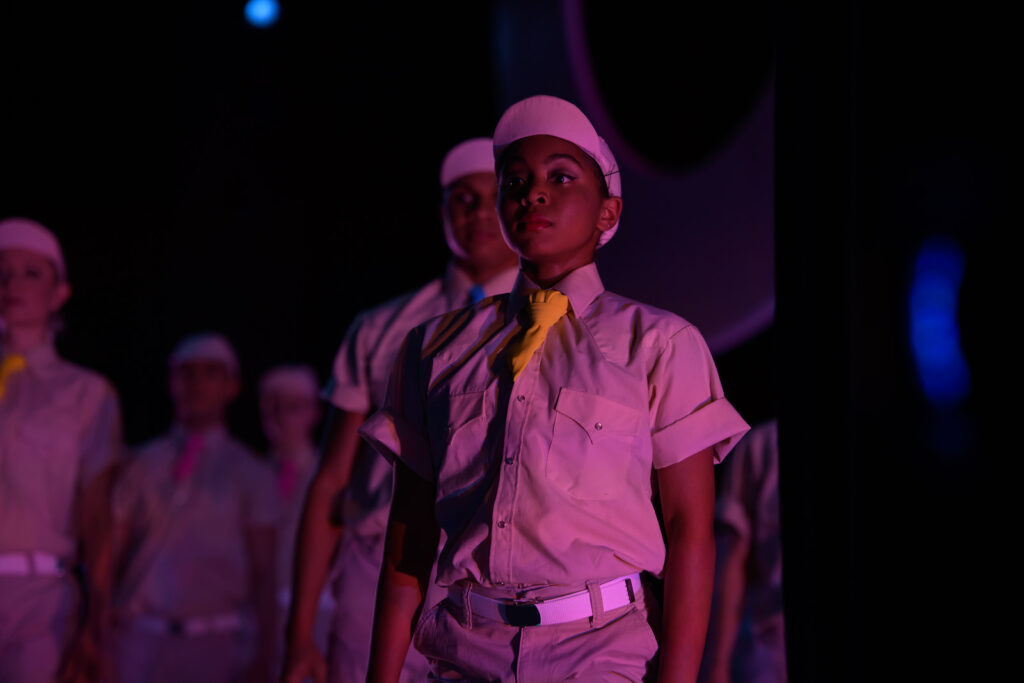
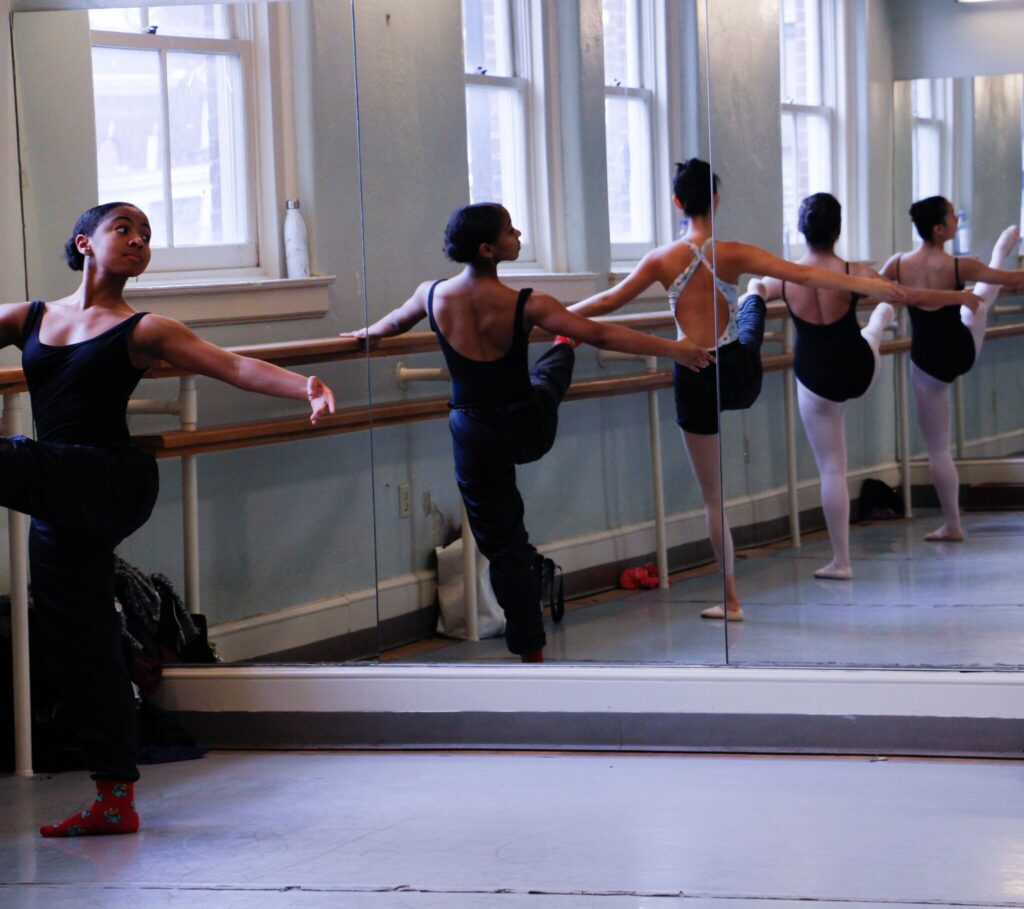
Once she got to high school, Logan decided that ballet ought to come first, “since [her] joints and knees would only be good for so long,” and she could defer her astronomy career till afterwards. She saw the fruits of her labor manifest as she signed her first ballet contract shortly after graduating, in 2019. Less than a year later she, like many others, found herself without an audience and, with that, a job.
Nonplussed, but uncertain for her future in ballet, Logan decided to go back to school at her local community college in the hopes of finding an alternative career. In this setting which, with its small class sizes and personalized teaching, “turned out to be the perfect place for [her],” she found herself reinvigorated and reminded of her childhood excitement about physics and math. As she was quickly exhausting the college’s relatively limited course offerings, she met Dr. Brittney VornDick (“Dr. V”), who advised her to transfer to a four-year university and consider trying out physics and astronomy research. Because of this guidance, and other support throughout her community college experience, she credits Dr. V with being “one of the most influential people to get [her] to the point where [she] is now.”
After two years at Alamance Community College and Durham Technical Community College, she transferred to North Carolina State University, where she would spend the next three years and complete her undergraduate degree in physics. During this time, she also participated in a slew of research experiences that guided her to the science that she’s interested in today. From her first REU at Georgia State University, working on machine learning algorithms to predict solar activity with Dr. Dr. Viacheslav Sadykov, she confirmed that research was her true calling. Through hard work, she learned some of the fundamental scientific practices that one needs in a research setting, like reading papers and processing data. The following summer she participated in the Simons-NSBP Scholars Program and spent two months at the Center for Computational Astrophysics in New York working on a totally different scale: cosmological simulations of dark matter and galaxy formation. Interpolating between these regimes, once she returned to NC State, she found the research focus that was just right: working with Dr. Carla Fröhlich running simulations to model supernovae and their observables.
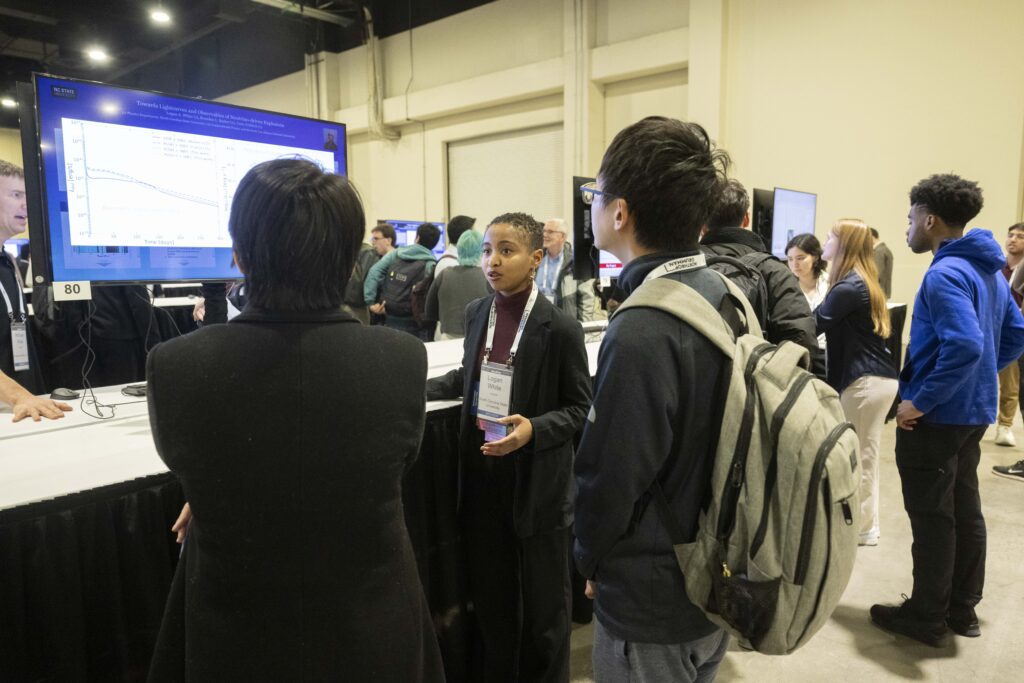
Throughout this academic journey, Logan found herself no stranger to imposter syndrome. At every stage, she found herself surrounded by people she felt must be more qualified or capable than her. These feelings were compounded by her lack of a peer support group: she was the only one in her circles applying for transfer to a four-year university at the time and was the only student not from a four-year university at her first REU, which she completed before her first semester at NC State. She remembered thinking “ they’re going to say no. And I shouldn’t even bother applying. I shouldn’t put the time in. Every time I pushed through, and I didn’t do that, that was the opportunity that I ended up getting.” From this, she resolves, “ don’t take the responsibility of telling yourself no, let somebody else do that.”
Logan credits discovering her community as another crucial aspect to her journey to this point. As one of a handful of Black undergrads studying physics at two predominantly white institutions, Logan felt isolated until she was able to tap into the Black In Astro community, first on Twitter and then at the AAS meetings. As she puts it, this community ended up being the catalyst for so much of what she’s doing today. From Black In Astro, she was introduced to the Simons-NSBP program, which resulted in another network of fellow Black physics and astronomy peers that she has maintained through the years since. In fact, her Black In Astro community helped her choose the next step on her academic journey.

This fall, Logan will begin as a graduate student at the University of Arizona, where she will be an NSF Graduate Research Fellow and GEM Fellow. With applications to these programs, she advises, “ start early. Don’t be hard on yourself and get external sources [like faculty outside your main field] to read your statements and your proposals.” Reflecting on her journey thus far, Logan expressed a strong commitment to pay forward the experiences she’s had. From learning to work her way back into school after time in the arts to navigating her first research experiences without an astronomy background or support system, she’s developed a number of strategies that she plans to pass onto her communities in graduate school and beyond. Indeed, she’s already taken on this responsibility as a mentor for other undergraduates in her research group and a coordinator for the Computational and Data Science in Astrophysics REU hosted at NC State, and is poised to continue to do so moving forward.
She also emphasizes that though her path was somewhat circuitous, “ all of your experience is good experience. There’s no timeline on when you have to be successful or on when you have to achieve something, you should go out there and take that step for yourself, even if it’s hard.” In fact, the parallels she sees between the arts and sciences — attention to detail, discipline, and work ethic — together hold the key to dancing your way to the stars.
To read more about Logan, check out her website!
Astrobite edited by Luna Zagorac
Featured image credit: Astrobites collaboration
