
A review of Antoine de Saint-Exupéry’s The Little Prince– or Le Petit Prince, if we’re being approprié– is not what you expect in your daily astro-ph digest. But why not take a break from being inspired by ongoing research, and reflect on what truly drew each of us into this quest across the ever-expanding universe.Having grown up under light-polluted skies seeing only the Moon, or Venus and Jupiter if I’m lucky, books sparked my passion for astronomy. While encyclopedias taught me facts, it was only recently I realised that a small traveler from Asteroid B-612 taught me wonder that helped me appreciate facts. Looking back, I suspect my path into exoplanets began with the Little Prince’s habit of standing on a tiny world and asking simple, disarming questions. So in today’s article, let’s explore some of the important ideas that this remarkable fable has for each of us in academic astronomy.
Scientific Biases– from our Sahara-based imagination and the desk of the geographer who never travels.
The Little Prince meets a geographer who compiles atlases without leaving his desk. Catalogs without ground truth are seductive, and tidy exoplanet retrievals can lean too hard on a few lines or a suggestive blob in direct imaging. The Prince’s first impression of Earth comes from the Sahara. If your landing site is a desert, you might infer a lifeless planet and be wrong by oceans.
Astrobiology lives with the same Sahara problem. We often see single pixels or low-signal spectra under stellar glare, then generalize from that sliver. Retrievals depend on priors, line lists, instrument line spread functions, and how we treat correlated noise. Our chemical imagination is Earth-centric: water solvent, and the famed CHNOPS building blocks. Yet oxygen can arise abiotically through photolysis and hydrogen escape, while methane can come from volcanism or serpentinization which while accounted for, is often glossed over especially when popularizing scientific results. On the other hand, we can be missing information when we base ourour observations in narrow wavelength windows and at a single geometry, so clouds and hazes mute bands, temperature–pressure and cloud parameters covary with abundances, and unocculted spots or faculae imprint pseudo-lines. In direct imaging, PSF subtraction both creates and erases signal, and spectral channels share noise. Quasi-static speckles are sometimes leftover that mimic point sources.
The fix, for now, is providing more context to our searches and improving our repository of information. We should expand wavelength coverage, work on instruments that offer much higher resolution for line separation, continuously monitor stellar activity, and provide more details to publish, like information on throughput alongside specta. Expanding other possibilities of non-earth centric life (like the possibility of silicon based organisms) is something people are working on, and should be encouraged.
Recognising the true grit behind every photon captured: the lamplighters and calibrators
On a tiny, fast-spinning world, the lamplighter lights and extinguishes a streetlamp all day. That is the invisible work behind headline results and beautiful images. Trustworthy data begin with basic cleanup and calibration: removing detector characteristics that interfere with real signal like bias and dark current, flattening pixel response, and correcting nonlinearity, and other uncertainties. There’s wavelength calibration with spectra. Different hardware requires additional care like cryo-based cooling, occasional vacuum pumping, advanced detector calibrations, and optical realignments. Add wavefront sensors and coronagraphs to the mix, and there’s a whole new set of calibrations and issues corresponding to centering and wavefront correction to deal with.
We can change the culture by naming this labor. Cite calibration papers. Put pipeline maintainers and observatory staff on author lists. In reviews, ask how systematics were tracked. Recognise the efforts of the day and night crew of observatories who maintain the facilities you have used in your paper. Remember, discoveries run on lamplighters.
What’s essential is often invisible to the eye
The book’s most quoted line maps neatly onto analysis. What decides whether a result survives a new dataset lives in priors, systematics, retrieval assumptions, and residuals. The press image may go viral, but the invisible work carries the weight. Many of us take for granted the libraries and tools that make careful statistics possible. We also under-share code and notebooks that could unlock underused datasets. And every good result sits atop nulls and dead ends that rarely see daylight.
Make invisibles visible. Release code. Document assumptions. Publish null results. Put uncertainty visualizations and model comparison tables in the main text, not only the supplement. We teach the tools in graduate courses, but not enough creative uses for non-detections. In a publish-or-perish world, clear nulls and careful justifications strengthen the scientific process.
Baobabs, terraforming, and what “stewardship” really means
On B-612 you must weed baobabs before they crack the planet. The metaphor cuts two ways. First, stewardship is maintenance: removing invasive ideas and practices that split communities. Second, when we daydream about terraforming, the Prince reminds us that intervention begins with care, not conquest.
A serious conversation about using extraterrestrial resources starts with planetary protection, cultural humility, environmental accounting, and shared governance. When larger space-based corporations talk about establishing colonies on the Moon and Mars, let’s not forget the examples of conquest and terraforming on Earth and the impact it has had on our environment and people. Yes, the prospect of tapping into our knowledge and resources to explore and enhance life is very exciting and worth pursuing, but it shouldn’t be at a cost too heavy to bear by creation itself. Maybe let’s think about cleaning up our space debris before putting a research station on the Moon! And this stewardship also extends to preserving dark skies to encourage amateur astronomers and protecting the sacred and pristine sites that host many powerful telescopes.
Gatekeeping vs Inclusivity in Science
In the fable, a Turkish astronomer announces the discovery of Asteroid B-612 and is ignored until he returns in European clothes. The same result suddenly counts. Signals are not merit. We have traded fezzes for affiliations, accents, slide polish, and pedigree, but the bias machine can keep humming.
If your judgment of a result changes once the logo slide appears, that is on us. Program committees can audit speaker rosters and Q&A dynamics. Session chairs can invite and amplify junior voices first, and model questions that probe methods, not people. Curiosity is not correlated with title or pedigree, yet talent leaks through practical bottlenecks and cultural ones. Build a wider avenue. Make seminars and conferences hybrid by default. Offer micro-grants for dependent care. Support remote observing and open data for low-bandwidth contexts. Use double-anonymous review where it is feasible. Write and enforce codes of conduct that protect junior voices in Q&A.
Inside labs and collaborations, protect the childlike question. The Little Prince’s superpower of asking simple questions teaches us the power of curiosity. Mentors should better appreciate and understand where even the most naive questions come from, and should encourage debating and questioning results posed to us.
Final Thoughts
The Little Prince is a book about the very important attention to detail: about tending the small things that keep a world intact. Astronomy advances the same way: not only by trumpets at “first light,” but by a million quiet calibrations, carefully stated priors, generous reviews, and patient listening. If we remember that, our conferences will feel less like costume dramas, our instruments will truly deliver their best performance, and our science will look a little more like exploration.
Edited by: Kaz Gary
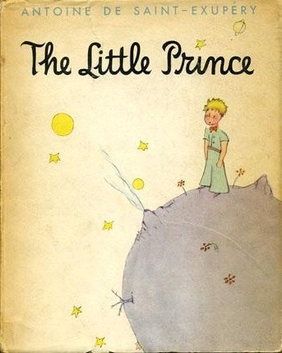
Featured Image Credit: Antoine de Saint-Exupéry, published by Reynal & Hitchcock (1943)

“We can change the culture by naming this labor.” We can go further and finally properly acknowledge instramentalists who build all the actual equipment that astronomy uses. They are at the bottom of the pecking order (and have been for decades) and treating them thus is just another form of discrimination.
Well said! Thank you.