
In this series of posts, we sit down with a few of the keynote speakers of the 247th AAS meeting to learn more about them and their research. You can see a full schedule of their talks here, and read our other interviews here!
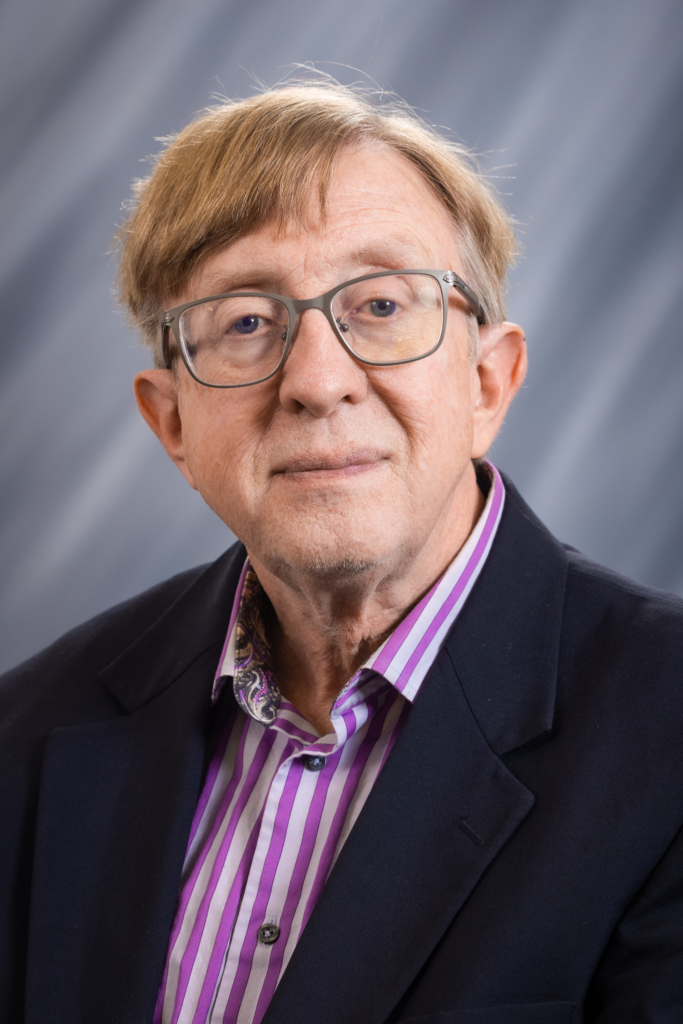
When I asked Thomas Hockey about his career, the sky’s influence is never far away. “The serendipitous astronomical events get my adrenaline going the most,” he told me, reflecting on a comet that smashed into Jupiter and eclipses sweeping the Midwest. As he contemplates his plenary address for receiving the LeRoy E. Doggett Prize for Historical Astronomy, which recognizes individuals who have “significantly influenced the field of the history of astronomy through a career-long effort,” the embrace of surprise and change is the heart of it. “[My plenary will be] sort of biographical, but with a purpose, with a message behind it,” he said.
That message? Resist being pigeonholed, embrace reinvention, and bring the tools of history to bear on astronomy’s biggest questions.
A career of deliberate change
Now a Professor of Astronomy at the University of Northern Iowa, Hockey began as a planetary astronomer. Early on, he weighed an enticing fork in the road: “I had an opportunity to work for Bill Barucki at the Ames Research Center to model lightning, and the possibility of lightning on Mars,” he recalled. He didn’t take it. Three decades later, lightning on Mars was finally detected. Instead of feeling regret that the discovery could have been his, he rejoiced in the awesomeness of the discovery itself. “You choose a particular path. That means there’s an infinity minus one things that you didn’t do, but it doesn’t have to be a zero-sum game.”
“It wasn’t until graduate school that I was brave enough to come to this view that you can be more than one thing,” he said. “My advisors essentially created my graduate degree, the first, if not one of the first interdisciplinary degrees that my university offered a PhD in.” He formalized an intellectual pairing that felt natural to him: astronomy and the history of science.
He explains that, as a faculty member, he also benefited from an unusually interdisciplinary department in which meteorologists, geologists, and astronomers share a home. “I didn’t have people leaning over my shoulder,” he said appreciatively. That latitude helped Hockey shake off imposter syndrome and claim a two-part identity he once worried the system wouldn’t accommodate. “How much more satisfactory my career has been by reacting to circumstances and being willing to say, ‘I’m the Tom Hockey who used to do X, but now I’m Tom Hockey who does Y just as well.’”
Sky and Society
Hockey focuses on 19th-century American astronomy, an era when U.S. science shifted from celestial position measurements to what we now call astrophysics. He’s drawn to moments when the supposedly sublime separations between sky and society collide. “I’ve become intrigued with astronomers and war,” he said. “As horrible as wars are, there’s sort of a special hell in civil wars. We experienced just such a thing when U.S. astronomy was transitioning. In the middle of this astronomical transition, there is this godawful war and the stresses and strains of reconstruction thereafter. How did that affect the astronomers of the time?”
But it’s not all heavy. When the 2017 total solar eclipse crossed the Midwest, he dug into the 19th-century expeditions that flocked to the region and wrote a book about them. If a supernova appeared tomorrow, he said, he’d be compelled to write about the history of supernova observations. “The Greeks didn’t like it, but in fact, the heavens are mutable.” He’s also still adding chapters to his own scholarly story. “Another thing I wrote is a textbook on Astronomy without a telescope, which has been how astronomy was done for most of human history.”
Crucially, Hockey sees historians as full participants in astronomy, not chroniclers standing apart. “If there was such flak, it would have been taken by the pioneers in the field,” he said, pointing to the founding of the AAS Historical Astronomy Division as a marker of professionalization. He cites Donald Osterbrock, who “will himself go down in the history of astronomy, but also at the same time became a historian of astronomy,” and who sought out training in historiography. His conclusion is unambiguous: “Not only has the American astronomical community through the AAS been supportive of historians in their ranks, but I’d also be so bold to say they need us.”
Advice for early-career astronomers
Hockey’s plenary is aimed squarely at students and early-career researchers navigating a culture that can feel risk-averse. “I’m a little worried about the fact that, nowadays, there is a seemingly never-ending stream of postdoctoral positions. You’re asked to sort of buttonhole yourself. I want to encourage people to risk changing their mind as they pursue their astronomical career, get involved in other stuff, and new stuff that might not even have existed when they started out.”
He’s the first to admit it’s easier said than done in 2025. “I realize it’s all well and good for me to say I pulled it off. I won’t claim that I know the environment as it exists now.” But he offers a first pragmatic suggestion: separate identity from profession. “What you are and what you get a paycheck for don’t have to be necessarily the same thing,” he said. “We think of ourselves as monks in the monastery we’re dedicating our entire lives to, but most people’s vocation and avocation differ.”
For those drawn to the bridge between history and astronomy, Hockey’s advice begins with an emphasis on rigor. “You need to get the discipline down first, and to recognize that history is not something you just put down one book, pick up another, and start doing. There’s a rigorous methodology there.”
See you in Phoenix
Hockey grew up in the suburbs of Phoenix, so this AAS will be a homecoming of sorts. His plenary promises a rare mix: memoir with a message and advice tempered with realism. If you’re an early-career astronomer wondering how to balance passion with pragmatism, or a seasoned researcher curious how the past can sharpen the next question, come hear from someone who’s made a career of listening to what the sky, and the historical record, have to say: the heavens are mutable, we can be too.
To hear more about Thomas Hockey’s career insights gleamed from the history of astronomy, tune into his Doggett Prize plenary talk “Don’t Let Anybody Tell You to Plan Your Career” at 8 AM MT on Tuesday, 6 January 2026 at #AAS247.
Edited by: Amaya Sinha
Featured Image Credit: AAS
