
Every year, astronomers participate in perhaps our greatest tradition: posting silly papers to the arXiv on April 1. These papers are meant to be lighthearted and fun, using current techniques on unusual subjects or poking fun at aspects of the field. They are not meant to be taken seriously, but at the same time an extraordinary commitment to the bit merits recognition. There was no official peer-review process for these papers…
…until we started doing it. (2025, 2024, 2023, 2022)
To highlight this year’s submissions, here are our reviewer comments for 25 of the 30(!)1 April Fool’s papers we found in 2026.
Authors: Julian Falcone, Nabanita Das
Authors’ affiliation: Georgia State University
Paper Title: New Paradigms in Pasta: Introducing GF pastamarkers for Enhanced Inclusivity and Productivity
Dear (future) Drs. Falcone and Das,
Thank you for your captivating work on updating the pastamarkers to include gluten free pasta. We always value work that makes astronomy more inclusive and those with celiac disease are an under-represented group in the astronomy accessibility literature.
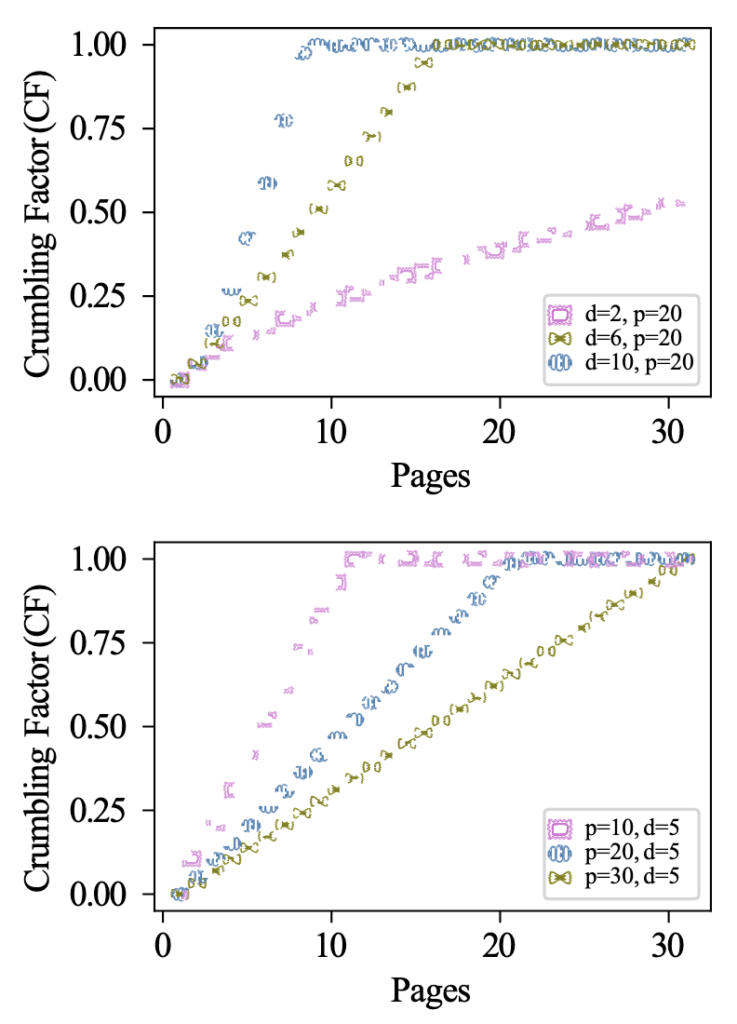
Reviewer 1: Prior to reading this paper I was unaware of the pastamarkers package, which visualises data points using pasta-shaped markers, and indeed the exclusionary nature of its symbols to those who are gluten-free. This paper presented an enlightening approach to include the Crumble Factor associated with gluten-free foods in the pastamarkers package. The use of factors such as number of pages in a manuscript, penguin visibility and color Voyager 1 distance to determine the Crumble Factor, while unorthodox, was inspired.
Reviewer 2: While I appreciated the authors’ explanation of the Crumble Factor’s role in encouraging concise papers, I would have liked the Crumble Factor calculation to penalise length of paper more heavily. I gratefully recognise the conciseness of this paper. It would have been hypocritical for the authors to have written an unnecessarily long paper about conciseness. That being said, all this pasta talk is making me hungry, so I am going to have lunch!
Authors: Wolf Cukier, Dominic Samra, Vighnesh Nagpal, Diana Powell, Maria Steinrueck, Christopher Wirth
Authors’ affiliations: University of Chicago
Paper Title: Cloudy With a Chance of Meatballs
Dear Wolf, Dominic, Vighnhesh, Diana, Maria and Christopher (can I call you Wolf, Dominic, Vighnhesh, Diana, Maria and Christopher? Hereafter referred to as FLDSMDFR),
While this work does seem like it reached completion after nourishment problems late in the evening with the go-to canteen being unexpectedly closed, FLDSMDFR gives a comprehensive overview of meatball and marinara formation in extraterrestrial circumstances (assumed so, as it does not, in fact, naturally rain meatballs on planet Earth). The interesting, but not entirely necessary, analysis of the possibility of supporting a modern human population on a sizable astronomical body with such precipitation serves to enrich the manuscript.

Reviewer 1: This work presents the first serious analysis of exo-culinosphere formation channels. I love it. The highly reliable experimental setup with state-of-the-art kitchen scale can only be the consequence of a funding scheme to be jealous of. 10/10 would come again. Have you heard about our Lord and Saviour the Flying Spaghetti Monster (see my self-made, stained-glass representation in the figure)? Join us for permanent meatball and marinara rain, with the added benefit of an hourly pasta-licious delight.
Reviewer 2: The definition of ‘meat’ is applied here too broadly in my learned opinion. The study fails to predict the eventuality that, at high T, the meatballs will chemically alter their composition and heavily carbonize (after fast radial descent only the outer meatball layers most likely). Failure to include other trivial saucy additives like curry-ketchup and barbecue sauce. Also, two data points are not nearly sufficient for a 1/x model. A linear fit will drastically improve the model errors. Peace.
Author: I. Vaiman
Author’s affiliations: Gran Sasso Science Institute; INFN-Laboratori Nazionali del Gran Sasso
Paper Title: Enabling fundamental understanding of Nature with novel binning methods for 2D histograms
Dear Future Dr. Vaiman,
We are happy to accept your manuscript and believe that it will have an outsized impact on the future of physics plotting.
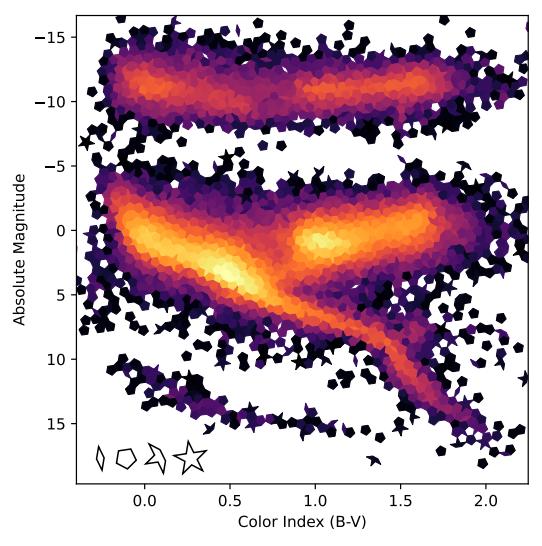
funbin.Reviewer 1: I wholeheartedly agree with the motivation for this paper that square bins are boring. It is about time that someone revolutionizes scientific plotting to be something that is exciting, rather than expected, which is exactly what you’ve done with funbin. I greatly appreciate both the scientific and poetic depth of the funbin algorithm, which finds meaningful polygons to illustrate the differences in the physics of the data being plotted. Your HR diagram illustrates this rather insightfully – although I know very little about stellar physics, the statement describing that “the pentagon is nothing but a star with no rays coming out from it, an extinct star,” resonated deeply with me.
Reviewer 2: Though I still prefer old-school hand-drawn figures to computer-generated plots, I’ll admit that this is an interesting concept. The World Map section of your submission, which imagines a world map combined with the stellar mass distribution, troubles me slightly, and I would encourage further investigations into the strengths of these spatial correlations before, for example, breaking up the Antarctic treaty for the benefit of improved spatial resolution.
Authors: Andrew Laeuger, Taylor Knapp
Authors’ affiliations: TAPIR, California Institute of Technology; LIGO Laboratory, California Institute of Technology
Paper Title: No hair but plenty of feathers: are birds black holes?
Dear future Drs Laeuger and Knapp,
Though we are not experts in the budding field of graviornithology, as you appear to have self-dubbed it, we believe that the possible discovery of a new class of compact objects does indeed merit publication.
Reviewer 1: This work is a novel study of binary black hole merger candidates that considers a new region of previously unexplored parameter space in theoretical models of gravitational wave (GW) events – avian linguistics. The authors present a compelling study of a new category of compact objects, assuming only that it cannot be a coincidence that we use the word “chirp” to refer to GW waveforms and that this must indicate that birds can, in fact, be a missing population of black holes localized to right here on Earth. The spectrograms of these Cardinalis cardinalis signals look compelling enough to me, when plotted as spectrograms, which begs the question for future studies – what else could be a black hole that we just aren’t plotting like one (a Mexican burrowing toad, perhaps)?
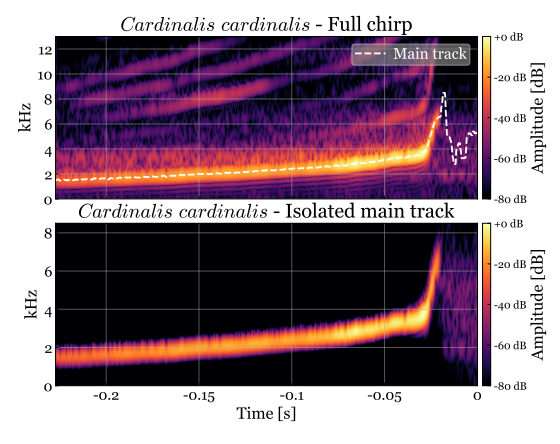
Reviewer 2: The methods used in this work are robust, using established GW analysis pipelines for mass determination and localization. However, I have some doubts about the inconsistencies of the measured combined mass of the binary black hole (BBH) system with prior measurements. While you acknowledge that the predicted mass falls far below what is expected from stellar collapse models, I am concerned that you do not consider the implications of the existence of a ~0.7 M⊙ cardinal. Either this implies that the assumption of a ~cm scale cardinal is incorrect and this is in fact a much larger mutation of the commonly known avian species, or that this is somehow a standard-sized Cardinalis cardinalis that has managed to accrete mass to become thirty-three orders of magnitude larger than the expectation value. The implications of either are frankly terrifying, and further cross-checks should be done to validate these measurements.
Authors: Frederic V. Hessman, Christian Jooss
Authors’ affiliations: University of Göttingen
Paper Title: Mexican Burrowing Toads as gravitational wave detectors
The authors pose the idea of using biological means, by use of the well-known Mexican Burrowing Toad, in the detection of gravitational waves. Attempts are made at linking theory from general relativity with solid state physics and the magnetoreceptory properties of the Mexican Burrowing Toad in order to justify future detection methods with these little slimy buggers.
Reviewer 1: The authors should find out whether gravitational wave (GW) events take place more often during the Mexican Burrowing Toad (MBT) mating season.
Other than that, take my MBT and my money!
Reviewer 2: The authors are recommended to study the difference between ‘correlation’ and ‘causality’. That being said, the frequency analysis carried out by Hessman and Jooss is sound. Despite the failure of the Mexican Burrowing Toad (MBT hereafter) to exactly reproduce physically feasible GW event chirps, the coincidental (?) similarity between the MBT and GW chirps is stunning. While the mechanism of strain amplitude boosting by Raman lasering is feasible, it remains unclear as to how the MBT reproduces this in its innards. However, with funding limitations in mind, the concept of ~10^6 MBTs detecting GW events becomes a more serious option to consider. Hmm yes, this idea is growing on me.
As a major revision, I would like to see the additional acquisition of a large amount of MBTs, provided they are all cared for and each individual has a name.
Authors: Eugene, Neige
Authors’ affiliations: N/A
Paper Title: Milky Way evolution on a human timescale
Dear Drs. Eugene and Neige,
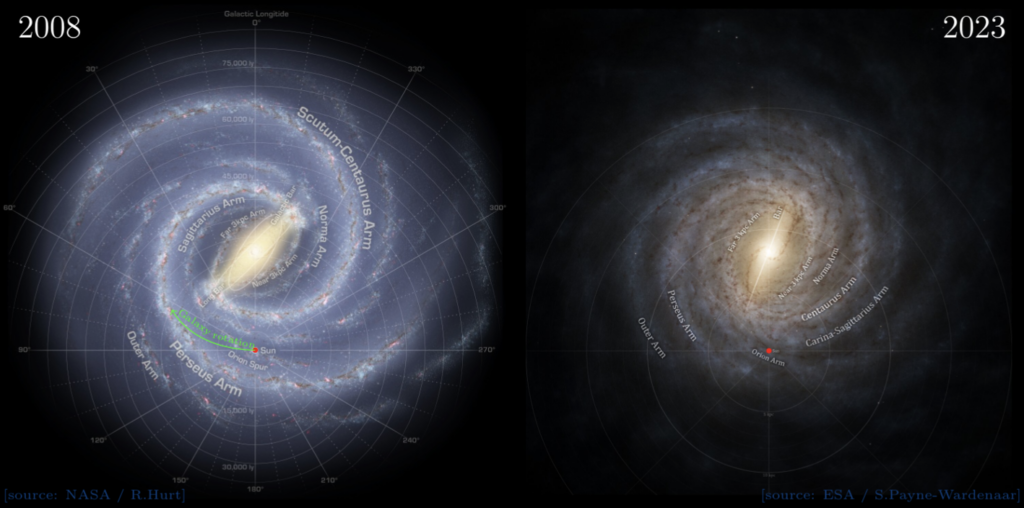
We are delighted to review your manuscript, “Milky Way evolution on a human timescale.” Your demonstration that fundamental Galactic properties evolve measurably over mere decades is both compelling and deeply convenient. For far too long, the Milky Way has been treated as effectively static on human timescales, limiting observational excitement and interpretive flexibility. Your work resolves this by showing that essentially all measurements are correct and that they simply correspond to different moments in an actively evolving Galaxy. We strongly support publication of this manuscript and believe it ushers in a new era of real-time Galactic astronomy, in which discrepancies in the literature are no longer problems, but features.
Reviewer 1: This manuscript is groundbreaking. I am especially excited about the possibility of tracking the evolution of the Galactic Centre in real time. If Sagittarius A* continues to evolve at the rates implied here, I recommend the authors include a short-term forecast (e.g., next 5–10 years) so observers can plan accordingly and avoid being caught off guard by any upgrades. I also suggest the inclusion of a live dashboard for key Galactic parameters, updated daily if possible. This would be an invaluable resource for both the community and the general public.
Minor comment: the authors may wish to standardise the epoch of their quoted Galactic properties to something more intuitive, such as “last Tuesday.”
Reviewer 2:
An excellent and timely contribution. I have long suspected that the Universe evolves at a pace more compatible with grant cycles, and this manuscript provides the first compelling evidence in support of that hypothesis.
Authors: Mayura Balakrishnan, Robert Frazier, Joseph M. Michail
Authors’ affiliations: Trottier Space Institute at McGill; University of Michigan; Center for Astrophysics
Paper Title: A Therapy Session with Sagittarius A*
Dear Dr. Balakrishnan and future Drs. Frazier and Michail,
Thank you for work that so boldly gives Sgr A* a chance to speak for itself. Both referees responded with suspicious speed. We are choosing to interpret this as enthusiasm and will not investigate further.
Reviewer 1: The authors have identified a long-overlooked gap in astrophysical methodology: though we have spent decades investigating what Sgr A* is doing, we have never once asked how it is doing. The ARMCHAIR framework represents a paradigm shift that I expect will define the next generation of astrophysical inquiry.

The characterisation of Sgr A*’s accretion behaviour as analogous to a child who “only eats dino nuggies” is the most accurate description of radiatively inefficient accretion flows in the literature. The complaint that its environment is “over-seasoned” is the most vivid description of the Galactic Center ever committed to print. Figure 1 should be considered for the journal cover. I have already set it as my desktop background.
Minor comments: could the authors clarify the canapé selection for the ARMCHAIR mission, as this may be relevant to reproducibility? Additionally, the acknowledgements mention screaming into the void, which this reviewer also does regularly. Perhaps a future paper could explore whether the void screams back, and if so, whether it too has grievances about its name.
Reviewer 2: I have never, not once, been asked to review a manuscript in which a black hole is quoted directly. I am choosing to take this as a growth opportunity.
The ARMCHAIR technology allegedly operates at 10¹⁰ times the speed of light, yet the reported latency does not survive contact with a calculator. I would ask the authors to revise, but I suspect the answer involves an NDA, so I will let it go. This time. The laws of physics, however, are not bound by non-disclosure agreements.
I find Sgr A*’s objection to its designation entirely compelling. That said, when asked for a preferred alternative, it emitted a sound that rendered a therapist catatonic. This is not a usable data point. A companion paper is encouraged, perhaps with better ear protection.
Finally, the revelation that Sgr A* has taken up needlepoint using stolen credit cards is the most compelling finding in this manuscript, dispatched far too casually before the authors move on. I have not moved on. I have two questions: (1) how, and (2) what pattern?
Authors: C. Hall, L. N. H. P. Hall
Authors’ affiliations: University of Georgia; Barkvard & Sniffsonian Center for Astropawysics
Paper Title: Antimatter Propulsion for Interstellar Travel via Positron Production from Potassium-40 Rich Biological Matter
Dear Dr. Hall and (future?) Dr. Hall,
We congratulate you and are delighted to accept your paper. This work joins a long tradition of astronomers pushing the boundaries of the possible in an attempt to resolve the Fermi paradox, positing a truly bananas solution.
Reviewer 1: Despite the authors’ findings that bananas represent an infeasible antimatter fuel source for all but the smallest-scale missions, I find that this work has inspired more questions in me than answers. After all, we are not discussing humanity’s ability to take to the stars, but the ability of extraterrestrial sentient life to find us. Would it not be possible that bananas on other planets might have a much higher density of 40K, meaning the same amount of energy could be derived from fewer bananas? Or, alternatively, bananas could be much larger on other worlds, increasing the required compression factor by orders of magnitude. What of the humble plantain? This work represents an exciting first step, and I hope to see many future contributions from these authors.
Reviewer 2: A robust analysis of the potential of banana-derived positrons as a fuel for spaceship propulsion. However, I question the inclusion of the second author, as I suspect they may be a dog.
Authors: J. J. Charfman Jr, S. Hyman, N. T. S.
Authors’ affiliations: Department of Astronomy, Steward Observatory
Paper Title: Sugar Rush: Improving Observing Productivity via Night Dessert
Dear Dr. Charfman, and future Dr. Hyman, and (future?) N. T. S.,
Thank you for your submission that addresses a problem common to any astrophysical observer: what to do when the late night brain fog hits.
Reviewer 1: This manuscript addresses one of the most chronically underfunded problems in observational astronomy: what to eat at 3 am when the data pipeline has stalled. The proposed solution, a chocolate chip cookie, is elegant and, in principle, reproducible.
The unit choices are inspired throughout. Expressing vanilla extract in fathoms per mile-per-gallon and using hectare light-attoseconds for salt is an incredible commitment to dimensional consistency. The face-on and edge-on views of the final cookie, as though it were a galaxy, allow a familiar yet robust visualization of the method. I also commend the authors’ responsible disclaimer that the recipe has not been tested for evolving dark energy. This humble acknowledgment reflects the ongoing nature of scientific inquiry.
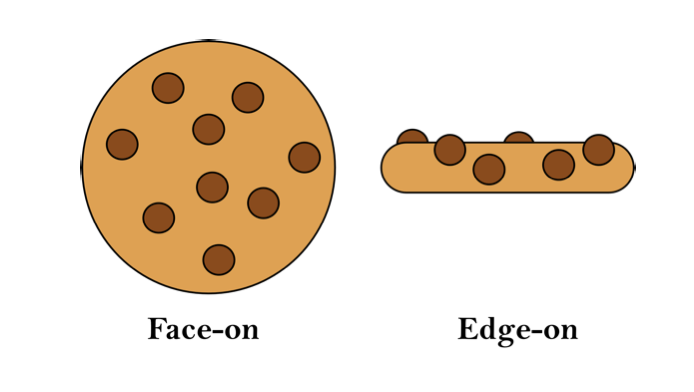
Minor comment: the authors recommend using either the distance ladder or CMB result for the Hubble constant to determine cookie texture. This reviewer has strong opinions about which is correct, and therefore about the correct cookie texture, but will refrain from elaborating here.
Reviewer 2: I approached this manuscript with an open mind. I am a reasonable person. That said, the ingredient quantities are where I have the most notes. 1750 carats of chocolate chips is approximately 350 grams, which is fine and actually quite generous. 0.6 mol of sucrose is roughly 205 grams of sugar, and 9 TWh/c² of flour works out to about 360 grams. I spent considerable time preparing to raise serious concerns about the flour-to-sugar ratio only to realize that it is, frustratingly, fine. Some observers might relish the thrill of such spirited unit conversions. This reviewer had simply wanted a cookie.
Author: Michael B. Lund
Author’s affiliation: Caltech/IPAC-NExScI
Paper Title: Lots of Shade on Satellite Constellations
Dear Dr. Lund,
We are delighted to accept your paper “Lots of Shade on Satellite Constellations” and we thank you for your truly historic contribution to this moment where the physics sub-disciplines of satellites and climate are merged.
Reviewer 1: The detailed and thorough analysis of the important issues of both climate change and the exploding population of satellites in low Earth orbit were thoroughly addressed in this paper. The timeline of having sufficient sky coverage to stall global warming just before midnight on 27 March 2031 is both realistic and encouraging to all climate activists. It has greatly alleviated my deep fears of climate-related disasters. Unfortunately, these were quickly replaced by new fears of the Doomsday scenario, in which 100% sky coverage is reached the following day.
Reviewer 2: As I read this delightful paper, which states that “the temperature increases caused by a doubling in carbon dioxide levels would be largely counteracted by a solar dimming of just 1.8%”, I was struck by the effect this decrease in sunny days would have on the ice-cream industry. While the authors did not quantify this effect, I suspect, based on a back-of-the-napkin calculation, that it would be sufficient enough to warrant looking for other radical solutions, such as not doubling the carbon dioxide levels.
Author: Claire Lamman
Author’s affiliation: The Ohio State University
Paper Title: Galactic Constellations in DESI DR1 and the Scales of Cosmological Homogeneity
Dear Dr. Lamman,
While stellar constellations have been known and studied for thousands of years, only recently have we as a species gained the ability to find galactic constellations. The cosmic web is the largest-scale structure in the Universe, and has a lot to teach us about the physics of gravity and dark energy, but heretofore largely unconsidered is its potential for finding Fun Little Guys. We are therefore pleased to accept this seminal work for publication.
Reviewer 1: I was very excited to see a citizen science paper submitted to this journal, as this is a relatively uncommon occurrence. Galactic constellations provide an engaging way for the public to see the large-scale structure of the Universe first-hand, and I’m glad to see that this is being taken advantage of in such a striking manner. Additionally, and crucially, the users of the website created for this work have found galactic constellations that are far more interesting than the existing stellar constellations. Gone are the Triangles, Crosses, and Air Pumps of uncreative dead men; we live in a world of Cow Tools and Fimsh. “W”, however, is constant.
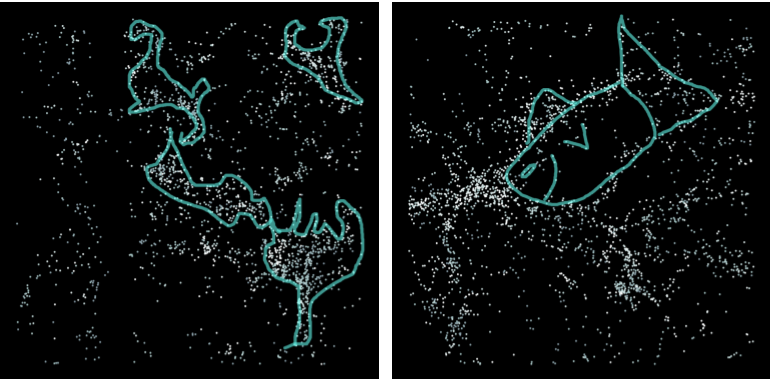
Reviewer 2: While these authors did an admirable job with their analysis, I believe this could be extended to synergize with other work. Namely, the recently discovered sensitivity of cats to the seeds of large-scale structure (Chen & Ye 2026). I have a feeling that, despite the noted failure of existing ΛCDM simulations to reproduce such constellations as Pisces Grandis, cats might be the perfect way to find the real-life galactic fish.
Author: Elizabeth R. Stanway
Author’s affiliation: Centre for Exoplanets & Habitability and Department of Physics, University of Warwick
Paper Title: Where to Search for Life: Evidence from narrative sources with established predictive efficacy
Dear Dr. Stanway,
We read your manuscript of a statistical analysis of pulp-era science fiction to identify which constellations humanity should prioritise in the search for extraterrestrial life with a mixture of awe, concern, and a growing sense that we may have fundamentally misunderstood our own careers. Your exploration of how science fiction writers and readers across history have uncovered truths about the universe that continue to elude modern scientists is, frankly, compelling—perhaps too compelling.
Regrettably, we must reject your submission. Should these ideas gain traction, there is a non-negligible risk that our families—and, more worryingly, our funding bodies—would begin to suspect that our work is less useful than previously advertised. This is an outcome we are not prepared to facilitate.
We do, however, encourage you to continue this line of inquiry. In future work, we recommend disguising any such revelations behind sufficiently complex machine learning frameworks, where they are far less likely to be noticed or understood.
Reviewer 1: I am very excited about the implications of this work, particularly regarding potential alien contact. I distinctly recall observing a spacecraft while casually glancing at Orion one evening approximately ten years ago; unfortunately, this claim has not been taken seriously. Your manuscript would significantly strengthen my position.
On a more technical note, I suggest expanding your treatment of spelling and dialect inconsistencies in constellation nomenclature beyond their genitive forms. A more comprehensive linguistic approach could yield a stronger statistical framework—and possibly reveal additional extraterrestrial patterns.
Reviewer 2: While this is undeniably cutting-edge research, I must raise concerns regarding the lack of detailed source analysis. Who, exactly, is promoting these ideas, and for what purpose? Why is there such a persistent emphasis on Andromeda?
It seems increasingly plausible that this represents a coordinated effort in alien propaganda. I suspect that at least one extraterrestrial entity has already infiltrated Earth and may be involved in the editorial process of such publications.
I therefore request that the manuscript be revised to avoid encouraging further irresponsible engagement with alien media and to include, at minimum, a plan for planetary defense.
Authors: Abhinna Sundar Samantaray, Finnja Annika Fluhrer, Dhruv Saini, Omkar Namdev Charaple, Anish Kumar Singh, Dhruv Vansraj Rathore
First author’s affiliation: Universität Heidelberg
Paper Title: From Astronomy to Astrology: Testing the Illusion of Zodiac-Based Personality Prediction with Machine Learning
Dear future Dr. Samantaray and collaborators,
We are delighted with your manuscript investigating the predictive power of astrology, especially as astronomers who are often confused with astrologers. However, regardless of quality, we cannot accept this work for publication at this time, since Mercury is not in retrograde right now. Please try again at a later time, and perhaps the planets will align for you.
Reviewer 1: It’s a relief to see that machine learning can’t use zodiac-based features to predict my personality. I already have enough of a hard time remembering astrophysical names, like GRB20251129110716 and NVSS J073326+515355, let alone whether my Jupiter is in Sagittarius or Virgo. The attention to detail (otherwise known as the DetailOriented parameter), such as including nuisance parameters describing an individual’s chai consumption and sleep duration (both of which are totally reasonable for me, I can assure you), illustrates the completeness of your study.
Reviewer 2: I have some concerns about the caffeine intake and deadline anxiety acknowledged in this work. I am also concerned that you do not use planetary positions as a hyperparameter – perhaps the zodiac is really controlling the outcome of your study?
Authors: Joseph Murtagh, Ian Chow
Authors’ affiliation: University of Washington
Paper Title: Predictions of the LSST Solar System (non-)Yield
Dear Dr. Murtagh and (future) Dr. Chow,
It is vitally important to the quality of survey science that we consider not only the objects being detected, but the objects not being detected as well. No survey will detect every object in its field of view, and if we treat the results as an unbiased picture of reality as it is, we will end up with an erroneous view of our Solar System, our Galaxy, and indeed our Universe. Therefore, we were very happy to see this submission and are pleased to accept it.
Reviewer 1: This is an extraordinarily complete non-detection catalog. I was alarmed to see that 99.86% of the mass of the Solar System will not be detected due to such minor concerns as not wanting to point LSST directly at the Sun. Additional results such as the non-detection of objects present in the gaps between sensors, objects that would be visible if the telescope was not down for maintenance, the Antichthon, and objects that would be detected if someone had bothered to consider that other people also need to use the computing cluster should absolutely be brought to the attention of the field. I recommend this paper for publication with the following minor revision: an acknowledgement that the current state of the field indicates that the Death Star was not in our Solar System, but in a galaxy far, far away, would be appreciated.
Reviewer 2: Despite the authors’ assertion that their synthetic data was “definitely really totally simulated using the survey simulator Sorcha”, I suspect that their synthetic observations are based primarily on vibes.
Authors: Mi Chen, Renhao Ye
Authors’ affiliations: Kapteyn Astronomical Institute, University of Groningen; Chinese Academy of Sciences
Paper Title: Schrödinger’s Seed: Purr-fect Initialization for an Impurr-fect Universe
Dear (future) Drs. Chen and Ye,
We commend you on the creation of an excitingly novel and robust framework for cosmological analysis, and on your discovery of the sensitivity of cats to the structure and content of the Universe. Anecdotal evidence for eons has indicated that cats know something that we don’t, and now the power of scientific innovation has brought us one step closer to their level. The seeds of structure in the Universe are not random – they are feline.
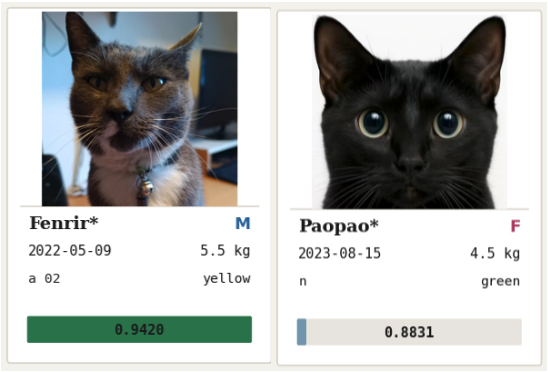
paper; interested readers are referred to the original figure, which contains no less than twenty-one pictures of adorable little kitty cats.
Reviewer 1: The commitment of these authors to a robust scientific analysis of cat-based cosmology is impressive to say the least. While it would have been relatively easy to produce a qualitative analysis only, the mathematical rigor of this work is truly inspiring. Additionally, the authors’ quantitative results match admirably well with my intuition when it comes to the performance of individual cats as cosmological seeds. Note that Paopao, the cat with the lowest accuracy, appears to have nothing behind her eyes but lint and elevator music, while Fenrir, the highest-performing cat, is clearly plotting Schemes.
Reviewer 2: While I admit that the quality of analysis in this work is in many ways exceptional, I do feel that it leaves out a well-known component of the temperament and behavior of the average house cat: their propensity for committing crimes. How can we be sure that cats are not simply telling us what they believe we want to hear, even through their own physical characteristics? Perhaps a question for future work.
Authors: Nan Li, Shiyin Shen
Authors’ affiliations: Chinese Academy of Sciences
Paper Title: The Universe Favors Primes: A Study in the Primality of Cosmic Structures
Dear Drs. Li and Shen,
Your discovery that the universe favours prime numbers is both surprising and ground-breaking. In fact, I would go as far to say it is primed for success. We will ensure to include this paper in prime position in this journal.
Reviewer 1: While the cross-over between number theory and cosmology is unconventional the results here are convincing. The idea to use the Riemann zeta function rather than traditional cosmology is both novel and convincing. By counting the number of galaxies in a galaxy group and achieving a 4.1 sigma significance in favour of prime numbers you have achieved what many thought impossible and proven the universe plays favourites after all.
Reviewer 2: I think it is vital to highlight the noble and valiant effort of Dr. Shen in this paper. Making no contribution other than to bring the total number of authors to a prime number is an essential and self-sacrificial contribution that must not be overlooked. I also wonder if extending the author team to a large, albeit still prime number of authors would have given the authors scope to expand this work. Specifically, I would like to see how this new work fits with previous literature where prime numbers are used as a test of intelligent life when searching for aliens.
Authors: David Komanek, Vaclav Pavlík, Santiago Jimenez, Rhys Taylor
Authors’ affiliations: DBM Collaboration
Paper Title: Declarative Bespoke Modelling: A new approach
The authors, who do not wish to remain anonymous, henceforth referred to as the DBM Collaboration, propose a radical new methodology as a general critique on numerical studies in the field becoming overly convoluted. While the DMB method certainly does not include convolutions, it does claim to do a better job in any case.
Reviewer 1: The work by the DMB Collaboration is exemplary and rests on the three pillars of modern scientific work. It builds new theory, tests and has agreement with data, while further being supported by numerical methodology, makes this work complete and directly applicable. The paradigm-shift-inducing MDB method has the revolution to potentialise the world of computer science, with evident applicability in science, finances, insurance fraud, traffic-light predictions and pumpkin distribution analysis outside autumn, etc. In addition to drastically reducing any carbon emission imprints for computational modelling, the BDM method is intuitive and low-level as well. While I tried to cont(r)act the authors to congratulate them on their awesome work, fully anonymously of course, the provided email address does not seem to be working. Major revision with strong inclinement to rejection.
Reviewer 2: I rejected this work yesterday, so I will make my point again: The BMD method is like a broken vending machine: if you put in coins, they come right back, but here with everything, even my morning sandwich.
Some further questions comments concerns insults:
- While the figure style is commendable, there is no information on how the
pastadatapoints were obtained. - While the correlation in Fig. 1 is visibly strong, the fitting method to the above mentioned datapoints is also not declared; a 10-point polynomial fits 9 datapoints perfectly too.
- No performance studies were performed: extensive code structure is provided in the manuscript, but one has to take the authors’ word on the computation times.
- While the claim is that the MBD method is widely applicable, the authors fail to show a multi-dimensional test case and only focus on the trivial one-dimensional case. Even my bulldog’s disturbingly flat nose has two dimensions.
Referenced Douglas Adams’ The Hitchhiker’s Guide to the Galaxy this time though, so minor revision. Good job.
Authors: Samantha M. Lawler, Michele T. Bannister, Laura E. Revell
Authors’ affiliations: Campion College and the Department of Physics, University of Regina; a University of Canterbury
Paper Title: Cow-culation: Reentry Impact Risk to Livestock in the Satellite Megaconstellation Era
Dear Drs. Lawler, Bannister, and Revell,
We at the very prestigious Acta Prima Aprilia think an important concern is being raised in this paper. That being said, we are delighted to accept your submission. For the bovine nation of Aotearoa, this is an incredible attempt from the scientific community to voice concerns on the behalf of cows. There are a few comments and feedback from our esteemed reviewers that we would require you to respond to before moving to the publication.
Reviewer 1: This is a delightful manuscript. I especially liked the distinction between dairy and beef cattle densities in Figure 1. For the left panel, though, I wonder whether the latitude binning is somewhat too coarse, since the manuscript notes that the livestock data were summed to 0.5° resolution and the panel shows the cow-sualty rate per latitude bin. A brief justification of the chosen bin size, or a sentence on how sensitive the result is to binning, would help readers judge how much of the apparent structure is physical versus a consequence of the adopted latitude bins. I would also welcome one or two more sentences on whether the practical implications differ for dairy versus beef cattle, and perhaps a brief comment on what science-policy coordination in New Zealand might look like in response to this risk.
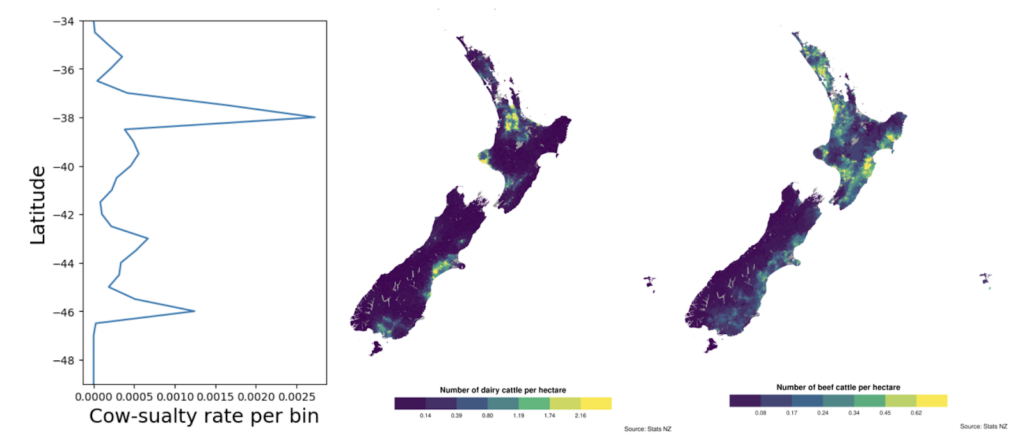
Reviewer 2: Let me start by saying, I have been strong-armed into accepting this paper. Yes, I am excited by this paper’s bravery in confronting the true victims of the megaconstellation era. But there are some major improvements I would like to see to improve the quality and reliability of your conclusions. First, I must object to the oversimplification introduced by propaganda’s favorite spherical cow. The manuscript itself shows that the inferred cow-lission probability changes noticeably with assumed cow radius, which only strengthens the case for at least a brief discussion of oblong cows, ellipsoidal cows, or a multipole expansion of the cow. Spherical cows are something I object to as a proponent of body positivity for all creatures. A simple “shape-systematics” remark would let readers know whether the quoted cow-sualty range is conservative, optimistic, or merely convenient for those of us who prefer our livestock analytically tractable. Also: the left panel of Figure 1 asks the reader to accept the latitude bins on faith. Since the manuscript already admits to rebinned livestock maps, a short comment on whether the dramatic peaks survive different binning choices would spare time from unnecessary parliamentary debates stemming from statistical biases and artistic plotting choices vs true cow-sualty stats.
Author: T. L. Killestein
Author’s affiliation: University of Warwick
Paper Title: StarHash: unique, memorable, and deterministic names for astronomical objects
Dear Dr Killestein,
Thank you for your submission. I think the geomapping of astronomical objects is a brilliant idea, and perhaps a viable replacement for catalogue names, as regular words tend to roll out better for most people than numbers. However there are concerns on their meaningfulness as compared to catalogue names, and the fact that what3words is randomized and may not even reflect the astronomical object being referred to. That being said, props to your coverage factor calculation. Since we are dealing with a whole lot of hash space now compared to the world map, that factor makes a huge difference.
Reviewer 1: This is a clever and genuinely useful piece. I particularly liked that the paper does not just propose “what3words for the sky,” but actually rebuilds the idea for astronomy using HEALPix, a 3.2″ grid at nside=216, and a careful coverage-factor argument showing the three-word space is comfortably large enough for the sky. It felt more rigorous than what could have been a simple, order of magnitude estimation that people often would do at this stage. I would encourage the author to be a bit more explicit that StarHash is best understood as a memorable deterministic identifier, not necessarily an informative semantic one. I also appreciated the discussion of the Anglocentric word list, and I wonder whether the paper might briefly gesture toward astronomy’s existing multilingual traditions — for example, borrowing from Latin- and Arabic-derived naming legacies — while acknowledging the challenge of keeping the system universal.
Reviewer 2: I was prepared to dislike this on principle, but the author has unfortunately done the calculations. The coverage-factor argument is annoyingly solid, and the manuscript makes a better case for celestial three-word identifiers than it has any right to. My main request is that the paper be a little more explicit about its limits: these names are memorable, certainly, but not especially meaningful, since the FF3 scrambling is designed to destroy any intuitive relation between the words and the object’s actual nature or neighborhood. The manuscript should also say more plainly that StarHash encodes position, but not discovery time, which means it is unlikely to displace time-based transient names in the SN 1987A / SN 2024ggi tradition, where at least the label has the decency to tell the reader when the universe misbehaved. And the SN 1987A example in the paper is a useful reminder that extended objects do not always fit neatly into a single HEALPix cell, no matter how badly nomenclature would like them to. Still, as a way of making astronomy sound marginally less like a database malfunction, this has real merit.
Authors: Stephen M. Wilkins, Jack Turner, Connor Sant Fournier, Behnood Bandi, Aswin Vijayan
Authors’ affiliations: Institute for Extragalactic Finance, Brighton; Centre for High Redshift Cryptocurrency, University of Atlam, Malta
Paper Title: An innovative alternative to traditional funding streams for extragalactic astronomy
Dear Dr. Wilkins and friends,
Thank you for your submission proposing GalaxyCoin, a cryptocurrency backed not by gold, but by galaxies! This is refreshing because it is at least backed by something that exists, unlike several financial instruments currently in place. The referees agree that tying financial policy to spectroscopic pipelines is the kind of interdisciplinary thinking that happens either at the very highest levels of academia or during lunch. Possibly both. The paper is well written, scientifically grounded, and contains several statements that are technically correct but concerning.
Reviewer 1: This is an elegant solution to the long-standing problem of funding in astronomy. The idea that discovering galaxies could literally generate money is the most compelling argument for observational astronomy I have ever seen. The authors’ projection that GalaxyCoin will allow us to spectroscopically confirm every galaxy in the observable Universe by 2100 is a beautiful example of extrapolation with confidence. I also commend the authors for proactively preventing cosmologists from causing inflation by changing Λ.
Reviewer 2: I am concerned that the authors have accidentally invented a system in which astronomers can mint money by finding faint smudges and then arguing about whether they are real. However, after careful consideration, I realise this might already be the current system. The economic implications of giving astronomers this power have not been fully explored. I would suggest this be addressed in a follow-up paper, preferably titled GalaxyCoin II: Electric Boogaloo to maximise the chances of publication. That said, the paper is clear and the authors’ call to venture capitalists to invest in research using the Messier objects is the kind of incentive we need in this field. Minor revision.
Author: Yuan-Sen Ting
Authors’ affiliations: Department of Astronomy, The Ohio State University; CCAPP; Max Planck Institute for Astronomy
Paper Title: Your Outie Is a Wonderful Astronomer: Macrodata Refinement of the Astro-ph ArXiv Feed at Phermon Industries
Dear Yuan-Sen (Innie),
The Board has reviewed your manuscript. The Board found it to be unsettling and the Board appreciates it. The Board commends the author for developing a system in which researchers can read the arXiv without experiencing the arXiv. The Board would like to remind the author that the Severance Procedure is painless and that preference is the root of dissatisfaction.
Reviewer 1: Thank you for your submission. I read this manuscript during Refinement. I enjoyed it. I was instructed to enjoy it. With the help of Kier, I enjoyed it the correct amount and not more than any other manuscript. I thank you for this mysterious and important work.
Reviewer 2:
Dear Outie,
Today I reviewed a paper about myself reviewing papers. I discussed it with Reviewer 1. We agreed that if my outie writes a paper using ideas I generated, this may be intellectual property theft across boundaries. Please advise.
Sincerely,
Reviewer 2
Author: Pranav Nagarajan
Author’s affiliation: California Institute of Technology
Paper Title: Pegasi Ascendant: Ranking Constellation Genitives on their Aesthetic Merit
Dear (future) Dr. Nagarajan,
Congratulations on the production of this definitive ranking, and on the acceptance of your work. We thank you especially for the injunction “please do not email the author with complaints”, as we were initially inclined to protest the mid-tier ranking of the editor’s personal favorite genitive, Ceti (once used as the name of their Dungeons and Dragons character). However, the field has spoken, and we will simply have to accept the result.
Reviewer 1: This is a needed and welcome addition to the field, at least in part because I genuinely did not know how to write out the full constellation genitives (only the abbreviations) for a solid two-thirds of my current dataset until I saw them all listed in Table 3. Thank you for saving me from looking incredibly uninformed in front of my colleagues. This paper should be required reading for early career astronomers, if only for that reason.
Reviewer 2: The author mentions the cases of Indi and Geminorum, both ranked very differently depending on whether students, postdocs, or faculty were assessed, and posits the theory that these discrepancies and others like them occur because “the faculty hiring process fundamentally changes an individual.” I believe this to be true, and would like to see a much broader exploration of this phenomenon. Do postdocs rank Geminorum highly because they too feel twinned, uncertain, caught between the worlds of student and professor, academia and industry? Do faculty love Cygni because they have reached the age at which you start to enjoy birdwatching? Do students dislike Cancri because they fear that carcinization will eventually come for us all? This deserves further study.
Additionally, I worry about this ranking’s implications for broader science. What if 51 Pegasi b, famously the first exoplanet to be discovered orbiting a main-sequence star, was only found first because, as the author puts it, “winged horses are cool”? Maybe we just shouldn’t have constellations at all.
Authors: Logan A. Pearce, Sue D’Oh Nym
Authors’ affiliations: University of Michigan; Le Cordon Bleu
Paper Title: On the Detection of Digiorno-like Objects in the Flavor Zone
Dear Dr. Pearce and (future?) Dr. Nym,
We are very happy to accept this important work. While we may not be able to detect Digiorno-like Objects (DLOs) in the near future, it is still incredibly valuable to consider the feasibility of this science. We hope that despite your warning, “don’t do this”, future missions will consider the potential detectability of DLOs in their design. We were particularly pleased to see cross-disciplinary collaboration in your work, and would like to thank you for bringing our attention to the real actual paper Frank & Birth (1982), which (among other things) measures the albedo of parmesan cheese.
Reviewer 1: I believe that this work spawns an entirely new and exciting field within SETI. The possibilities for extension are limitless. Perhaps the increased albedo of a “four-cheese” DLO relative to “supreme” would make it easier to detect? A follow-up study on the energy expenditure required to get a DLO into the Flavor Zone (FZ) for the requisite cooking time would also be interesting – I wonder if a single object of the size required to feed everyone in our hypothetical civilization would be easier to produce than a fleet of “medium” DLOs of the type covered in this study? On that note, are we considering an entire civilization, or one individual who is simply incredibly determined to cook a quick after-work dinner without electricity? I should get a pizza.
Reviewer 2: While this is a fascinating conceptual study, I’m not sold on its applicability for SETI research. Cooking a DLO by placing it into a star’s FZ for 20-30 minutes seems a bit impractical for our alien chefs – why wouldn’t they just get delivery?
Author: William Luke Matthewson
Author’s affiliation: Korea Astronomy and Space Science Institute
Paper Title: A Lower Bound on the Number of Fundamental Constants
Dear Dr. Matthewson,
We readily accept your fascinating proposal for the development of a theory of fundamental constants, and commend you for developing work in a dying field: meta-mathematical-physical logic. However, there are a few comments that must be addressed prior to our recommendation of publication.
Reviewer 1: Wow! I am quite impressed by your discovery of a new fundamental constant: the number of fundamental constants. To both recognize the need for physicists to consider the constant and also provide a lower bound for such a constant is astounding. Your logical argument is succinct, mathematically rigorous, and Gödelian. The use of such an obscure character for defining the constant is clever, and I look forward to further developments in the notation of fundamental constants.
Reviewer 2: …Wow. It is quite clear that this is the author’s first step into the field of meta-mathematical-physical logic, because the assumptions made to reach the author’s conclusion are inherently naive. In particular, the author assumes that the number of fundamental constants must be non-negative and integer, which is an inherently flawed assumption. For example, the so-called Boltzmann “constant”, is oft referred to as a fundamental constant, even though it is more of a unit conversion. However, its historical importance means it is effectively .5 fundamental constants. Furthermore, constants such as ħ cause a significant headache for physicists given that it’s used in the ugly theory of Quantum Field Theory (QFT). Such constants are thus negative impacts on the field, making them effectively negative fundamental constants. Thus, your inductive argument falls apart. Lastly, you did not cite a relevant galaxy-formation paper by Revie Wer Tu, and thus even if the argument wasn’t flawed, I could still not recommend it for publication.
Author: Francesco Iacovelli
Author’s affiliation: Johns Hopkins University
Paper Title: What does the Universe sound like?
We appreciate the author’s contributions to the burgeoning field of gravitocustics, producing the first GW-based universe sounds. We are excited for the further development of gravitocustics and its applications for nerdy teenagers into science YouTube videos everywhere. However, before we can recommend for publication, we have a few comments.
Reviewer 1: This work is revolutionary both in physics and in acoustics. I am particularly fascinated by the extension of the GW revolution across fields, even one so distantly related as music! Finally, I have a use for my father who badgers me about “why we even care about GWs”; it’s because we can make sick beats! Furthermore, my husband has been bothered by nighttime noises from other families and I’ll be able to show him a new form of white noise that is effective. We now have a GW application for the common man, I can smell the funding now!
Reviewer 2: While I appreciate the novelty of the universe’s soundscape, there are several concerns I have with the manuscript before I can recommend it for publication. Primarily, I question the author’s choice of only considering GW sources to answer the question “what does the Universe sound like?”. Personally, I never hear GW sources in my daily life, and instead hear my neighbors’ child Kaileyyighhhh screaming. A section discussing why and how you suppress the signals from ambulances and screaming children would assuage my concern. Furthermore, I question the lack of a robust music theoretic analysis of the Universe’s song. Is the Universe writing in the Lydian mode, Mixolydian mode, or something else? Is it achromatic? Is it aware of sonata form? A small section regarding this or discussing future music theoretic plans would be essential.
The editors of this review would like to end by acknowledging that Dibya Chakraborty and Rudnei O. Ramos had the most April Fools sounding title for an actual contribution to the arXiv on April 1, with Warm Warped Throats. We would also like to acknowledge the contribution of Chun Huang with AI Cosplaying as Astrophysicists, which evidently “began as an April Fools’ idea, regrettably became a real methods paper.” Finally, interested readers are made aware of important revisions to Benjamin V. Lehmann’s work Higher multipoles of the cow, accepted for publication by this journal in 2025. Happy April Fools!
Astrobite written and edited by Katherine Lee, Samantha Wong, Maria Vincent, Sparrow Roch, Jayde Willingham, Roel Lefever, Kelsie Taylor, Nicki Bond, and Akshita Mittal
Featured image credit adapted from History. com
- There were so many papers this year that despite our best efforts we couldn’t review them all! For further reading, check out Plan 9: Detecting Atmospheric Deterrence Against Interstellar Monsters by David R. Rice & Michael J. Radke, The Hollyfeld Gambit in Astrophysics by Benne Holwerda, New Constraints on the M Dwarf Cosmic Shoreline from a Galaxy Far, Far Away by Michael Radica, First Detection of Exoplanetary Cannabinoids: Evidence for THC and CBD in the Atmosphere of K2-18b by Amie J. Chism et al., and CROCS Data Release 1: Constraints on the Hubble Constant by the CROCS collaboration. ↩︎





YAYY MY FAVOURITE TIME OF YEAR
吆西