
In this series of posts, we sit down with a few of the keynote speakers of the 248th AAS meeting to learn more about them and their research. You can see a full schedule of their talks here, and read our other interviews here!
Sanmi Koyejo works at the intersection of machine learning, scientific discovery, and the difficult question of what it actually means to trust an artificial intelligence (AI) system. An assistant professor of computer science at Stanford University and leader of the Stanford Trustworthy AI Research (STAIR) Lab. His work develops foundations for evaluating and understanding AI systems, with applications spanning healthcare, neuroscience, and astronomy. His work focuses on AI measurement science, evaluation, accountability, and the gap between impressive demonstrations and reliable real-world performance.
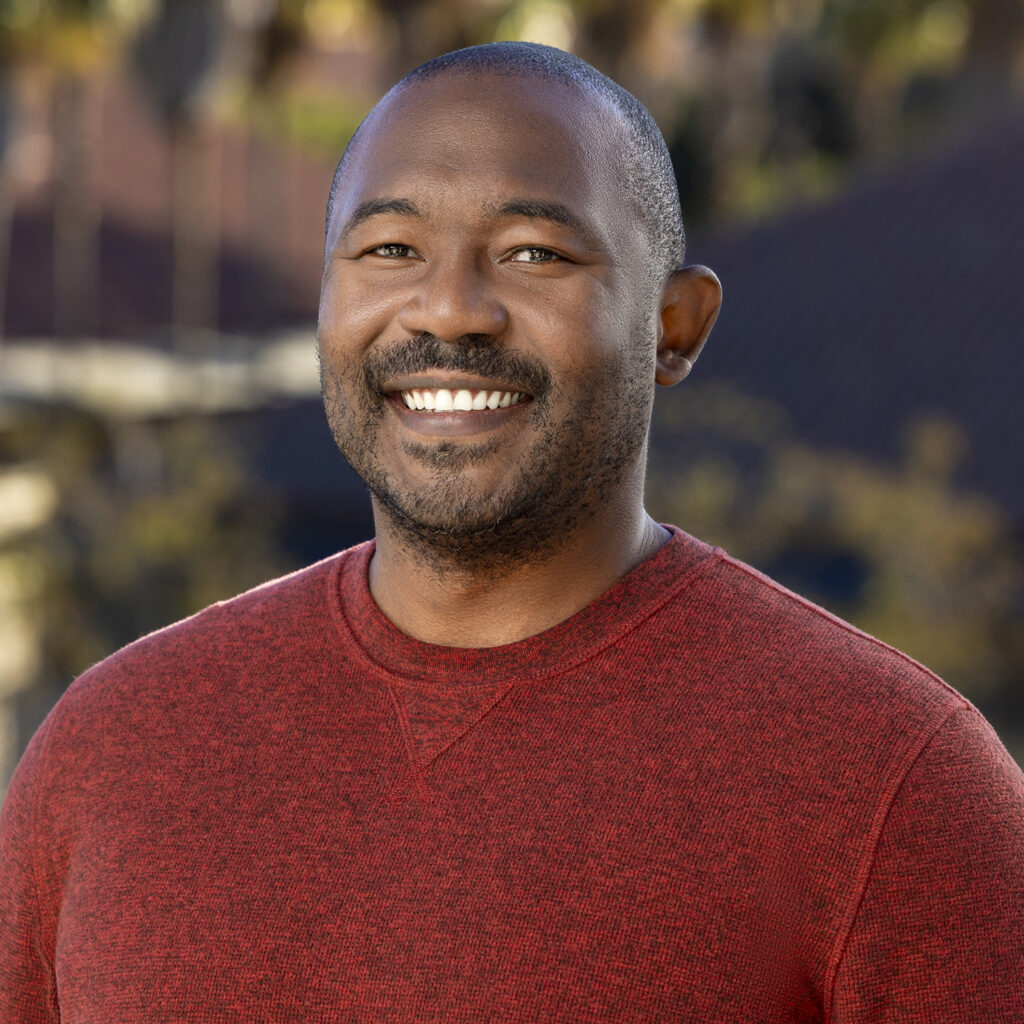
Photo Credit: Sanmi Kojeyo
Finding machine learning by accident
Koyejo did not set out to work in artificial intelligence. As a student, he originally imagined a future in electrical engineering. He spent time building electronics, working on control systems, and thinking about communication technologies. That changed gradually during graduate school.
At the time, he was studying cognitive radio systems, communication networks that could adapt automatically to changing conditions. To solve those problems, he started using machine learning tools. What began as a supporting method quickly became the most exciting part of the work. “I got excited about that part and dropped everything else,” he said.
By the end of his PhD, machine learning had become his main research direction. After moving to Stanford for a postdoc, Koyejo became interested in a broader question: not just whether AI could make predictions, but whether it could help scientists make new discoveries and better understand the world. Today, his research group works broadly in three areas:
- Understanding AI systems: figuring out what these tools can and cannot do.
- Building trustworthy AI: making systems more reliable, safer, and less prone to mistakes.
- Applying AI to real problems, especially in areas like science and healthcare.
Why did astronomy catch his attention?
Although astronomy is still a relatively newer area for his group, Koyejo said he was immediately drawn to the kinds of problems astronomers work on. One reason is that astronomy operates differently from the kinds of problems where AI usually succeeds. Many machine learning systems improve because they can learn from huge numbers of examples. But astronomy does not always work that way.
As Koyejo put it: “There’s one universe, not a billion.” Astronomers may collect enormous amounts of data, but they cannot create new universes to test ideas. That means astronomy often depends on combining observations with physical understanding and scientific intuition. Koyejo finds that balance exciting.
Rather than replacing scientific thinking, AI may become most useful when it works alongside existing knowledge. His early work in astronomy has involved collaborating with researchers to explore whether machine learning can speed up or improve the efficiency of certain analysis methods, while preserving the physical understanding underlying them. But he repeatedly emphasized that scientific discovery is about more than getting answers quickly. “The thing you want is understanding.”
AI can pass tests without doing science.
One of the main ideas behind Koyejo’s plenary talk is a simple but important distinction: Doing well on a test is not the same as doing science. AI researchers often evaluate systems using benchmarks, standard collections of problems designed to measure performance. These tests are useful. They help compare systems and track progress. But Koyejo worries that people sometimes take those results too far.
A model that scores well on a benchmark is often treated as evidence that it can solve much bigger problems. That leap, he argues, is not always justified. “Passing the benchmark is not the same thing as doing science.” His group studies better ways to evaluate AI, not just by asking whether a system gets answers right in controlled settings, but whether it actually works in the messy situations people care about.
One surprising result from his research is that AI systems often agree with each other, even when they are wrong. People tend to assume that agreement means correctness. But multiple systems can confidently make the same mistake. For Koyejo, this is not a reason to dismiss AI. Instead, it is a reminder to apply the same standards of evidence that scientists already use elsewhere.
Scientists should help shape AI
Koyejo also spoke about how AI is changing scientific work itself. Research papers are easier to produce than ever before. Review systems are under pressure. Automation is appearing in more parts of the scientific process. But he argued that scientists should not think of themselves as passive users of AI tools. They should help decide what those tools become. Scientists understand what counts as evidence, which mistakes matter, and what makes a result trustworthy. Those decisions cannot simply be handed over to algorithms.
Advice for students
Technology has made it easier than ever to produce work quickly. But producing something is not the same as understanding it. That makes mentorship increasingly important. “Pure production is no longer enough.” Good mentors help develop judgment, perspective, and taste, the kinds of skills that become more valuable when generating outputs becomes easier.
Koyejo encouraged students to explore widely and think seriously about where they want to make an impact. Fields like astronomy, he said, may offer especially exciting opportunities because many scientific questions remain open. But he also encouraged students to avoid chasing quick results.
Learn deeply. Build context. Use tools thoughtfully. Looking beyond the hype
Koyejo does not describe himself as either optimistic or pessimistic about AI. Instead, he sees a need for better questions. There is real excitement around what these systems might do, but also a need for careful evaluation before making big claims. His research focuses on closing that gap: moving from impressions and headlines toward evidence and understanding. And that goal may feel familiar to astronomers.
To hear more about AI in Astronomy, tune in to Sanmi Koyejo’s Plenary Lecture at 11:40 AM PT on Monday, June 15th at #AAS248!
Edited by: Niloofar Sharei
Featured Image Credit: AAS
