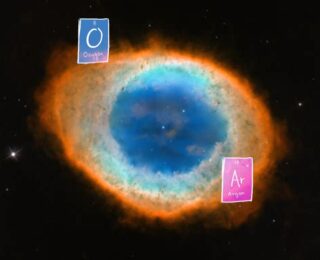
Supernovae in the Super-Early Universe
Today’s bite explores the star formation history of galaxies in the early universe using chemical signals of stellar deaths.

Today’s bite explores the star formation history of galaxies in the early universe using chemical signals of stellar deaths.

Gravitational lensing is a natural result and unique feature of Einstein’s theory of general relativity. It is also an important instrument in the cosmologist’s toolkit. Today’s paper highlights one way astronomers are using gravitational lensing to study dark matter.
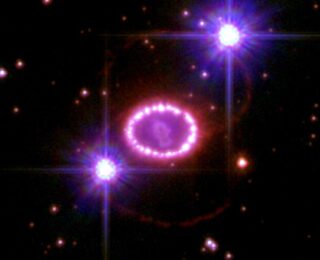
In this Astrobite, the authors try to solve the mystery of what happens to the corpse of a supernova post-explosion: black hole or neutron star?
What are all the ways to power a supernova? Learn here today!
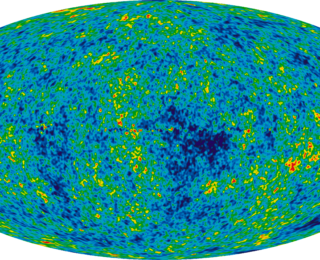
In today’s Bite, guest author Catherine Chaison discusses the CLONE simulation and its use in simulating galaxy clusters!

In today’s Astrobite, Guest author Jim Shih discusses what happens when an exoplanet with an atmosphere gets too close to its star!