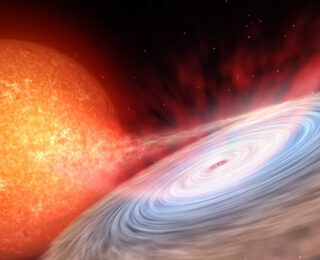
Double the scattering, double the fun!
In today’s bite, we discuss whether scattering from the X-ray corona impacts measurements of black hole spin!

In today’s bite, we discuss whether scattering from the X-ray corona impacts measurements of black hole spin!
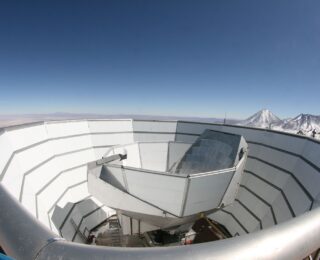
Today’s bite will discuss how we can use cosmological data to look for new kinds of interactions between neutrinos.

Today’s bite explains why we’re not very likely to see a black hole made from light–affectionately called a kugelblitz.
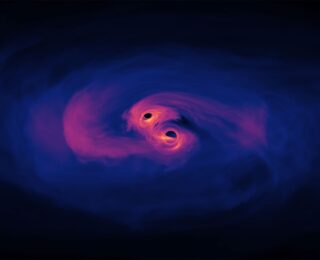
In today’s bite, we look at a paper that investigates if self-interacting dark matter can accelerate the inspiral of supermassive black holes binaries, and if we can detect this with gravitational waves.
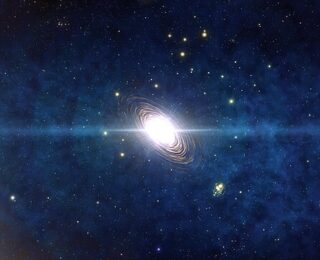
Pair-Instability Supernovae could be the fate of some of the universe’s most massive stars. Today’s Astrobite explores if dark matter accumulated in the cores of these stars could help drive these gargantuan explosions!
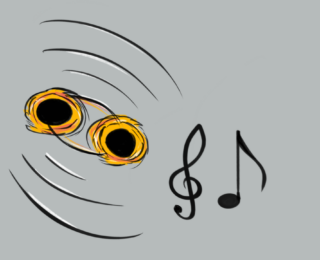
Gravitational waves hum in various frequencies. Can we hear the ultralow frequency ones ? Find out in today’s bite.