
Featured Astrobites
Our latest posts
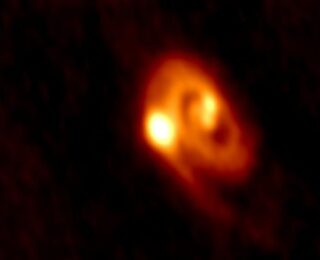
Sharing is caring: how do binary stars actually transfer mass?
Mass transfer is a fundamental parameter for determining how binary stars evolve. A 3D hydrodynamic simulation enables real-time movies of how material moves from one star to another!
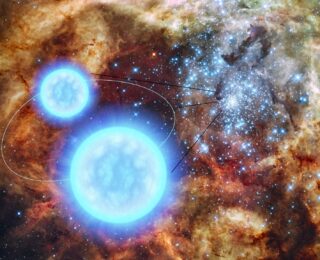
The suspects may be fleeing the scene of the crime, but our most stellar detectives are on the case!
What kind of event is violent enough to fling around stars that are hundreds of times more massive than our Sun? Find out today!
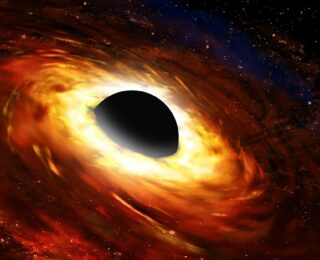
Growth Spurt: Super-Eddington Accretion Leading to Overmassive Black Holes?
Some astronomers are discovering black holes that appear to be too big for their galaxies. Discover how rapid growth could be the cause!
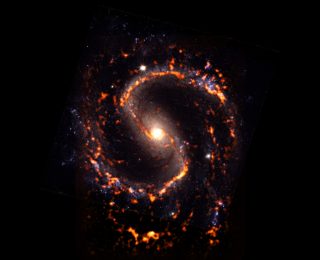
How stars dust themselves off and emerge from their hidden birthplaces
When stars are born, they’re hidden behind dust and dense gas. How long will it take them to emerge?
Looking for a single stellar ancestor: Mono-enriched stars in zoom-in simulations
Today’s bite explores if we’ll be able to find a star that has formed from the gas enriched by only one stellar predecessor, an interesting way to probe what’s actually happening in stellar nucleosynthesis.
The Anatomy of Active Galactic Nuclei
Active Galactic Nuclei produce some of the most dazzling fireworks in the Universe. Let’s dissect one to figure out what powers them!
Beyond astro-ph
Astronomy beyond the research
No Results Found
The page you requested could not be found. Try refining your search, or use the navigation above to locate the post.
Navigating careers in astronomy
Career advice

Tools for Reading Papers, Part 3
Do you feel lost reading papers? Try reading a review article or a classic paper first!

What If I Am Not Accepted Into a PhD Program (U.S.)?
Today we explore how to handle grad school rejection, with different career paths and anecdotes from similar experiences.
What Does “Success” Mean to You?
In today’s Astrobite, we consider suggestions for establishing a personal definition of success in astronomy.