
Featured Astrobites
Our latest posts
So long, and thanks for all the jellyfish
Today’s paper explores where, when, and how long jellyfish galaxies lose cold gas as they dive into massive galaxies.
Disentangling Humans from Galaxy Morphology Studies: A Hybrid Machine Learning Model for Galaxy Classification Across Redshift
Is AI the real expert on galaxy morphology evolution? Read today’s bite to find out!

Roasted Marshmallows Setting Fire to Our Understanding of Planet Formation?
Today’s paper demonstrates how spectroscopic observations of an exoplanet can help us understand its composition and formation history!
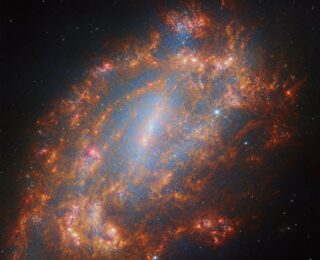
UR: Something from Nothing: Analyzing JWST Pixel Data
In our latest of our #UndergradResearch series, discover how to better calibrate JWST for clearer images with Feras Natsheh.
![[Beyond] the research notebook: reproducibility and transparency in science](https://astrobites.org/wp-content/uploads/2024/12/git-320x260.png)
[Beyond] the research notebook: reproducibility and transparency in science
Reproducibility and transparency in the research is becoming increasingly important in the age of AI. Learn how to go beyond your notebook to make your research more accessible!
There Are Many Ways Galaxies and Supermassive Black Holes Dance
Find out how supermassive black holes dance along with their host galaxies in today’s paper
Beyond astro-ph
Astronomy beyond the research
No Results Found
The page you requested could not be found. Try refining your search, or use the navigation above to locate the post.
Navigating careers in astronomy
Career advice
Installing and Running Gadget-2
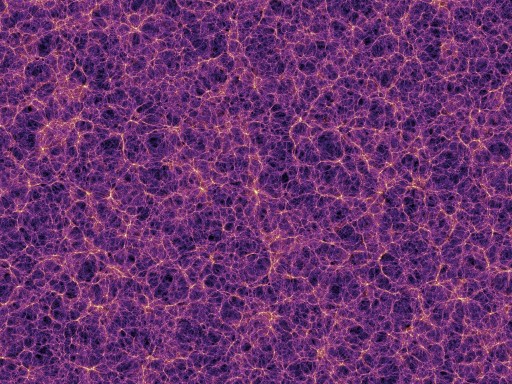
This is the first of two posts detailing how to install and operate the Gadget-2 hydrodynamics code. Click here for the second post in the series. Today’s astrobite will be another in a series on career advice and useful astronomical tools. So far, it looks like there’s been a dearth of posts on the tools of theoretical astrophysics, so I thought I’d take the opporunity to show how easy it is to run a simulation using Gadget-2, a smoothed particle hydrodynamics (or SPH) code. Gadget-2 is open source and publically available, so anyone can run simulations with it. In a future post, I’ll discuss how to set up and run a simple hydrodynamics test problem. The instructions for installing Gadget-2 will be highly platform dependent. If you’re running Linux or UNIX, you have all of the tools you will need to compile the codes already. If you’re on a Mac, you’ll need to install and update Xcode, which includes all of the compilers you will need. On Windows, you’ll probably need to install cygwin which will give your Windows installation full UNIX support. Since I have a Mac, I’m going to focus on getting these codes working on OS X Snow Leopard. If you have a different system, it might not be possible to follow my instructions exactly. I’ll be doing all of the simulations for this series of posts on my laptop, a Macbook Pro. First, you will need to download a few software packages. Gadget 2.0.7. Version 1.9 of the GNU scientific library (GSL). Version 2.1.5 of the FFTW fast Fourier transform library. A Message Passing Interface…
Everything I need to know about observing I did not learn in kindergarten
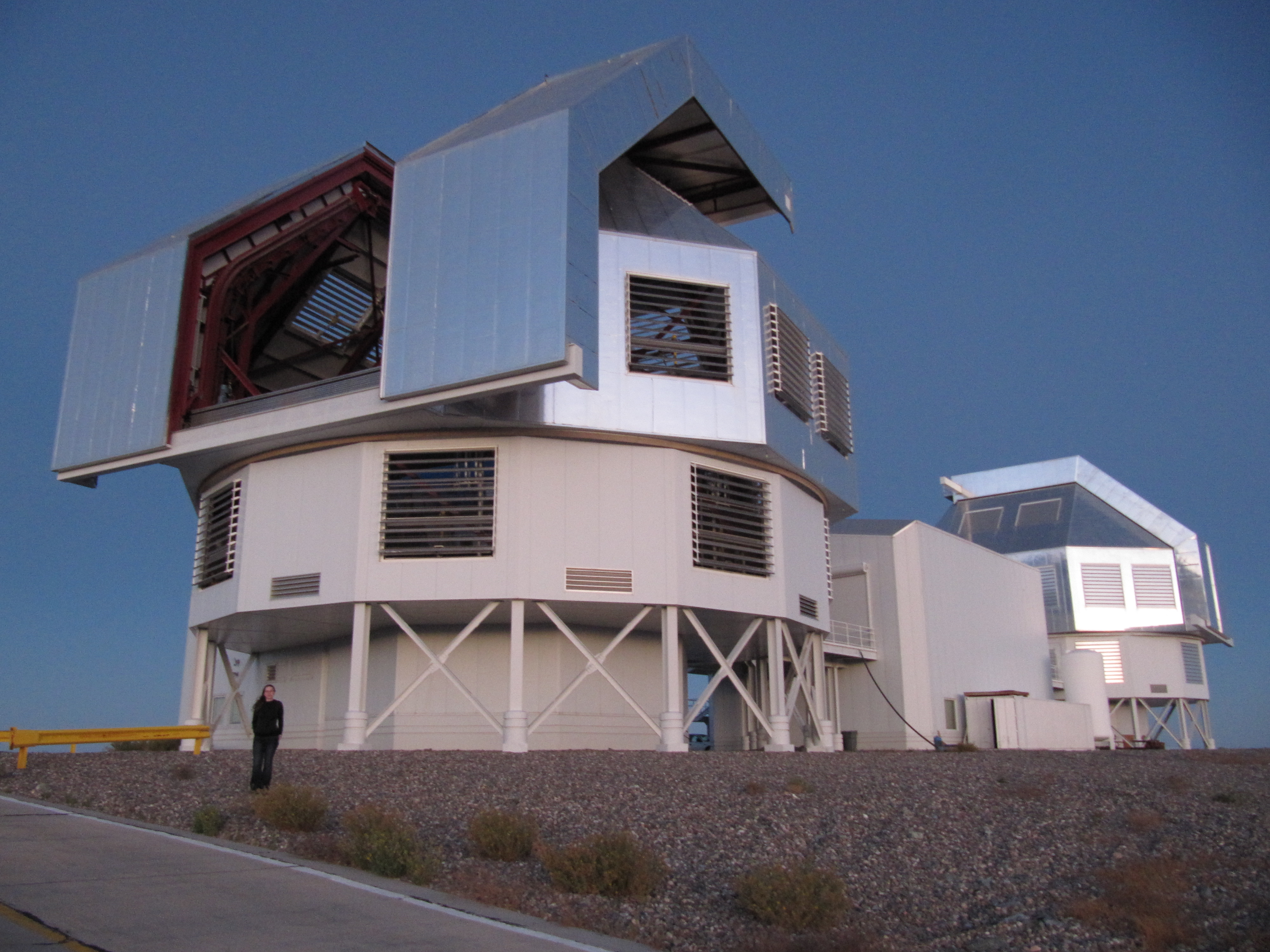
Last week I spent two nights observing on Magellan, in Chile. It was my first observing trip and there was a lot more to it than expected!
Visiting a Grad School? Check out our tips!
Visiting grad schools can be intimidating, but we are here to tell you not to worry! The visits are fun, packed with meetings, and a great way to see what the department is really like.
More posts by category