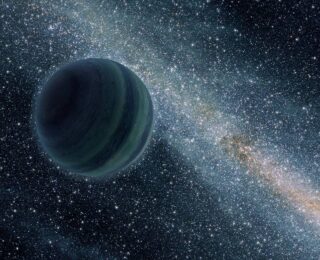
Knock, knock. Who’s there? A free floating planet!
Not that long ago, in a system not too far away, a free-floating planet pays a visit… to HD 106906, a binary star system with an exoplanet and a debris disk!

Not that long ago, in a system not too far away, a free-floating planet pays a visit… to HD 106906, a binary star system with an exoplanet and a debris disk!
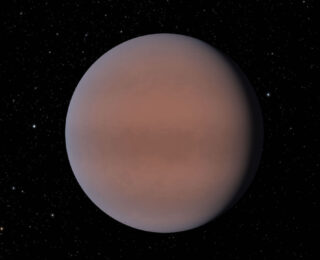
Water vapor detection of exoplanet atmospheres has been a hot topic. This scientific question is included in the first set of results published by JWST. But it’s even more difficult to detect the presence of water vapor on exoplanets in the Neptune desert. This year, researchers detected water vapor on TOI-674 b for the first time by analyzing atmospheric transmission spectrum. It’s very exciting. This discovery provides an important target for subsequent detection with higher precision by JWST.
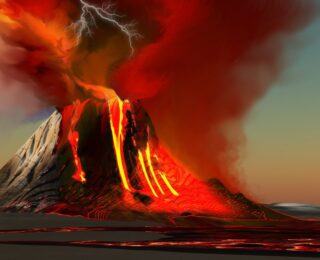
Today’s paper examines the reaction between atmosphere and magma in exoplanets, a key factor in shaping an exoplanet atmosphere

Want to learn how astronomers discover and understand exoplanet orbits? Today’s post will teach how to use the open source code called orbitize! in Python!

Plenty of committed and planned heists give examples of how to steal diamonds and pearls. But how to steal a whole planet? Easy! You just need to be a star in a star forming region.
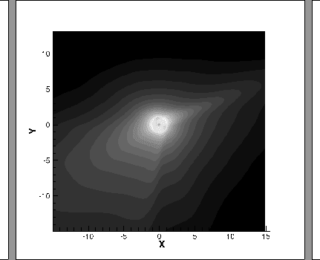
Today’s paper explores a promising method for detecting and constraining exoplanetary magnetic fields: measuring their effects on a host star’s radio emission during transits.