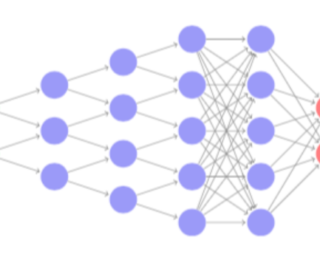
Searching for FRBs Using Neural Networks and Machine Learning
Learn more about how a team at WVU is using machine learning algorithms to search for FRBs!

Learn more about how a team at WVU is using machine learning algorithms to search for FRBs!
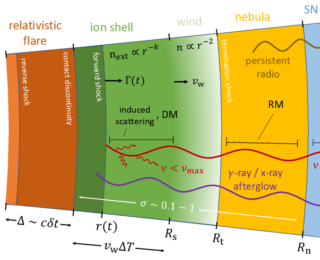
The astrophysical cause of fast radio bursts (FRBs) is unknown, but could their origins perhaps be… shocking?
We report on Day 3 of the winter AAS meeting in Seattle, WA. Highlights include updates in X-ray astronomy, the discovery of a second repeating FRB, an exploration of astrochemistry in planet-forming disks, and a look at the 2020 Astronomy Decadal Survey.
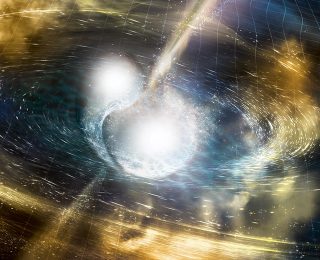
We report on Day 2 of the winter AAS meeting in National Harbor, MD. Highlights include an exciting update on the repeating fast radio burst, a look at the evolution of galaxy clusters and what’s between them, and a summary of the state of gravitational-wave astronomy.

Outreach extraordinaire, Lawrence Rudnick, employs both radio and x-rays to investigate the dynamics of the intercluster medium. Be sure to read this interview before his plenary talk at #AAS231 on Wednesday!
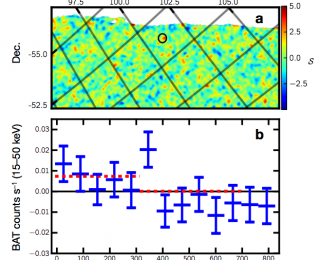
Has a counterpart finally been detected for the ever-elusive fast radio bursts that have been detected outside of our Galaxy? Well, that’s a tricky question…