• RSS
  • Submit a Guest Post
  • Undergraduates: Submit your Research!
  • Suggest a Paper Topic!
astrobites
  • About
    • About Astrobites
    • Meet the Authors
    • Statement of Inclusivity
    • Copyright & Permissions
  • Latest Research
    • Daily Paper Summaries
    • Classics
    • Undergrad Research
    • Physical Review Coverage
  • Beyond astro-ph
    • Beyond astro-ph Library
    • Interviews
    • Career Navigation
    • Personal Experiences
    • Current Events
    • Teaching with Astrobites
  • Guides
    • EM Spectrum
    • Galaxies & AGNs
    • Spectroscopy and Spectral Lines
    • Adaptive Optics
    • Gravitational Waves
    • Transient Astronomy
    • Astrophysical Software
    • Graduate School
    • Writing a personal statement for grad apps
    • First Observing Run
    • …More Guides!
Select Page
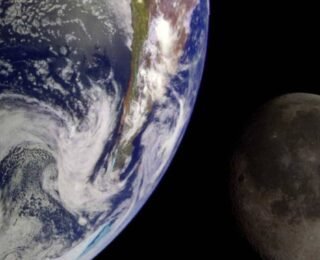
Did the Moon’s Ancient Magnetic Field Help Shield the Infant Earth?

Did the Moon’s Ancient Magnetic Field Help Shield the Infant Earth?

by Jamie Wilson | Dec 21, 2020 | Daily Paper Summaries

A team of scientists led by Dr. James Green at NASA’s Headquarters in Washington, DC, have shown that the Earth and Moon may once have shared a protective magnetic shield that sheltered the young Earth’s atmosphere from erosion by the solar wind.
Solar Wind Takes up Mercury’s Mantle

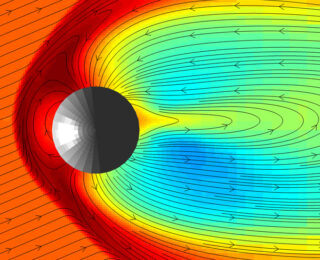
Solar Wind Takes up Mercury’s Mantle

by Will Saunders | Nov 9, 2020 | Daily Paper Summaries

Mercury is the smallest planet but has the largest core compared to its size. Is the solar wind to blame?
The Brine of Your Life

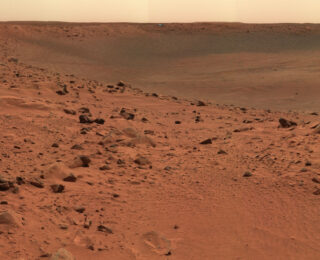
The Brine of Your Life

by Will Saunders | Oct 8, 2020 | Daily Paper Summaries

Can ephemeral, salty puddles on the surface of Mars sustain life?
Today’s forecast? Gusty winds on a brown dwarf

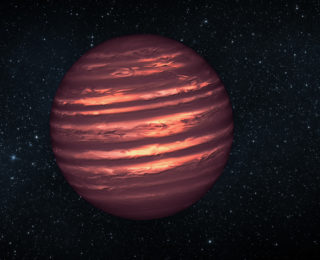
Today’s forecast? Gusty winds on a brown dwarf

by Briley Lewis | Jul 2, 2020 | Daily Paper Summaries

How could we measure winds on a distant brown dwarf or a Jupiter-like planet?
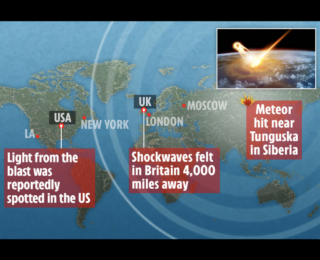
A New Theory for an Old Siberian Explosion

A New Theory for an Old Siberian Explosion

by Will Saunders | Jun 17, 2020 | Daily Paper Summaries

Can an asteroid passing through the atmosphere explain the largest impact event in recorded history?
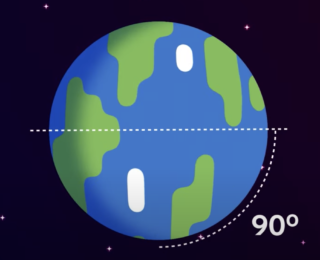
Potential Habitability of Extremely Tilted Planets

Potential Habitability of Extremely Tilted Planets

by Will Saunders | May 5, 2020 | Daily Paper Summaries

What happens when you take an Earth-like planet and tilt it nearly on its side? For life, its not as crazy as it sounds.

« Older Entries
Next Entries »

Loading

Follow our socials

  • Bluesky
  • Facebook
  • Instagram
  • RSS Feed

More Posts About

AAS AGN astronomy astrophysics binary stars black holes cosmology dark matter dwarf galaxies exoplanets galaxies galaxy evolution gravitational waves habitability JWST Kepler Milky Way observations planetary science planet formation protoplanetary disks radio astronomy simulations solar system spectroscopy star formation stars stellar evolution supernovae theory

Posts by Category

  • Accessibility
  • Applications
  • Beyond
  • Book Reviews
  • Career Navigation
  • Classics
  • Climate Change
  • Course Assignments
  • Crossposts
  • Current Events
  • Daily Paper Summaries
  • Game Reviews
  • Guides
  • Historical Astronomy
  • Instrumentation
  • Interviews
  • Outreach
  • Personal Experiences
  • PRJ
  • Quick Notes
  • Satellites
  • Teaching
  • Undergraduate Research

More Astronomy

  • AAS
  • AAS Nova
  • astro-ph
  • AstroBetter
  • APOD

Read Astrobites in Other Languages

  • Astrobitos (Spanish)
  • Astropontos (Portuguese)
  • staryab (Farsi)

Listen to Astrobites

  • astro[sound]bites

Discover More Incredible Science

  • ScienceBites Network
  • RSS

© 2026 Astrobites | All Rights Reserved | Supported by AAS | Designed by Elegant Themes | Powered by WordPress