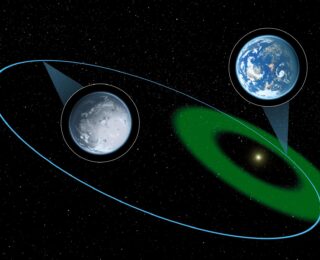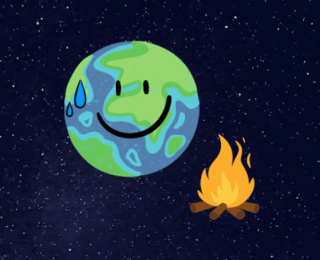
Detailed atmospheric models reveal that planets can be habitable much closer to their host star than previously thought, provided they have desert-like climates. This expanded definition of the habitable zone increases the number of planets that could support life by a factor of 2-3.
The census of planets for smaller stars—M dwarfs—is now basically complete. In this paper, Courtney Dressing and Dave Charbonneau use this M dwarf advantage to determine the occurrence rate of small planets around M dwarfs.
In our search for life on other planets, we begin by determining which exoplanets orbit in the habitable zone of their star. But where exactly is the habitable zone for a given star? The authors of this paper update a previous planetary climate model to predict where you should looking for your next extrasolar vacation home.
The holy grail for exoplanet science would be to find an inhabited planet. Not just habitable, but actually inhabited. But where are we most likely to find those planets? Only around Sun-like stars, or could life thrive around other types of stars? Could evolved stars like white dwarfs or neutron stars harbor life? Could brown dwarfs, the so-called failed stars, have inhabited planets?
Why do we care so much about finding an Earth-like planet? Is our goal to eventually colonize this planet, to make it an outpost from which to explore the rest of our galaxy? Is it pure curiosity about what else is out there? Or is it fueled by human kind’s endless romance with the stars? Exoplanet discoveries don’t usually make me wax philosophical but you’ll have to forgive a momentary lapse before I move on to the science: the discovery of the first Earth-sized exoplanets, Kepler-20e and f.
The First Kepler Science Conference is occurring this week at NASA Ames. Check out this summary of the conference to learn about the exciting results from the Kepler mission.
Yesterday, NASA confirmed another new exoplanet from the Kepler mission, Kepler-22b. From some of the headlines, you’d think it was time to pack your bags. The discovery of Kepler-22b is undeniably exciting, but there’s a lot we don’t know about this planet.
George Lucas dreamed of a planet with two suns. Now that Kepler scientists have found such a planet, the question arises: can it support life?
I’m a fourth year undergraduate from the University of Southampton, UK, studying for my masters at the Harvard-Smithsonian Centre for Astrophysics. With my summer reading completed, and a new exoplanet waiting to be discovered, I stepped off the plane into Boston Logan Int. this September and eagerly exchanged a drizzly English summer for a beautiful New English Autumn.