• RSS
  • Submit a Guest Post
  • Undergraduates: Submit your Research!
  • Suggest a Paper Topic!
astrobites
  • About
    • About Astrobites
    • Meet the Authors
    • Statement of Inclusivity
    • Copyright & Permissions
  • Latest Research
    • Daily Paper Summaries
    • Classics
    • Undergrad Research
    • Physical Review Coverage
  • Beyond astro-ph
    • Beyond astro-ph Library
    • Interviews
    • Career Navigation
    • Personal Experiences
    • Current Events
    • Teaching with Astrobites
  • Guides
    • EM Spectrum
    • Galaxies & AGNs
    • Spectroscopy and Spectral Lines
    • Adaptive Optics
    • Gravitational Waves
    • Transient Astronomy
    • Astrophysical Software
    • Graduate School
    • Writing a personal statement for grad apps
    • First Observing Run
    • …More Guides!
Select Page
Quench your inner star formation

Quench your inner star formation

by Olivia Cooper | Sep 10, 2022 | Daily Paper Summaries

Does one galaxy’s star formation quench another’s? Find out in today’s astrobite.

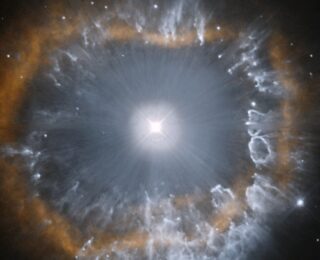
Are there thousands of Godzillas hiding in plain sight?

Are there thousands of Godzillas hiding in plain sight?

by Guest | Sep 9, 2022 | Daily Paper Summaries

A unique galaxy suggests a novel method to search for rare stars, which may have been previously overlooked and misidentified.

Our Icy Planetary Relatives: Special Slushies?

Our Icy Planetary Relatives: Special Slushies?

by Guest | Sep 9, 2022 | Course Assignments, Daily Paper Summaries

The author’s of today’s paper found that planets are made of unappetizing slushies!
Detecting Exoplanets’ Elusive Magnetic Fields with Radio Transits

Detecting Exoplanets’ Elusive Magnetic Fields with Radio Transits

by Macy Huston | Sep 8, 2022 | Daily Paper Summaries

Today’s paper explores a promising method for detecting and constraining exoplanetary magnetic fields: measuring their effects on a host star’s radio emission during transits.
Another one bites the dust: What dust devils tell us about Mars

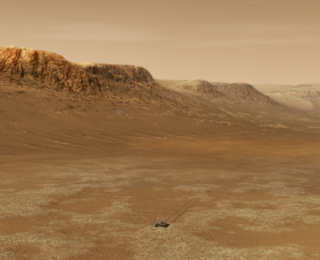
Another one bites the dust: What dust devils tell us about Mars

by Guest | Sep 7, 2022 | Course Assignments, Daily Paper Summaries

Dust devils, also known as dusty vortices, are key to understanding Mars’ climate since they loft dust into the atmosphere, shaping the Martian environment. Today’s author discusses some dust devil data gathered by the Mars Environmental Dynamic Analyzer on the Perseverance rover.

« Older Entries
Next Entries »

Loading

Follow our socials

  • Bluesky
  • Facebook
  • Instagram
  • RSS Feed

More Posts About

AAS AGN astronomy astrophysics binary stars black holes cosmology dark matter dwarf galaxies exoplanets galaxies galaxy evolution gravitational waves habitability JWST Kepler Milky Way observations planetary science planet formation protoplanetary disks radio astronomy simulations solar system spectroscopy star formation stars stellar evolution supernovae theory

Posts by Category

  • Accessibility
  • Applications
  • Beyond
  • Book Reviews
  • Career Navigation
  • Classics
  • Climate Change
  • Course Assignments
  • Crossposts
  • Current Events
  • Daily Paper Summaries
  • Game Reviews
  • Guides
  • Historical Astronomy
  • Instrumentation
  • Interviews
  • Outreach
  • Personal Experiences
  • PRJ
  • Quick Notes
  • Satellites
  • Teaching
  • Undergraduate Research

More Astronomy

  • AAS
  • AAS Nova
  • astro-ph
  • AstroBetter
  • APOD

Read Astrobites in Other Languages

  • Astrobitos (Spanish)
  • Astropontos (Portuguese)
  • staryab (Farsi)

Listen to Astrobites

  • astro[sound]bites

Discover More Incredible Science

  • ScienceBites Network
  • RSS

© 2026 Astrobites | All Rights Reserved | Supported by AAS | Designed by Elegant Themes | Powered by WordPress