
Learning more about exoplanet orbits using orbitize!
Want to learn how astronomers discover and understand exoplanet orbits? Today’s post will teach how to use the open source code called orbitize! in Python!

Want to learn how astronomers discover and understand exoplanet orbits? Today’s post will teach how to use the open source code called orbitize! in Python!
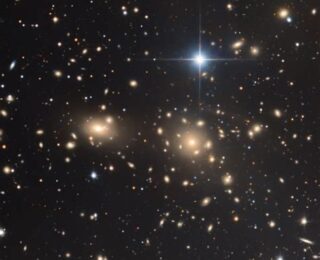
Could dark matter behave similarly to regular matter? If so, could dark matter halos collapse and form structures, like a black hole? In this work we explore the Atomic Dark Matter Model and predicting structure formation in it using simple algebra. We build on the current literature by showing that for certain values of the variables that govern dark matter interactions, we won’t be able to determine if the halo will be able to collapse using methods to track the dark matter number densities and how efficiently the halo can dispose of its initial energy.
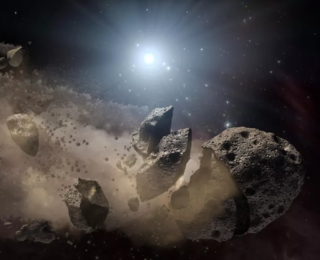
(22) Kalliope and its large moon Linus were thought to be traveling through the solar system as a lone pair with no further asteroid family to accompany them. This seems strange, as Linus was most likely created by a giant impact which would have to leave other fragments. Today’s authors are convinced they found the family belonging to Kalliope and the reason it hasn’t been identified sooner.

Plenty of committed and planned heists give examples of how to steal diamonds and pearls. But how to steal a whole planet? Easy! You just need to be a star in a star forming region.
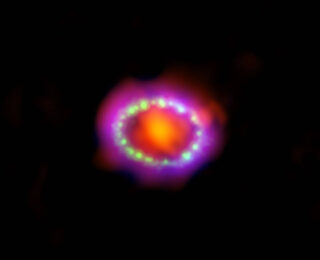
I spy with my little eye a pulsar wind nebula at the heart of SN 1987A. Check out today’s bite to see the latest results in the search for SN 1987A’s compact object.